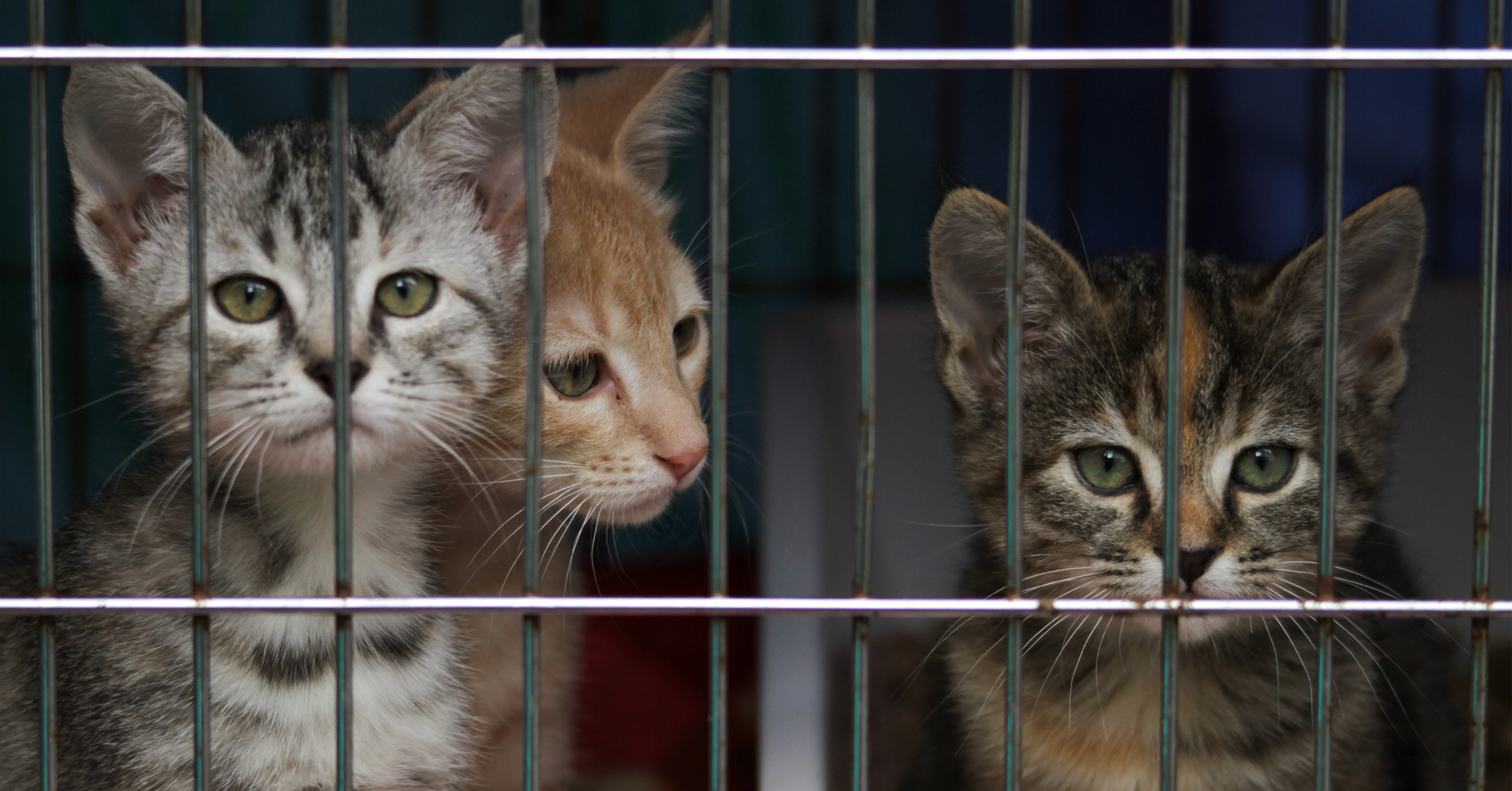
Cats are—among all of their other amazing attributes—extraordinary survivors. But for many, there is no chance of survival once in the hands of animal researchers.
Inside laboratories across the United States, thousands of cats and kittens are being caged, bred, harmed, and killed for human curiosity and profit. Their resilience does not protect them from the horrors perpetrated against them—perversely, it gives researchers more opportunities to exploit them.

More Than 11,000 Cats Trapped in Labs
Based on the most recent data available, over 12,500 cats found themselves trapped in labs in 2025. Some were confined for breeding, used to produce the next generation of victims. Others were subjected to experiments the laboratories themselves classified as painful or distressing, including experiments in which pain relief was deliberately withheld.

These figures reveal only part of the truth, of course. The animal research industry works hard to stop us from seeing what it does to animals every single day, but filings submitted by laboratories to the USDA still provide a harrowing glimpse.
Spinal Cords Injured, Then Basic Comforts Denied
In 2025:
- University of Missouri researchers injured cats’ spinal cords and then used the resulting injuries as justification for taking away their resting boards.
- University of Pittsburgh researchers also damaged cats’ spinal cords and implanted a “stimulator” device to study recovery from bladder dysfunction. Cats left with “hind limb deficits” were then denied resting surfaces.

What Else Cats in Laboratories Have Endured
The violence inflicted on animals in labs is as diverse as it is appalling. Other recent records document researchers:
- Forcing cats into cannibalism by feeding them the bodies of other cats.
- Electroshocking cats to force defecation after shoving marbles “up their rectums.”
- Shooting cats in military trauma exercises.
- Forcing cats to walk on treadmills after severing their spinal cords.
- Repeatedly anesthetizing and intubating cats despite complications including hypothermia, vomiting, impaired muscle control, coughing, bruising, loss of appetite, retching, excessive saliva collection, lethargy, dehydration, and “raspy and wheezing breathing.”
- Preparing cats to have holes drilled in their skulls and electrodes implanted in their brains.
- Giving a cat nearly five times the appropriate dose of a paralytic agent, causing difficulty breathing and likely organ damage before death.
These are only examples of what U.S. animal researchers are doing to cats just like those we love and share our lives with.
Laboratories Need a Constant Supply of Victims
Cats come under the control of animal researchers in different ways, including through commercial breeding operations. These businesses—like the now-notorious Ridglan Farms—are part of a sprawling supply chain that treats living beings as research inventory, consumer goods, and even branded products.

That industry includes Marshall BioResources in New York. In May 2026, Marshall reported holding more than 1,200 adult cats and more than 800 kittens—all trademarked as Marshall Cat®.

Marching Against the Machinery of Animal Research
Rise for Animals has long worked to expose and oppose Marshall BioResources. Now, we are building on that work by joining a new campaign to end animal experimentation—one that begins by confronting a primary business keeping laboratory cages full.
In September 2026, advocates will march from New York’s state capital to Marshall BioResources in North Rose, New York, to bring public attention to a business, and an industry, that works hard to stay invisible.
We will stand up for the cats, dogs, pigs, and ferrets trapped within its walls, and we will call for their liberation.
Let World Kitten Day Inspire Us to Take Action
World Kitten Day—July 10th—should inspire us to celebrate the cats we know and love, those who have already found safety. But it should also remind us that safety is not something cats in laboratories are given—it is something we have to take back for them. This September, we have that chance.
Join us.
Share this post on Facebook, X, or Bluesky to expose what’s happening to cats behind laboratory doors.
Then, join the campaign demanding freedom for the animals trapped inside Marshall BioResources.