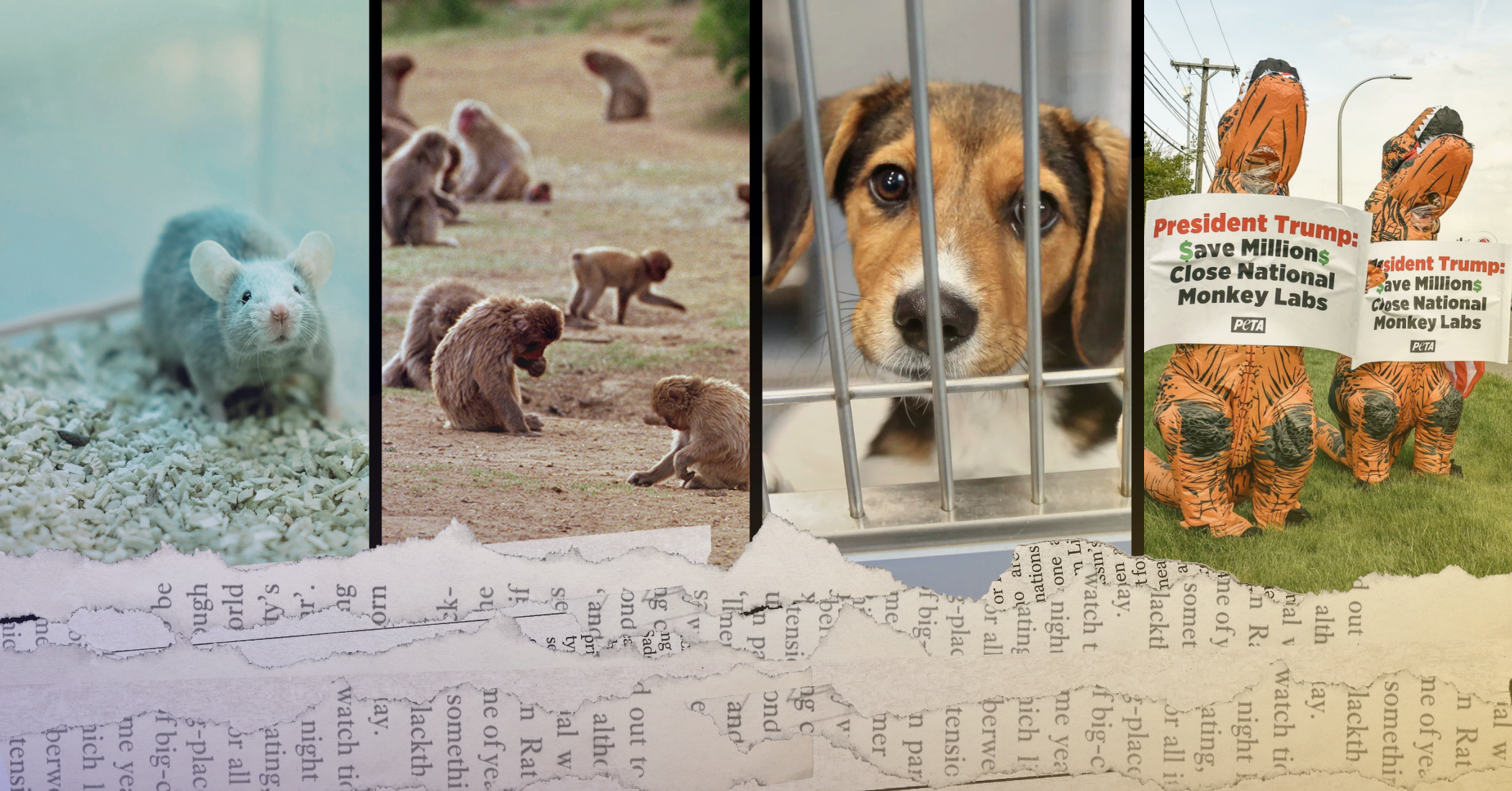
Here’s a roundup of the latest, biggest news stories related to animal research—all the recent media coverage you need to know right now to be the most effective activist for animals in labs.
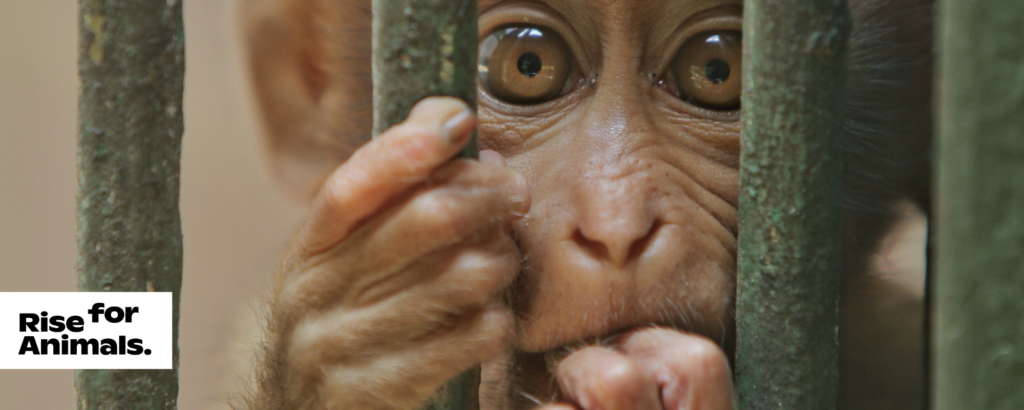
Charles River Tightens Its Grip on the Monkey Trade
Lindsey Soffes, Rise for Animals, 6/24/2026
The world’s largest supplier of animals for biomedical research has expanded.
Just months after the U.S. quietly closed its investigation into Charles River Laboratories’ suspected trafficking of wild, endangered monkeys into the U.S., the company has bought part of the very supply chain in question.
Their purchase of an Asian monkey supplier represents a brazen move to consolidate power, avoid accountability, prevent future scrutiny, and perpetuate the import of monkeys into U.S. labs. 📰 Full Story →
When the Cage Becomes the Killer
Rise for Animals, 6/25/2026
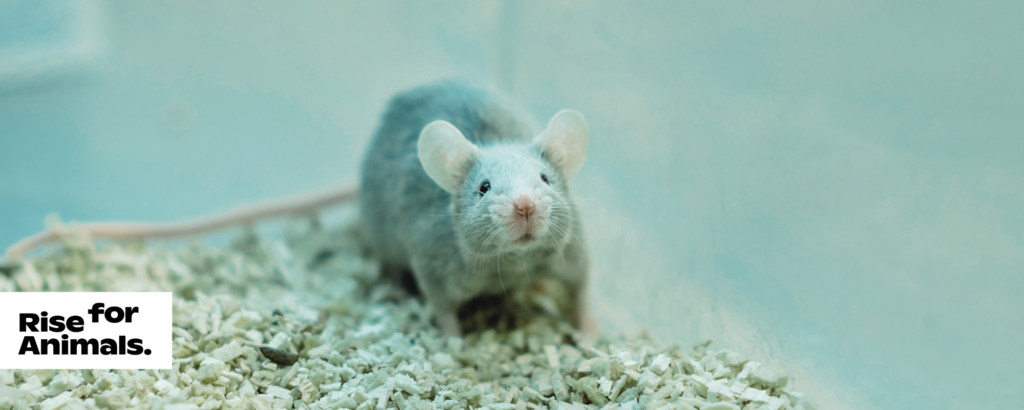
A laboratory cage is a supposedly controlled environment. But for animals held at the University of Notre Dame, it became a drowning chamber.
We uncovered records that show mice drowned after their cages flooded again and again—at least 96 times—between February and August 2023. 📰 Full Story →

USDA issues warning to Creighton University over animal testing violation
Andrew Hood, First Alert 6, 6/18/2026
“The USDA has issued an official warning to Creighton University after an animal welfare group accused researchers there of violating federal law. A First Alert 6 investigation turned up a report issued in January that says staff found a gate separating two male rabbits in their cage was open because the gate hadn’t been closed properly. The report says both males ended up in the same side of the cage, and one was later found with severe injuries. Staff ultimately ended up euthanizing the rabbit, according to the report.” 📰 Full Story →
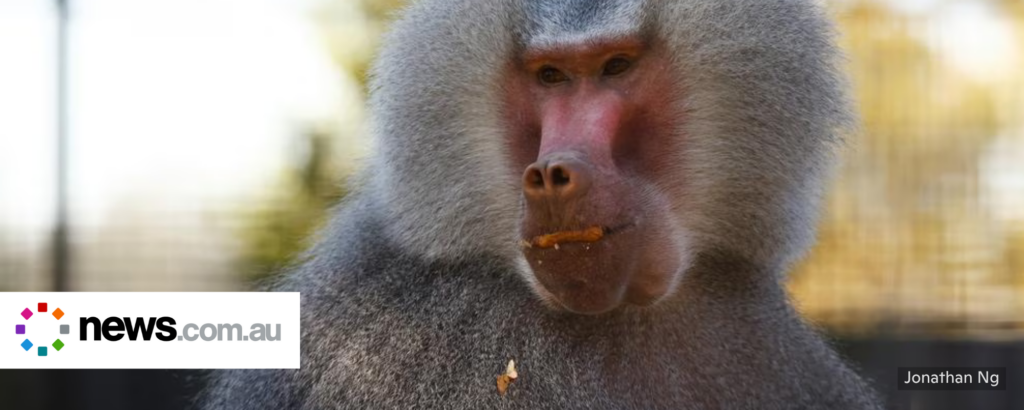
Secretive baboon colony hidden in major Aussie city sparks scrutiny over animal research
Robert White, news.com.au, 6/19/2026
“For decades, a government-funded colony of more than 160 baboons has lived, bred and died on Sydney’s outskirts, hidden in plain sight from the taxpayers who fund every single day of their captivity. The Australian National Baboon Colony at Wallacia, in Sydney’s west, houses more than 160 baboons bred and used for medical research under the oversight of Sydney Local Health District.”
“The existence of the heavily secured facility is largely unknown to the public, despite decades of operation and ongoing taxpayer funding. Now, whistleblower testimony, internal medical records obtained through parliament and renewed criticism from animal welfare advocates have reignited debate over whether Australia should continue using primates in medical experimentation. Animal Justice Party MP Emma Hurst said documents obtained through parliamentary orders – and seen by news.com.au – detailed at least 24 baboon deaths between 2021 and 2025, including animals euthanised due to lymphoma, weight loss, breeding suitability and participation in medical studies . . . . The records include references to lymphoma, seizures, paralysis, skin conditions, stillbirths, hypertension studies during pregnancy and animals euthanised as part of diabetes and transplant research programs. . . . Medical notes also reference stillborn infants, progressive weight loss, animals described as ‘withdrawn’ and ‘isolating’, and multiple euthanasia decisions linked to suspected lymphoma.” 📰 Full Story →
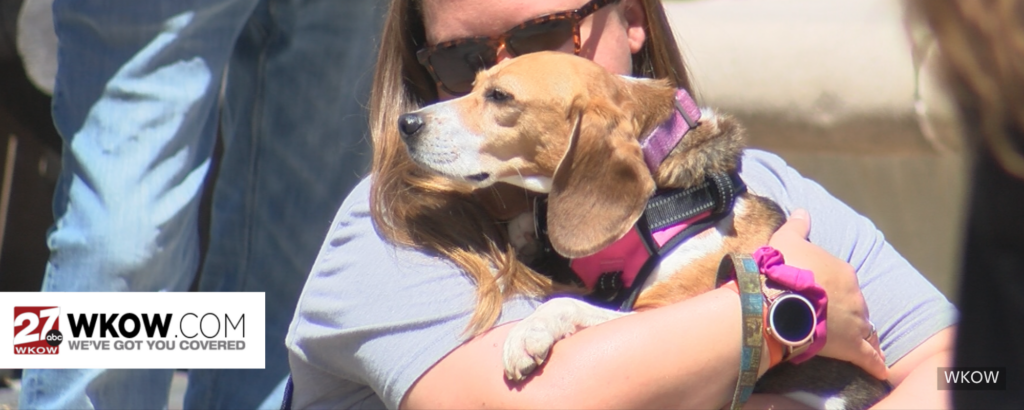
Dozens protest animal testing at UW-Madison
Nolan Wick, 27 WKOW, 6/20/2026
“Dozens gathered at Library Mall on UW-Madison’s campus . . . to protest the university’s testing on beagles.”
“Protesters told 27 News they want to keep the ball rolling after Ridglan Farms finalized plans to donate and sell its remaining 475 dogs and close. . . . . [one protester] said she wants to use that momentum to force UW-Madison to stop animal testing.” 📰 Full Story →
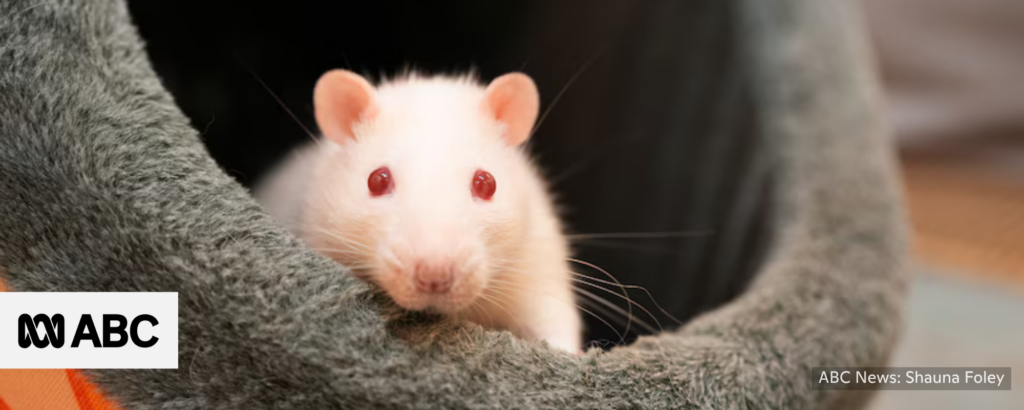
Adoption centre dedicated to rehoming small lab animals launches on NSW Central Coast
Sarah Forster & Shauna Foley, ABC, 6/20/2026
“An animal rehoming facility dedicated to rabbits, rats, mice, and guinea pigs used in scientific research has opened on the NSW Central Coast. . . . ‘This is the first facility of its kind that is offering rehoming services purely for small animals from research facilities,’ [Founder Paula] Wallace said. ‘They come from a very wide range of research settings … from human and animal disease research, but also product testing….’”
“In NSW, organisations are only required to report on the fate of dogs and cats used in research, so it is unclear how many smaller animals are euthanased [sic].”
“‘People often refer to rats as being the dogs of the rodent world because they do have very similar characteristics,’ she said. ‘Having spent a lot of time with these rats over the last nine years, I can tell you that I believe that their ability to mirror human emotions is, I think, almost equivalent with a dog or a cat.’” 📰 Full Story →
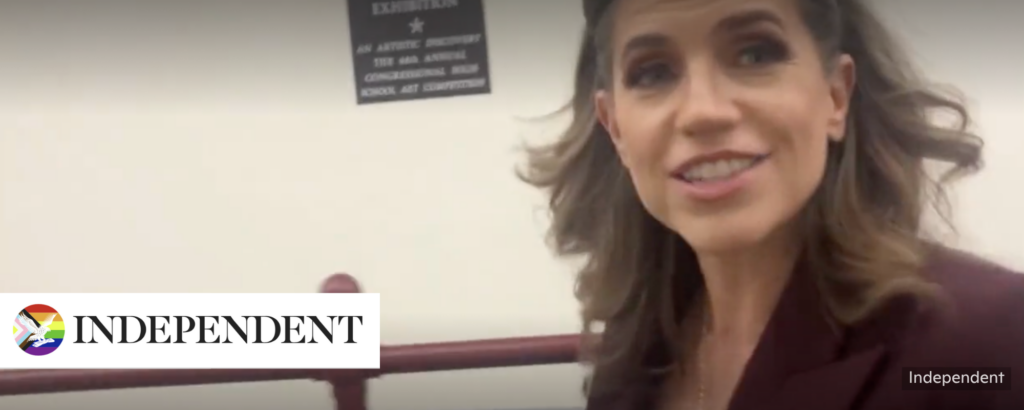
Nancy Mace mocked online after posting about ‘trans’ mice in research
Isabel Keane, The Independent, 6/21/2026
“South Carolina Rep. Nancy Mace is facing an onslaught of mockery after unveiling a bill to halt the supposed federal funding of ‘transgender mice.’ Mace, 48, recently announced the “TRANS MICE Act” on X, writing, ‘Animals should not be used for radical transgender experiments. This is not science. This is ideological cruelty paid for by the American taxpayers.’ Her post included an image of a mouse touching a human hand and the words: ‘NO TRANS MICE.’ ‘Our TRANS MICE Act ends it. No federal funds may be used to conduct, support, or fund research aimed at altering an animal’s biological sex,’ Mace wrote. . . . However, her post was quickly amended with a community note suggesting she misunderstood the research surrounding ‘trans mice,’ which refers to transgenic mice – not transgender mice. . . . However, Mace pushed back on the fact check, insisting that she wasn’t talking about transgenic mice but ‘federally funded transgender-related experiments on animals.’”
“‘This post is not about transgenic mice. It is about federally funded transgender-related experiments on animals,’ she wrote. ‘The bill is called the Transgender Research on Animals Now Stops and Money for Ideological Cruelty Eliminated Act, also known as the TRANS MICE Act.’” 📰 Full Story →
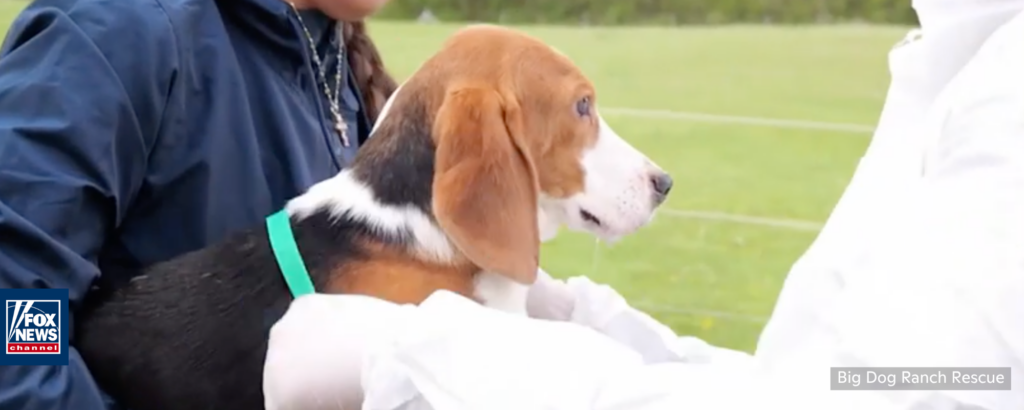
Ridglan Farms rescue beagles find new life helping veterans overcome war trauma with Paws of War
Taylor Penley, Fox News, 6/21/2026
“[Robert] Misseri’s organization [Paws of War] helps train and place shelter dogs to assist U.S. military veterans suffering from the emotional effects of war. He told Fox News that the group took 10 [Ridglan] beagles into their care upon their release.”
“Director of Adoptions Jodie Cohen described how the group helps the ‘traumatized little souls,’ from interviewing veterans and first responders to find good matches for the dogs, to teaching the dogs how to perform basic skills. . . . The organization says the program is designed to help both the animals and the people adopting them recover from trauma and build confidence together. ‘The lives are being changed on both ends of the leash, and they really are,’ Misseri said.” 📰 Full Story →
Animal rights groups cautiously optimistic on EU roadmap to end ‘cruel toxicity tests’
Sabine Waldeck, Personal Care Insights, 6/22/2026
“The cosmetics industry’s push away from animal testing has reached a pivotal moment after the European Commission (EC) launched a roadmap to phase out animal tests in chemical safety assessments earlier this month. The plan marks the EC’s first official commitment to replacing these testing methods with non-animal science. The roadmap aims to replace animal tests for chemicals used in cosmetics and other products with alternative methods, without sacrificing safety standards for consumers or the environment. . . . ‘It promises to coordinate and steer pivotal groups and institutions across the EU, as well as create new organizational structures, all of which will be vital for progress to be made in the transition away from using animals in cruel regulatory toxicity tests,’….”
“However, roadmaps do not carry legal force, leading to lingering reservations about whether the EC will keep its promises. Additionally, legal and monetary gaps in the outline leave open-ended questions on funding and regulatory action. And yet, animal rights organizations are optimistic. ‘We know that the roadmap is not itself legally binding, but it should serve to drive the amendment and evolution of the EU’s regulatory framework. We know there is a lot of uncertainty around whether or not the key European chemicals regulation, REACH (Registration, Evaluation, Authorization and Restriction of Chemicals), will be revised, but we are encouraged by changes already made or underway,’ says [Dr. Emma Grange, director of science and regulatory affairs at Cruelty Free International].” 📰 Full Story →

Northumbria researchers provide economic evidence base for shift away from animal testing
Northumbria University Newcastle, 6/23/2026
“Researchers at Northumbria University have produced new economic evidence demonstrating the significant and growing commercial value of alternatives to animal testing in the UK, with findings already featuring in parliamentary debate on the issue. The study, commissioned by cosmetics company Lush and conducted by the Common Sense Policy Group, based in Northumbria’s School of Communities and Education, analysed data from 75 UK firms operating in the Non-Animal New Approach Methodologies (NAMs) sector between 2021 and 2024. It found that sector turnover grew from £947 million to more than £1.2 billion over the period, with employment rising by nearly 13% per year. The research projects that, under existing growth rates, the NAMs sector could reach £2.12 billion in turnover and employ more than 12,000 people by 2030. The paper . . . . also estimates that an additional £100 million in public investment could generate £248 million in tax returns . . . within seven years.”
“The findings have attracted attention at Westminster. . . . Irene Campbell, Chair of the All-Party Parliamentary Group on Phasing Out Animal Experiments in Medical Research, cited the research as providing the economic evidence base to support the ethical argument for transitioning away from animal testing.”
“Lead author, Professor Elliot Johnson said: . . . ‘What this research shows is that the ethical case and the economic case for moving away from animal testing point in the same direction. We hope this gives policymakers, funders and industry the up-to-date evidence they need to accelerate the transition with confidence.’” 📰 Full Story →
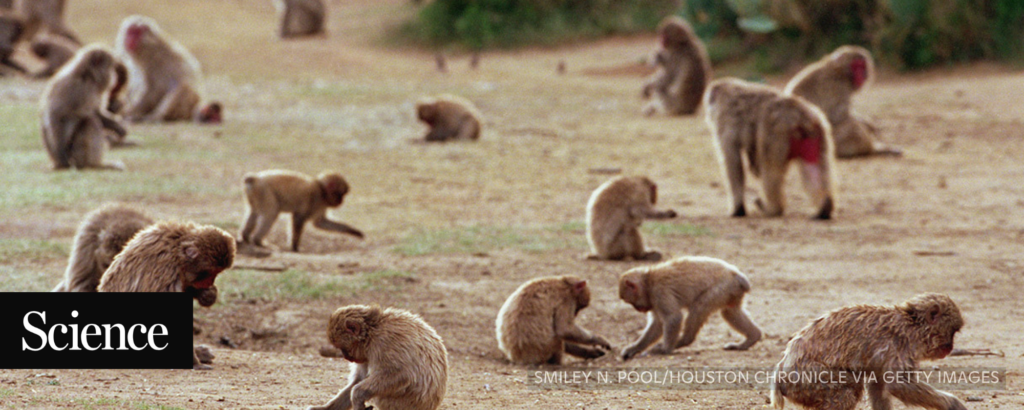
After backlash, CDC revises plan to retire research monkeys to Texas sanctuary
David Grimm, Science, 6/22/2026
“The U.S. Centers for Disease Control and Prevention (CDC) has seemingly backtracked on a plan to send its research monkeys to a Texas sanctuary. In May, the agency announced it would retire up to 162 rhesus and pigtail macaques to Born Free USA, a 70-hectare refuge near the Mexican border. But after an uproar from critics in the biomedical community, who claimed the plan was rushed and could endanger the animals, the agency posted a new ‘contract opportunity’ over the weekend that opens the door for more facilities to apply.”
“In late May, all seven National Primate Research Centers, along with more than 20 other biomedical organizations, sent a letter to CDC protesting the plan. A few days later, Alpha Genesis, one of the largest suppliers of research monkeys in the United States, filed a complaint with the U.S. Government Accountability Office, alleging CDC didn’t have a legal justification to exclude other interested parties. Shortly thereafter, CDC rescinded the plan. . . . Now, CDC has announced an ‘open-market’ solicitation for facilities willing to host the monkeys. The document makes no mention of Born Free, but critics say the strictures it outlines effectively eliminate anyone else from qualifying.” 📰 Full Story →
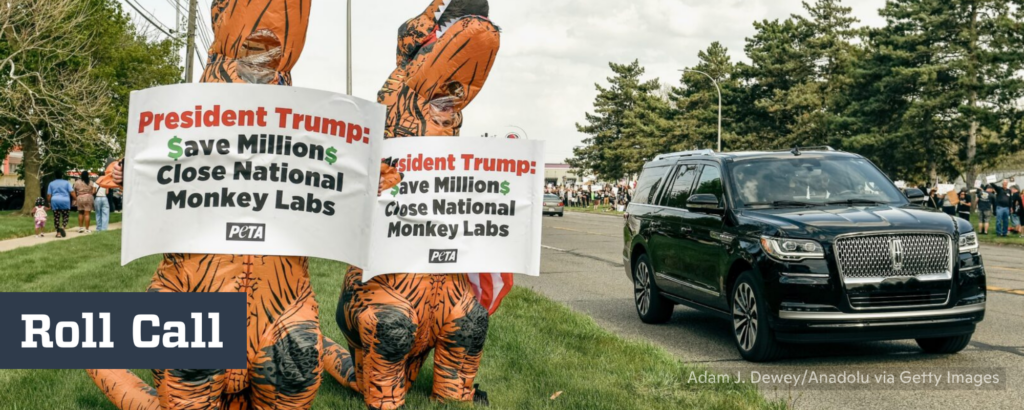
RFK Jr.’s moves on animal testing spur Capitol Hill action
Ariel Cohen, Roll Call, 6/24/2026
“The debate [around animal experimentation] has created some unlikely bedfellows. Sen. Cory Booker, D-N.J., a vegan and animal rights activist, is typically a fierce critic of the Trump administration and Kennedy’s HHS. But he applauds Kennedy’s animal-rights policy push. ‘I’m so happy that in some, in a narrow way, that the Trump administration is making progress on this,’ Booker said Tuesday, calling ending animal testing ‘one of his favorite topics.’ ‘It’s just a win, win, win, win, win across the board,’ Booker said of ending animal testing.”
“‘Many people in this administration, including Secretary Kennedy, came in with a distrust of a lot of the status quo,’ said Kathy Guillermo, senior vice president of People for the Ethical Treatment of Animals. ‘And when these people came into their positions they started off looking very critically at what was going on and were ready to make change. In previous administrations we did not see that.’”
“The debate is bleeding into this year’s House and Senate spending legislation. The House Appropriations fiscal 2027 Labor-HHS-Education bill, which currently awaits floor action, specifies that the National Institutes of Health should look into alternatives to animal testing, and requests that the NIH update in the fiscal 2028 congressional justification on actions it is taking to strengthen enforcement of alternatives to animal testing. Congress also asks the NIH to ensure peer reviewers have adequate resources to review nonanimal methods. But the report also recognizes the ‘essential role’ of nonhuman primates in medical research and encourages the NIH to continue awarding funding to projects that use nonhuman primates and animal models.”
“The Senate’s fiscal 2027 bill is still being written. When asked about funding for animal testing in the measure, the Labor-HHS-Education Appropriations Subcommittee’s top Republican, Shelley Moore Capito of West Virginia, called animal testing a ‘big topic,’ but said she was unsure how things would shake out.” 📰 Full Story →
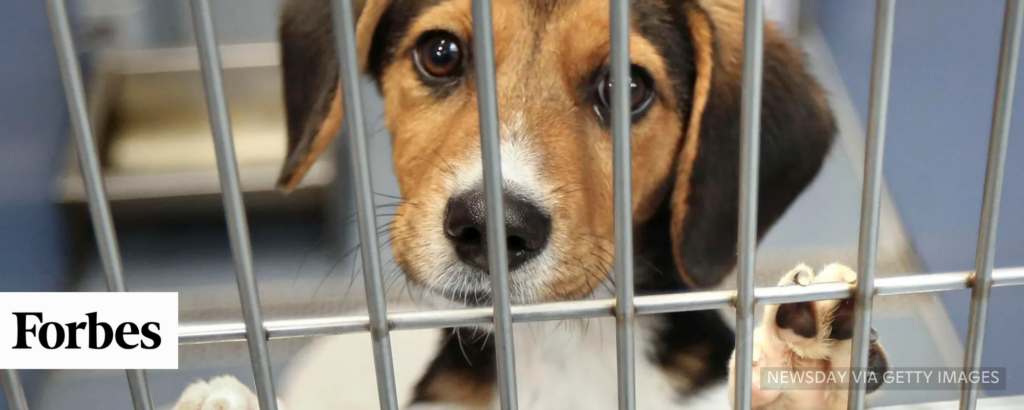
Beagles, Lab Animals And The Moral Costs Of Medical Progress
Rebecca Coffey, Forbes, 6/24/2026
“In The Hidden Lives of Lab Animals: A Vet’s Vision for a More Human Future, animal welfare scholar and lifelong laboratory veterinarian Larry Carbone refers to beagles as ‘the poster-pups of animal research battles.’ . . . Of course, dogs are only one species among many. Cats, horses, pythons, guinea pigs, rabbits, pigs, sheep, chickens, chimpanzees, rats, mice, rhesus monkeys, frogs, fruit flies, worms, and even fleas have been used in medical research. And that’s the short list. The ethical dilemma facing scientists and policymakers is that such research has saved countless human lives. Where should the balance lie?”
“The Hidden Lives of Lab Animals takes an autobiographical approach to that question. Carbone recounts episodes from his student days and his forty-year professional career as he searches for a balance between scientific necessity and compassion. . . . He concludes with a series of practical recommendations, among them perhaps my favorite: ‘Unmask invisible pain.’” 📰 Full Story →
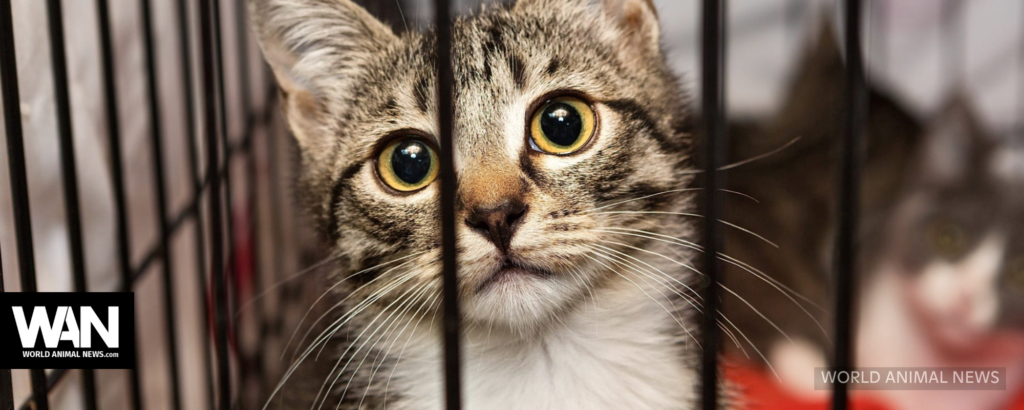
Kitten Experiments Moved To Secretive NIH Lab After USDA Lab Shut Down – Take Action!
World Animal News, 6/24/2026
“A startling new investigation by government watchdog White Coat Waste (WCW) has uncovered that cruel kitten experiments did not end after a U.S. Department of Agriculture (USDA) kitten testing program was shut down following widespread public outrage but were instead moved into National Institutes of Health (NIH) laboratories. According to records obtained by WCW through Freedom of Information Act requests, kitten experiments previously conducted at the shuttered USDA facility were transferred into an NIH laboratory in Bethesda, Maryland, where documents show they remain active through at least late 2026.”
“In 2019, public outrage erupted after WCW exposed a horrific USDA kitten testing program where thousands of cats were bred and subjected to painful experiments before being killed. At the USDA’s Beltsville facility, investigators uncovered disturbing toxoplasmosis parasite experiments that included kittens being fed cat and dog meat obtained from overseas markets. WCW’s disturbing findings sparked bipartisan backlash and ultimately led to the Trump administration terminating the program. . . . Many animal advocates believed the heartbreaking chapter had finally come to an end. But newly uncovered records tell a very different story. Documents reviewed by WCW show that the NIH, in collaboration with the USDA’s controversial cat experimenter, is using kittens and cats in studies where they are fed infected mouse brains, confined, inoculated, and subjected to biological sample collection.”
“Perhaps most disturbing are records indicating efforts to erase traces of the animals’ laboratory histories after studies concluded. One document uncovered by WCW stated that microchips would be permanently reassigned if cats were adopted, ‘ensuring no record’ that the cats had participated in laboratory testing. The language has raised new concerns among advocates who say the public deserves full transparency about what animals endure inside taxpayer-funded laboratories.” 📰 Full Story →
Help spread the word. Share this news compilation on Facebook, X, or Bluesky.