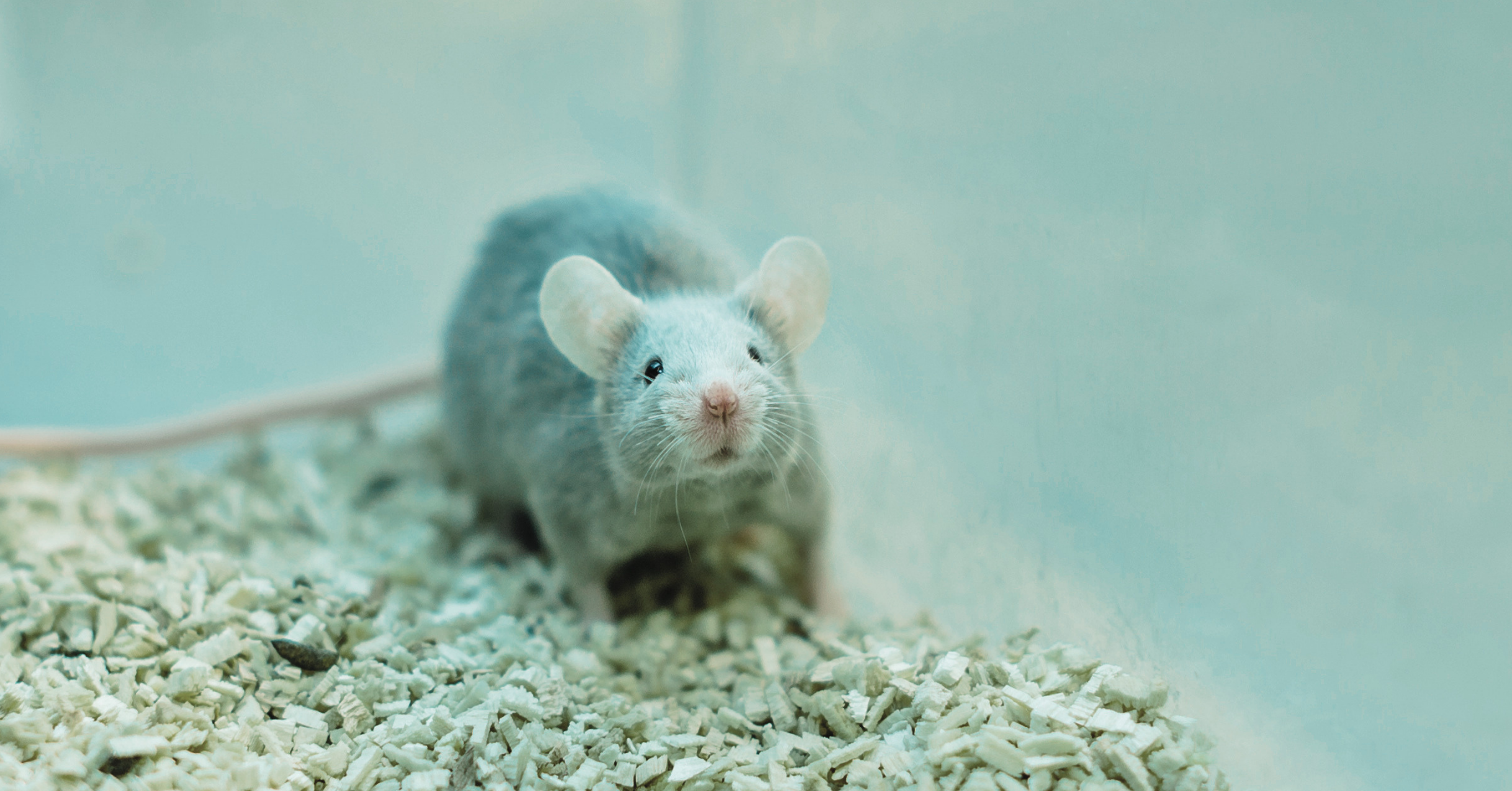
A laboratory cage is a supposedly controlled environment.
But for animals held at the University of Notre Dame, it became a drowning chamber.
We uncovered records that show mice drowned after their cages flooded again and again over the course of several months. Their deaths weren’t the result of one isolated accident—they were part of a pattern.
Between February and August 2023, Notre Dame reported 96 cage-flooding incidents to the National Institutes of Health’s (NIH) Office of Laboratory Animal Welfare (OLAW).

Approximately 22 mice died. They drowned inside the cages they couldn’t escape.
96 Cage Floods, 22 Drownings
The first reported deaths occurred in February of 2023.
On February 15th, vivarium veterinary staff found five mice dead in one flooded cage during a routine health check. That same day, staff found four more mice dead in another flooded cage.
Two days later, one additional mouse was found dead in a flooded cage.
In just two days and three incidents, ten mice had drowned.
Notre Dame reported the deaths to OLAW, explaining that it had “learned of the drowning deaths of ten mice occurring in the past two days.”
But those ten mice weren’t the last. Over the following months, more cages flooded. More mice died.
One mouse died after another cage flood on February 25th. Four more mice were found dead in a flooded cage on May 11th. Another mouse was found dead on May 21st. Three mice were found dead in a flooded cage on August 7th. Two more mice were found dead on August 14th, and a third was found moribund and euthanized by veterinary staff.
The Alarms Didn’t Protect Them
The record shows that Notre Dame had pressure-flow alarms in place to identify water-flow problems, but those alarms didn’t alert veterinary staff in any of the initial cases.
Only after mice were found dead did the university’s Attending Veterinarian request that the alarm threshold be lowered so staff could identify possible flooding earlier.
The animal research industry wants the public to believe that animals in laboratories are protected by layers of oversight: trained staff, veterinary care, approved protocols, monitoring systems, committees, and federal reporting requirements.
But in this case—like too many others to count—the animals illegally suffered and died.
Notre Dame Found Problem After Problem
Notre Dame’s investigation pointed to a series of infrastructure failures and facility problems.
The university found that many cage-flooding incidents involved older water valves. Some lacked dates of manufacture, indicating they were likely at least a decade old. The manufacturer reportedly described the valves’ anticipated lifespan as seven to ten years.

In June 2023, Notre Dame had 4,189 mouse cages in circulation. The university planned to refurbish 2,500 valves to replace those older than at least seven years.
But old valves weren’t the only suspected problem.
The record also describes possible contamination in the rack water system. A manufacturer’s report indicated that previous valve failures were likely attributable to debris contamination. Notre Dame identified possible routes of contamination including cage wash systems, water supply lines, and the cage side of the valves.
Later, a faulty bedding-filling station was identified as a potential contributor. The station had reportedly discharged excess bedding, and the vacuum meant to control dust wasn’t operational. An external filter may have spread dust across the room and nearby areas.
In other words, the problem wasn’t simply one broken part.
The problem was old equipment. Failed alarms. Possible contamination. Dust. Bedding. Water systems. Movement of cages between vivaria. A facility operating in ways that left imprisoned animals vulnerable to unintentional harm and death.
This Is What Oversight Looks Like
Notre Dame did what the laboratory oversight system expects institutions to do after animals suffer or die by accident—it investigated itself.
It held meetings. It reviewed data. It contacted manufacturers. It adjusted alarm thresholds. It refurbished valves. It changed some facility practices.
Then OLAW accepted the response.
In March 2024, OLAW sent Notre Dame a letter closing the case. The agency wrote that the university’s handling of the matter was “consistent with the philosophy of institutional self-regulation,” said the actions taken were “appropriate,” and even stated that Notre Dame was “to be commended” for its efforts.

But nothing the university did to “address this insidious problem” could undo the harms already done. Cages had flooded. Alarms had failed. Animals had died and there was no bringing them back.
When “Controlled” Conditions Kill
To Notre Dame, the 96 cage-flooding incidents and 22 animal deaths were a facilities issue.
To OLAW, it was “Case A3093-F.”
To the oversight system, it was yet another problem to be reviewed, documented, corrected, and closed.
But to the mice, it was their lives and their deaths.
This record shows what “controlled” can mean for animals trapped inside the system.
For these mice, harm and death didn’t come from an experiment—it rather came from the infrastructure of laboratory confinement itself.
The mice weren’t free to move away from the rising water. They weren’t able to seek higher ground. They weren’t able to escape the cage that became the site of their deaths.
Because—like all animals in labs, past and present—the mice were entirely dependent on the very system built to hurt them.
Across the animal research industry, suffering isn’t treated as a reason to end the use of animals in labs. It’s treated as a problem to be managed so that the system can continue to exploit animals by the millions.
Your Call to Action: Animals in laboratories don’t need better cages, better valves, or better paperwork after they suffer and die. They need freedom from the system that imprisons them in the first place.
Urge your legislators to support the SPARE Act and help end federally funded animal research.