It’s National Justice for Animals Week—and, right on cue, the animal research industry wants you to believe it’s doing better.
Not because it’s ending animal experimentation. But because it has identified a new, less sympathetic victim.
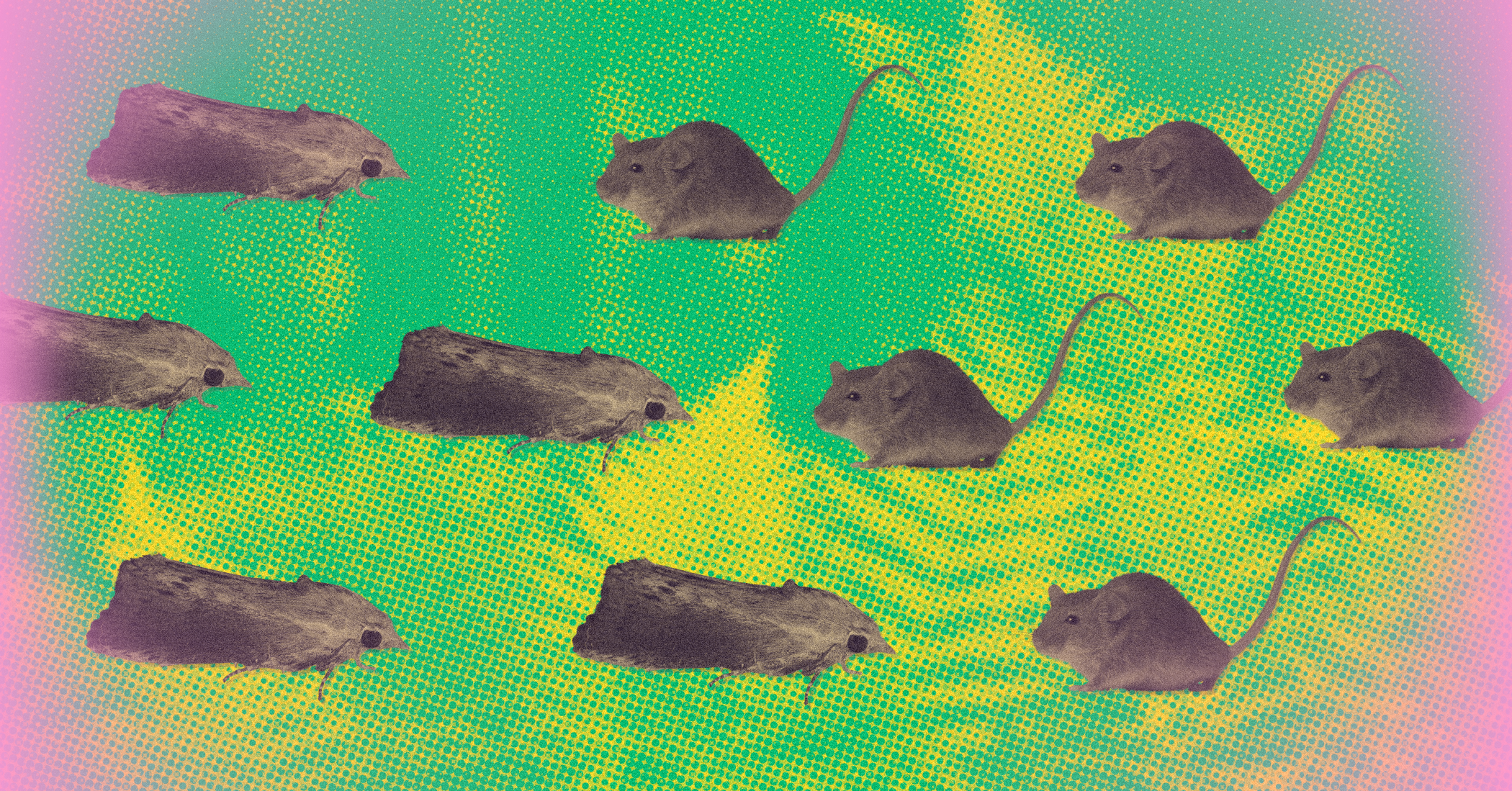
Headlines are celebrating the genetically-engineered wax moth (Galleria mellonella) as a promising “replacement” for mice in some experiments.
Researchers boast that they have performed gene-editing in wax moths for the first time, “opening avenues” to harm them in place of rodents in some types of research. Wax moths, they note, have long been of interest, though the “lack of genetic tools” limited their victimization—until now.
This isn’t a move toward justice. It’s a new frontier of exploitation.
Swapping one animal for another is neither meaningful innovation nor reform—it’s industry rebranding.
The industry has relied on this maneuver before—and it’s counting on it again as public pressure mounts, regulators threaten reductions in animal use, and the majority of the U.S. public calls for a shift away from animal experimentation.
When faced with scrutiny, the industry does not dismantle its machinery or release its victims.
It retools, and ushers in new ones.
Career laboratory veterinarian Larry Carbone recounts that, in the late 1980s, animal research “looked just about obsolete in modern medicine,” as “molecular biologists and some high-tech fields were moving away from vertebrate animals….” But, then, researchers “develop[ed] the techniques to add or remove genes from mice, and the apparent steady decline of animals in labs reversed, with transgenic genetically engineered mice leading the way.”
The numbers of mice trapped in labs “went through the roof throughout the 1990s,” and, today, “uncounted millions of mice with designer genes fill laboratories” all around the world.
Though “[t]hese new genetic technologies hold promise for better developing nonanimal lab tests,” writes Carbone, they “somehow keep creating new jobs for the animals at the same time….”
The pattern is unmistakable.
Now, as calls grow louder to reduce animal experimentation, the industry is once again invoking “innovation”—not to move beyond animal use, but to create “yet more program animals to develop more and more illnesses in the lab.”
Enter: the wax moth. The industry is calling its commodification, manipulation, and exploitation of this animal progress.

Let’s examine that—using the industry’s own words:
➔ Claim: Wax moths are good “models” for humans. Researchers promote that wax moths “are susceptible to similar bacteria and fungi infections as humans” and that “their cells also respond similarly.”
➔ Admission: Due to fundamental species-specific differences, wax moths “cannot fully replicate how infections behave”in humans (because, for example, moths do not produce antibodies, “which play a major role”), and they “handle medicines differently” than humans (meaning that a “treatment that appears effective in a moth may not work the same way in the human body”). So, wax moths, just like all other victims of animal experimentation, are being marketed as comparable enough to experiment on-–just not comparable enough to rely on.➔ Claim: Wax moths may replace some mammals. Researchers promote genetically-engineered wax moths as capable of “reduc[ing] the need for smaller mammals in certain areas of research.”
➔ Admission: Because of the same fundamental differences that prevent moths from serving as human “models,” moth experiments will occur primarily before—not in place of—“later [] studies in vertebrate animals.” Researchers say that engineered wax moths will be used to “bridge[] the gap between Petri-dish experiments and rodent studies,” between “cell culture and animal testing.” In other words, it seems moths will be used as additions, rather than “replacements.”➔ Claim: Wax moths are not really “animals.” Some commentators suggest that replacing mice with moths could “spare more than 10,000 animals annually”—yet moths themselves do not appear to count in this calculation.
➔ Admission: The industry knows moths are animals, and admits it—at least when scientifically convenient: researchers characterize wax moths “as a controllable whole-animal system” and an “in vivo [living body] model.”➔ Claim: Wax moths are an “an ethical solution to the controversial issue of using rodents in research.”
➔ Admission: “Ethics” has nothing at all to do with this new foray—convenience does. Not only is widespread public sympathy for insects lacking, but researchers share that the appeal of wax moths also lies in their being “cheap, fast-growing insect[s],” whose exploitation is “cost-effective” and free from regulatory oversight (researchers flat out denote that the exploitation of insects avoids many of the regulatory requirements that accompany the use of mammals).
Replacing one sentient victim with another does not challenge the dominance of animal experimentation—or reduce the harm it causes.
If harming one dog for another is unjust, then harming a moth in place of a mouse is too.

In the realm of human research, the Belmont Report’s principle of justice forbids exploiting the vulnerable because they are convenient. Yet, convenience (and institutional self-preservation) is precisely what defines the wax moth’s appeal to researchers: They are small. They are “cheap.” The law doesn’t recognize them. The public doesn’t rally around them.
Justice that depends on someone “lower” to absorb the violence isn’t justice at all—it’s discrimination dressed up as reform.
Swapping victims allows the industry to appear responsive while preserving its infrastructure, funding streams, and experimental pipeline.
It keeps the system intact while offering the public the illusion of progress—reframing expansion as reduction, addition as replacement, and exploitation as ethics.
But justice is not species-specific. It does not hinge on appearance, popularity, or public sentiment.
Justice asks a deeper question: is it right to use sentient beings as tools for others’ ends?
And, if the answer is no for humans, it cannot be yes for mice—and it cannot be yes for moths.
Real justice would mean investing fully in non-animal, human-relevant research methods.
It would mean dismantling—not diversifying—the industry’s roster of animal victims.
And it would mean refusing to quiet controversy by identifying a body small enough, different enough, and unprotected enough to absorb the harm, so the machine of animal experimentation can continue undisturbed.
Justice is not a species swap.
Justice is ending the human exploitation of other species—every one of them.