Content Warning: This article contains graphic photographs of dogs used, killed, and dissected in laboratory experiments. We’re sharing these images because they provide rare documentation of what really happens to animals in labs.
When hundreds of beagles were rescued from Ridglan Farms this spring, the world watched. Videos of dogs being carried to safety spread across social media. News outlets covered the dogs’ release. People lined up to adopt them. Politicians celebrated their freedom.
But for every dog freed from Ridglan, countless others were sold into labs. They never made it out.
Some Dogs Made It Out Alive. Others Didn’t.
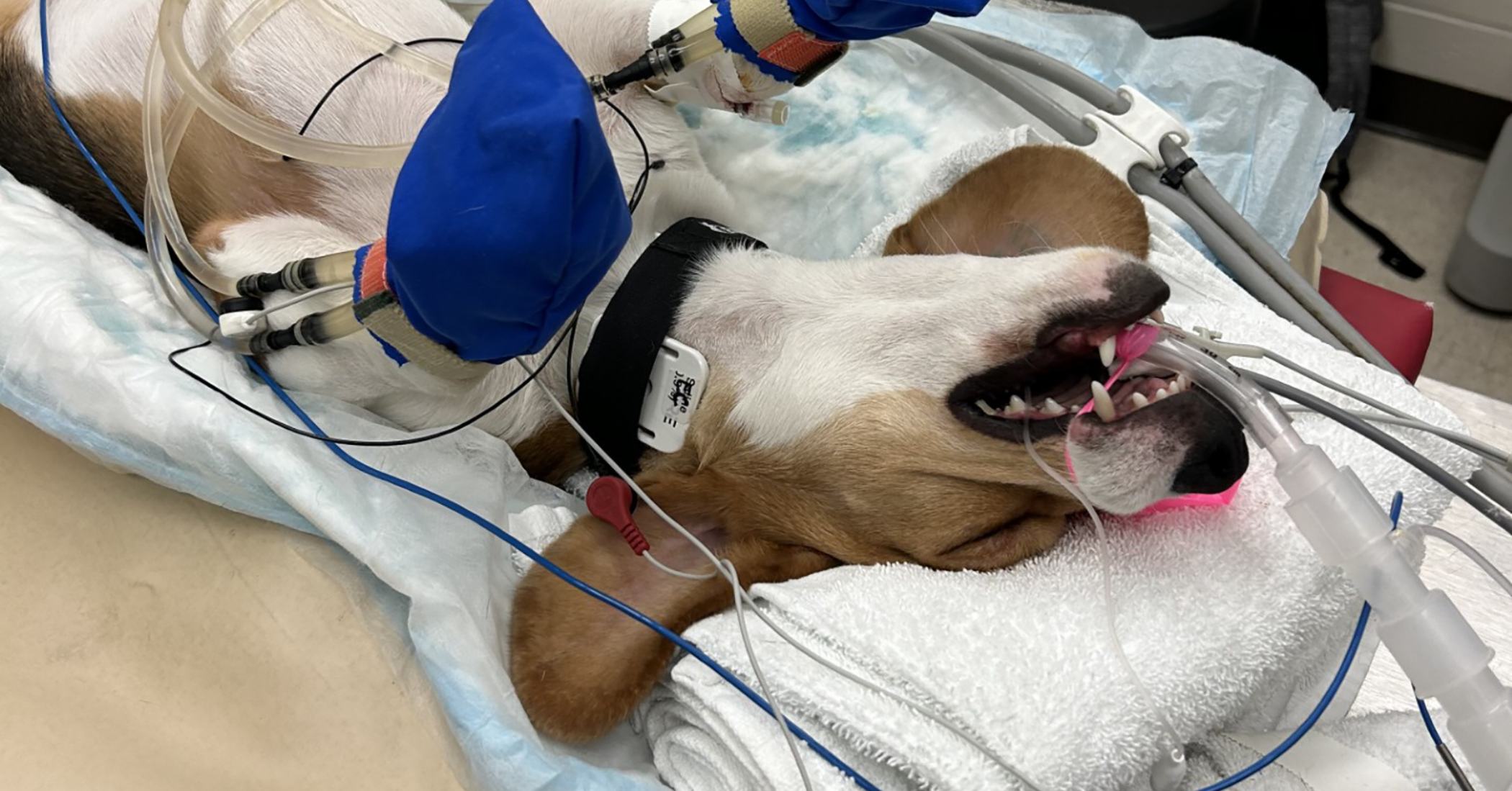
As seen on Fox 6 News Milwaukee, we obtained photographs, veterinary records, and research protocols that appear to trace individual dogs bred and sold by Ridglan Farms through University of Wisconsin-Madison (UW) experiments—including one that ended in dogs’ death and dissection.

Between 2022 and 2025, Ridglan sold more than 6,800 dogs to research institutions across the United States. Some were puppies only weeks old. As the nation’s second-largest supplier of dogs for laboratory use, Ridglan shipped animals to research facilities in California, Texas, New York, Massachusetts, Pennsylvania, and beyond. Among Ridglan’s long list of customers is UW’s Veterinary School.
The records we obtained show that several Ridglan-bred beagles were purchased by UW and transported to the university in January 2023. Veterinary records identify the dogs by tattoo numbers—such as AJC-2, DZC-2, and ZYC-2—allowing some of the dogs’ movements through the research system to be tracked.

The records indicate some dogs were subjected to a non-terminal study and were later adopted out. But others were not so fortunate.

UW appears to have enrolled several Ridglan-bred dogs in a series of experiments that concluded just months later with their deaths.
One UW research protocol indicates these dogs were still under general anesthesia from what the records describe as an “unrelated surgical procedure” when they were transferred into another experiment. There, researchers injected methylene blue before killing them and “immediately” dissecting their bodies.

These graphic photos appear to document portions of these experiments.
They’re horrific to look at. But they’re important, rare evidence of what many animals in labs endure.

Ridglan Doesn’t Operate in Isolation
These photos document the awful fate of a few dogs. Unfortunately, their story is common.

Every year, millions of animals are imprisoned, used, and killed in labs across the United States.
Most will never be seen by the public.
Most will never be reported by the labs experimenting on them.
Most will never become the subject of news coverage, or experience people waiting in line to bring them home.
Most will be killed, disappearing into a system built to keep them out of sight.

The compassion people have shown for Ridglan’s rescued dogs shouldn’t end with the beagles who made it out. It should extend to the dogs who didn’t—and also to the mice, monkeys, cats, rabbits, and countless other animals still captive and exploited in labs today.

The story of Ridglan Farms isn’t just the story of one dog-breeding operation—it’s the story of the entire animal research industry.

Together, we can end this.
Your support helps free animals from torture in labs.
Donate now: