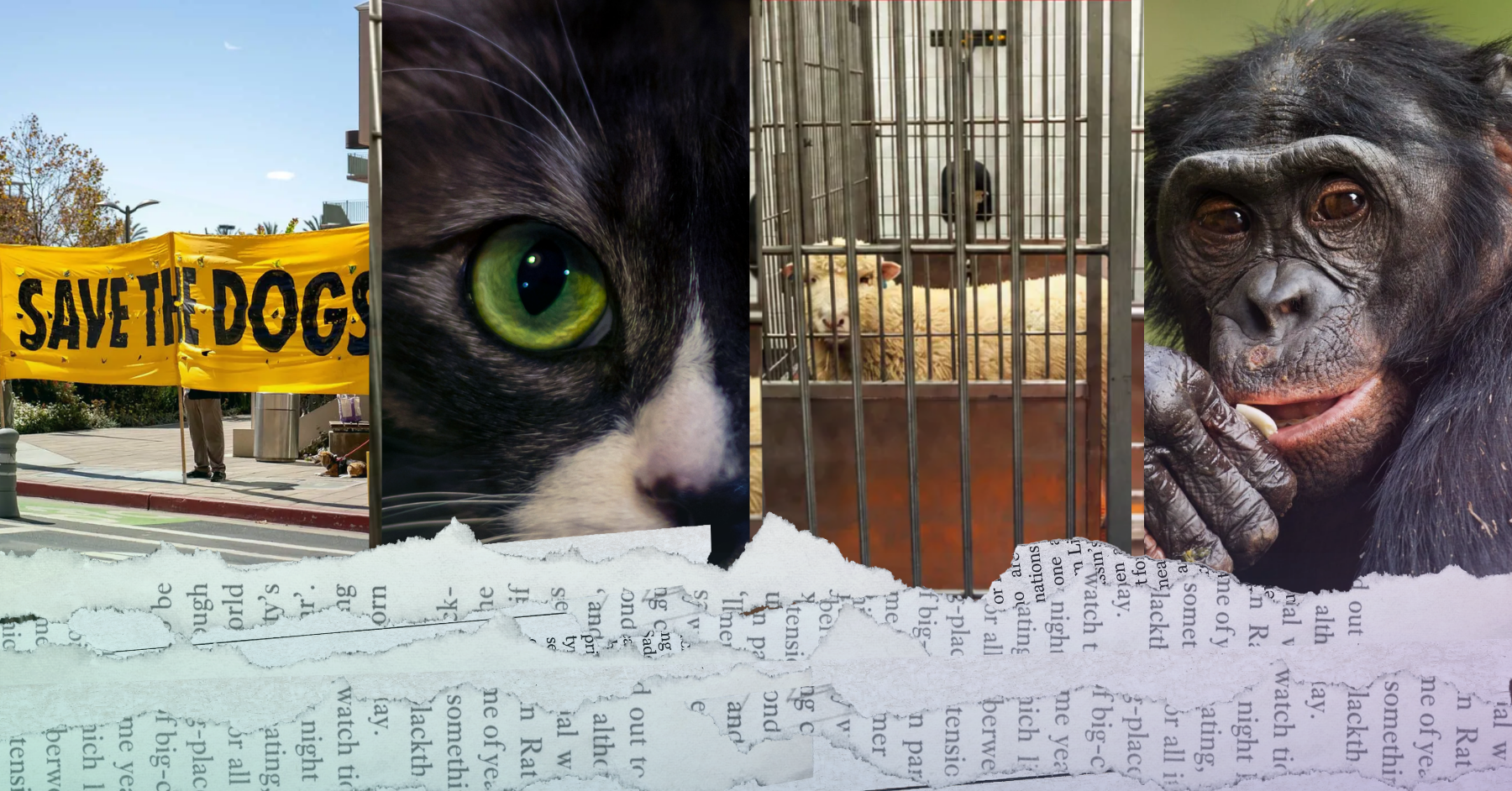
Here’s a roundup of the latest, biggest news stories related to animal research—all the recent media coverage you need to know right now to be the most effective activist for animals in labs.
FDA Wants to Drop “Animal” from Its Rules. Let’s Lock It In.
Lindsay Soffes, Rise for Animals, 9/29/2026
FDA is planning to take “animal” out of key drug-testing regulations. That’s progress! But animal tests remain permissible, industry practice may not change, the rule can still be withdrawn or reversed, and questions about the evaluation of NAMs remain. This is why we still need Congress to pass the FDA Modernization Act 3.0: 📰 Full Story →
⚠️ Take action: Tell your US Senators to pass the House-approved FDA Modernization Act 3.0 without amendment, so the bill can go directly to the President for signature. Send your letter here.
What If AI Treats Us Like We Treat Animals?
Lindsay Soffes, Rise for Animals, 10/1/2026
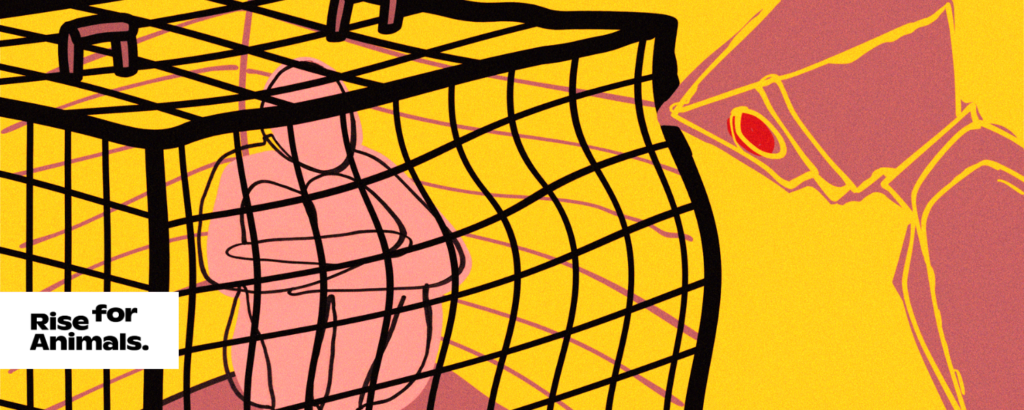
AI is learning from just about everything humans do—including how we treat animals. Could AI someday apply that same treatment to us? 📰 Full Story →
FDA Takes Another Step Away From Animal Testing
Alice Manners, Beauty Matter, 09/24/2026
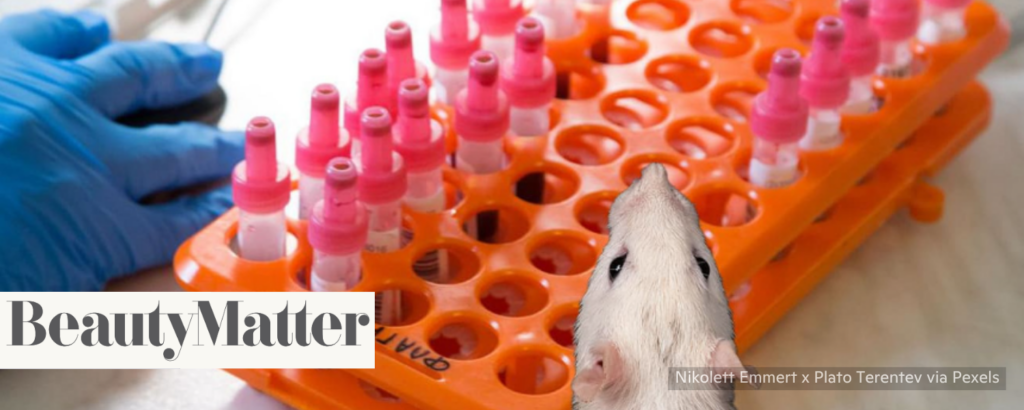
“The US Food and Drug Administration (FDA) is taking another step away from animal testing as the default in drug development, updating its regulations to explicitly recognize non-animal methods as acceptable options for generating safety evidence before products are tested in humans.”
“Cosmetics are not subject to an FDA requirement for animal testing, and the new rule does not change how cosmetics companies must substantiate product safety. But many of the technologies being developed as NAMs have applications across regulatory categories. As those methods accumulate validation data and regulatory precedent in pharmaceuticals, the infrastructure surrounding non-animal safety assessment becomes considerably more mature. For beauty companies, ingredient suppliers, testing laboratories, and technology developers working on alternatives, greater regulatory acceptance of NAMs in the more tightly regulated pharmaceutical sector could also help advance the validation and adoption of technologies with applications beyond drugs.” 📰 Full Story →
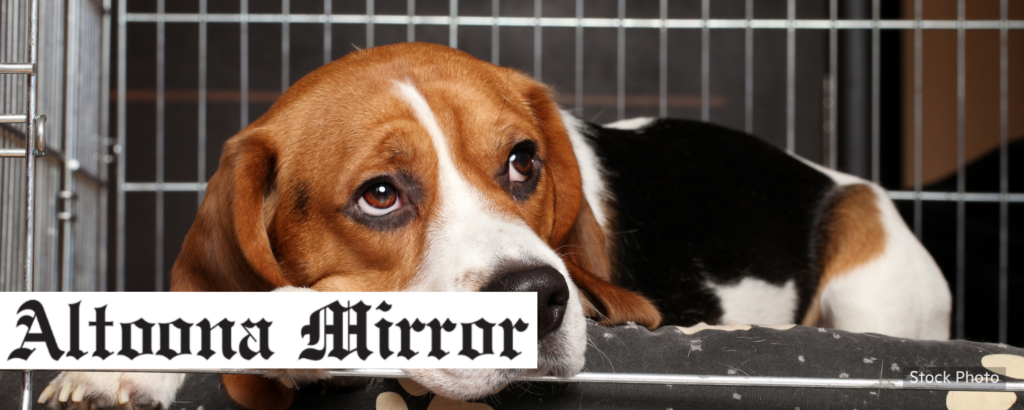
Beagle Bill would ban cosmetic testing
John Finnerty, Altoona Mirror, 09/25/2026
“The sale of cosmetics tested on dogs and cats would be banned in Pennsylvania under a Senate-passed bill amended by the House Judiciary Committee []. Senate Bill 381 would also mandate that dogs and cats used in lab testing be put up for adoption once they are no longer being used by the labs. The legislation, dubbed the Beagle Bill by lawmakers, was inspired by a 2022 case in which dozens of beagles were rescued from a Virginia lab whose operators were charged with violating federal animal welfare laws.”
“Animal rights groups say there are more than a dozen animal testing labs in Pennsylvania that use dogs and cats for experiments to assess the effects of drugs, pesticides, chemicals and other products. More than 3,000 dogs and cats in Pennsylvania were subjected to testing in research facilities, according to the U.S. Department of Agriculture.”
“ . . . the legislation would make Pennsylvania the 18th state to require that dogs used in lab testing be made available for adoption and the 12th state to ban the sale of cosmetics tested on dogs and cats. Labs conducting animal testing would also be barred from using state tax dollars to directly support research that involves testing that causes pain and distress to the animals while intentionally withholding anesthesia.” 📰 Full Story →

Animal testing of vet vaccines at lowest level in decade
MRCVSonline, 09/25/2026
“The Veterinary Medicines Directorate (VMD) has recorded the lowest level of animals used in vaccine quality control in a decade. The average number of animals needed to release a veterinary vaccine has reportedly dropped by 41 per cent in 2024, when compared to statistics from 2013. In new statistics, shared by Defra [], the VMD estimates that 17 animals were involved to release a batch of veterinary medicine in 2024. In 2013, this number was estimated to be 29 animals. Statistics also revealed a 29 per cent reduction in animal use overall. This is despite an increased number of vaccines being released compared to 2013.”
“The VMD believes that ceasing the Target Animal Batch Safety Test in 2013 may have decreased the number of animals by thousands. The proportion of veterinary vaccines released in the UK that require animal testing for quality control has also fallen sharply. There were 74 per cent of these vaccines in 2013, compared to 34 per cent in 2024. This change in testing requirements, as well as advances in science, is said to have led to many animal tests to be replaced with alternative measures. As a result, horses, cats, dogs, turkeys and pigeons are no longer required for routine quality control testing. Newly authorised vaccines appear to be increasingly using animal-free approaches. The findings support a government initiative to reduce and ultimately replace the use of animals in science.” 📰 Full Story →
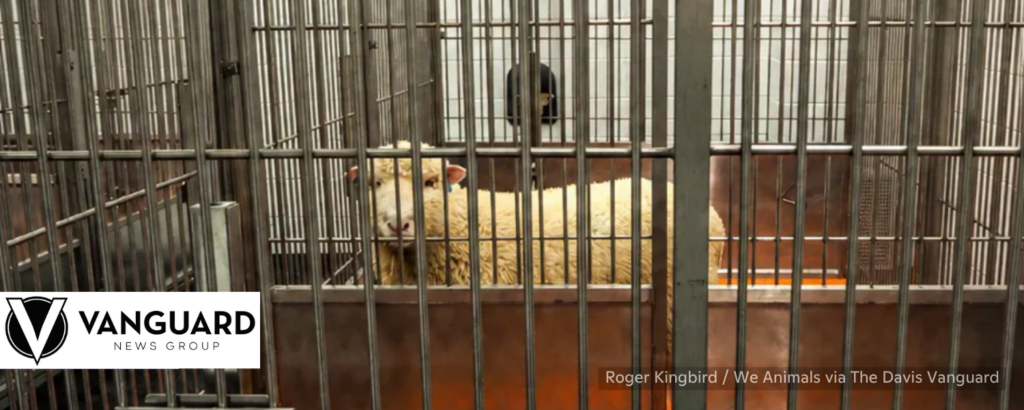
UC Davis Policies Link Research Livestock to Commercial Food Supply
David M. Greenwald, The Davis Vanguard, 09/25/2026
“Public records obtained by the animal advocacy organization Animal Partisan raise questions about the treatment, oversight and ultimate disposition of farm animals used in research and teaching at UC Davis, revealing a system in which animals can simultaneously serve scientific, educational and agricultural purposes.”
“ . . . one of the most significant findings was the extent to which animals at agricultural research institutions can occupy roles that do not fit neatly into conventional distinctions between laboratory animals and livestock.” 📰 Full Story →
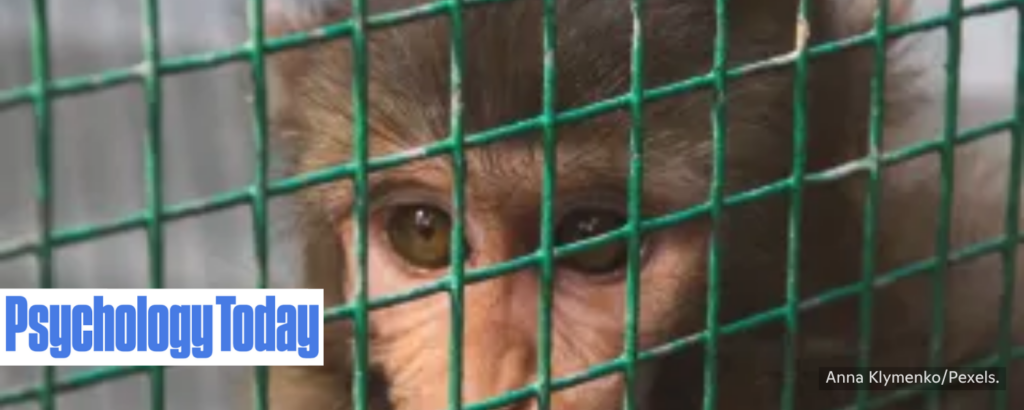
Inside a Primate Lab: The Animals and People Who Work There
Mark Bekoff, Psychology Today, 09/26/2026
“The vast majority of people have little to no idea what happens in a research lab. This is what award-winning writer and investigator Lindsay Oliver went undercover—not to stir up discontent, but to find out how the animals are treated and how people adapt to what they’re doing. In her riveting new book, Marshmallows Are Their Favorite: Undercover at a Primate Lab, Oliver reports what went on at a primate lab and offers a unique and largely unknown story about its nonhuman residents and the humans who work there.”
“‘The book looks at what happens when something profoundly wrong becomes ordinary. The facility is in the middle of a town. It could be any town. A Target on one corner, a Starbucks on another, and on another, thousands of monkeys locked in cages. The lab is a workplace, which sounds obvious until you are standing inside it. People clocked in, complained about schedules, gossiped, flirted, and planned their weekends while monkeys screamed and pounded on the walls of their cages. What felt surreal to me was just another Tuesday at the lab.’” 📰 Full Story →
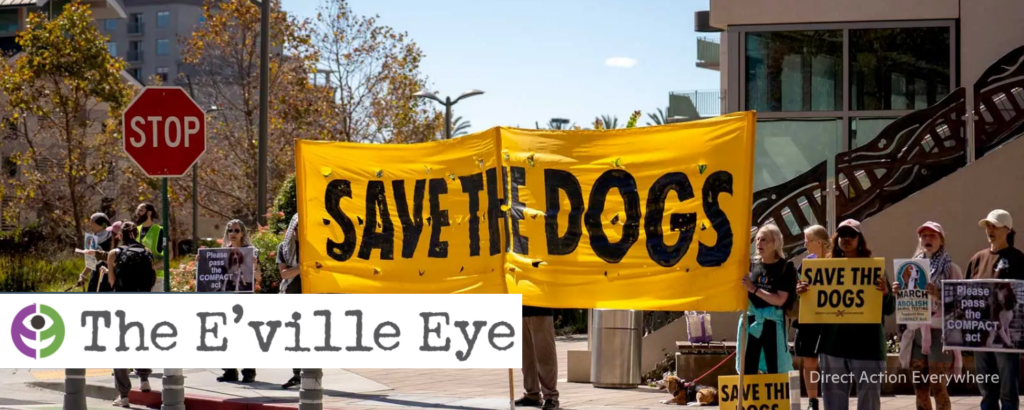
Activists March Through Emeryville Demanding Passage of COMPACT Act
Rob Arias, The E’ville Eye, 09/28/2026
“Animal-rights activists marched through Emeryville Saturday, stopping outside Novartis’ research facility on Horton Street before continuing through the Public Market and Bay Street to protest the use of dogs and cats in biomedical research and call for passage of a federal bill restricting government funding for such research. The demonstration, organized by animal-rights group Direct Action Everywhere (DxE), came three days after the introduction of the Companion Animal Protection Against Cruel Testing Act, or COMPACT Act, in Congress. The bipartisan bill, H.R. 10522, would prohibit the U.S. Department of Health and Human Services and its agencies from using federal funds for biomedical research involving live dogs and cats.”
“‘We are grateful that legislation is catching up to public sentiment, and we are hopeful that the COMPACT Act is the first step to ending all animal experimentation.’”
“Saturday’s demonstration was part of a nationwide day of protests against animal testing, according to DxE. Demonstrations were also held in San Diego, Massachusetts and upstate New York….” 📰 Full Story →
Movement to end animal testing arrives in Gainesville
Christian Haas, The Independent Florida Alligator, 09/28/2026
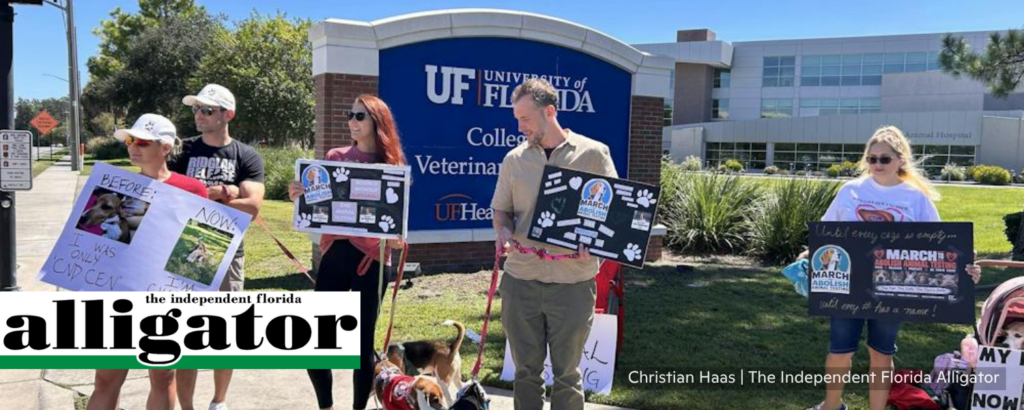
“Peach, a 6-year-old beagle, was once just called ‘CTU-9,’ the number she was assigned at Ridglan Farms, a now-closed beagle breeding and research facility in Blue Mounds, Wisconsin. Peach’s former identification is tattooed on her right ear. A tattoo across her stomach reads ‘WIAE,’ which stands for Wisconsin Animal Experiment, a standard practice at animal testing facilities. . . . Kim-Anne Dodd, Peach’s owner, planned a Sept. 26 event for Gainesville residents in solidarity with the March to Abolish Animal Testing, a 200-mile, two-week walk from Albany, New York, to the Marshall BioResources facility, a for-profit company that breeds animals intended for research, in North Rose, New York.”
“Dodd said Peach spent over six years in Ridglan Farms before she was released May 2. . . . Peach suffers from PTSD, panic attacks and frequent seizures. She also has dozens of ‘debilitating’ allergies, Dodd said, which limit her from touching grass, disrupt her breathing and cause skin infections and fluid-filled blisters. Peach’s medical complications don’t end with allergies, either. Peach required extreme dental surgery, mammary gland tumor and melanoma removal in the month after her adoption, Dodd said. She also had yeast infections in her ears, patches of missing fur and paws swollen to double or triple a healthy size. Dodd and her veterinarian determined the swelling was likely from spending almost seven years on concrete and in wire cages, she said, which may have also caused significant tooth wear and decay. Dodd believes Peach’s other medical complications originated from experiments and testing at Ridglan Farms, she added.”
“Ten owners of previous test beagles gathered in front of UF’s College of Veterinary Medicine with their pets Sept. 26 to protest testing on animals or breeding them to be experimented on. Drivers honked carhorns as they drove past the crowd and its signs. ‘END ANIMAL TESTING,’ one sign read. Others showed beagles ‘before,’ when they were still known by their identification numbers, and ‘now,’ with their new names.” 📰 Full Story →
Beagles Are Bred for Research. Activists Are Pushing Back.
Justin Murphy, The New York Times, 09/29/2026
“At its headquarters, the company, Marshall BioResources, houses more than 9,000 adult beagles and 5,000 puppies along with 11,000 ferrets, according to a U.S. Department of Agriculture inspection report in July. The company also breeds cats and miniature pigs. Now, it finds itself a target in the backlash against animal testing as activists look to build on a dramatic confrontation this year at a Wisconsin facility.”
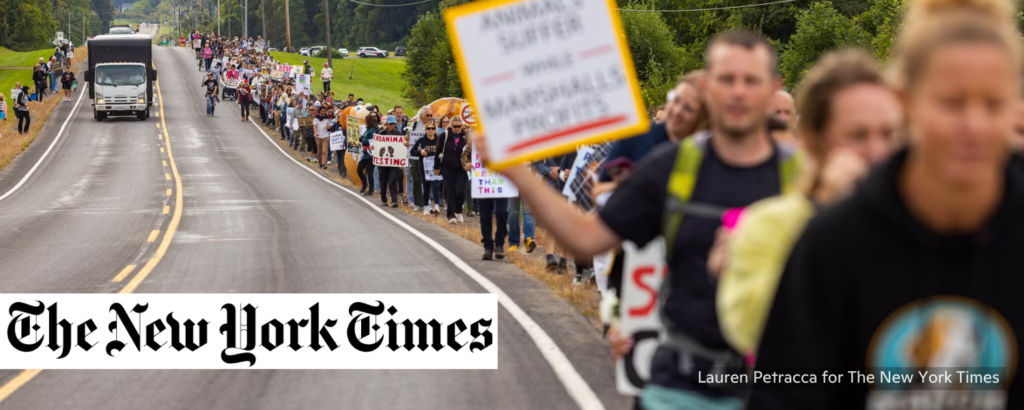
“On Saturday, about 400 protesters rallied outside Marshall’s headquarters. The protesters — several dozen of whom had made a 200-mile march from the state capital in Albany — argued that live animal testing is outdated and unreliable and accused the company, the nation’s largest breeder of dogs for biomedical research, of treating its animals inhumanely. ‘We know the dogs in there are no different from our own dogs,’ one of the demonstrators [] said.”
“The backlash against animal testing is reflected in bipartisan legislation — introduced this month in Congress by Representative Mark Pocan, a Democrat whose Wisconsin district includes Ridglan Farms, and Representative Nick Langworthy, a New York Republican — that would prohibit the use of federal funds for research involving live dogs and cats.” 📰 Full Story →
Prosecutors ask judge to exclude evidence about Ridglan Farms conditions from open rescue trial
Shaina Nijhawan, 15 WMTVI, 09/29/2026
“Prosecutors are asking a Dane County judge to limit what jurors can hear about Ridglan Farms when four defendants go to trial in connection with the March open rescue at the facility. In pretrial motions filed Monday, the State asked the court to exclude evidence about conditions and the health of animals at Ridglan, along with alleged or confirmed regulatory violations involving the facility. Prosecutors argue those issues would not legally justify the defendants’ actions. The State is also asking the judge to bar references to findings made by Judge Rhonda Lanford in an earlier proceeding involving Ridglan, as well as findings, reports or actions involving special prosecutor Tim Gruenke. Prosecutors argue those matters involved prior alleged conduct at Ridglan and could unfairly prejudice or confuse the jury. The filing also seeks to exclude any reference to actions taken by the Wisconsin Veterinary Examining Board involving former Ridglan veterinarian Dr. Richard Van Domelen. Prosecutors are additionally asking the court to prevent the defendants from using several affirmative defenses, including necessity, coercion and defense of others. The State argues Wisconsin law does not extend those defenses to protecting animals.”
“The judge has not yet ruled on the State’s requests.” 📰 Full Story →
Primate Communication May Follow Grammar Patterns Once Thought Uniquely Human
Jess Cockerill, science alert, 09/30/2026
“Human languages are complex and versatile. . . . Our languages tend to follow specific patterns. Little chunks of grammatical sense can sit within the larger structures of sentences to form complex layers of syntax. We’ve long thought those nested patterns of language – known as supra-regular recursive grammar – distinguished us from any other animal on Earth. But there’s growing evidence that at least some of our terrestrial neighbors may be using similar grammatical strategies to communicate with each other.”
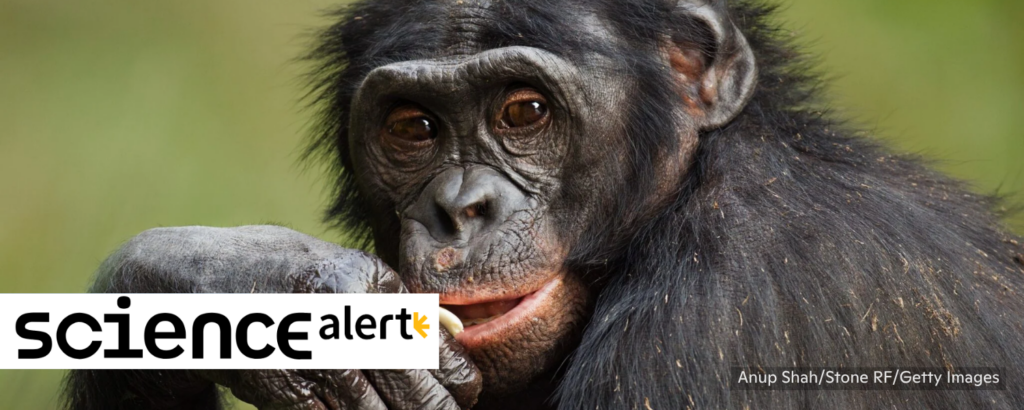
“A new study suggests three non-human primate species may sometimes use supra-regular recursive grammar when calling to each other: the common marmoset (Callithrix jacchus), the olive colobus monkey (Procolobus verus), and the bonobo (Pan paniscus). . . . ‘These findings challenge syntax as the major transition in hominid evolution and opens up prospects for alternative evolutionary scenarios,’ the authors write.” 📰 Full Story →
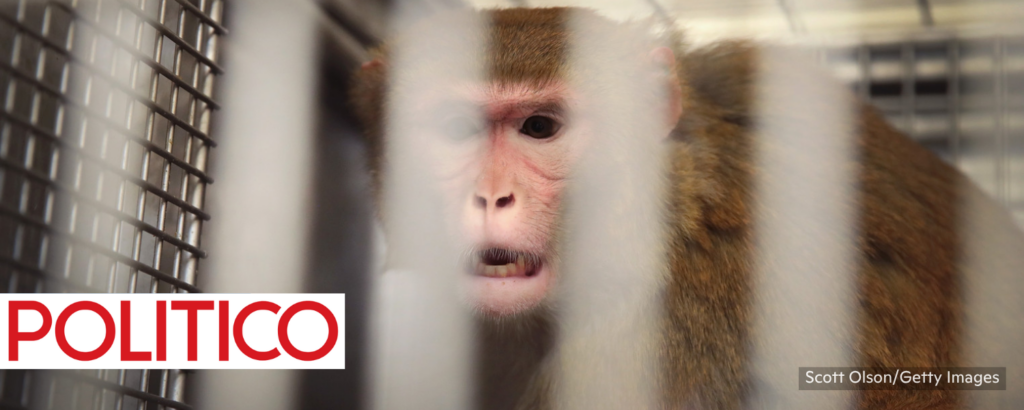
130 CDC monkeys need a new home
Sophie Gardner & Kelly Hooper, Politico, 10/01/2026
“The Health Department recently touted an effort by the Centers for Disease Control and Prevention ‘substantially reducing its laboratory animal colony’ as the agency looks to transition away from animal testing. It’s still unclear where the federal government will relocate those primates — or how much the process will cost. A release from the Department of Health and Human Services last week noted that the CDC ‘is working to permanently place healthy non-human primates in a qualified sanctuary.’”
“Greg Westergaard, founder and CEO of Alpha Genesis, a South Carolina-based preclinical research and primate breeding facility, said his organization had submitted two proposals to take the primates. The company would accept the monkeys ‘essentially for free’ if the federal government would allow the primates to be used for breeding. Otherwise, it would cost roughly 4 million — or slightly more — for Alpha Genesis to house the primates in its sanctuary. However, the CDC’s contract specifies that the agency seeks ‘a sanctuary at which no research or breeding will take place.’”
“It’s unclear how much money the federal government is willing to pay to retire the animals, which can live for more than 30 years. An HHS spokesperson declined to comment.” 📰 Full Story →