Here’s a roundup of the latest, biggest news stories related to animal research—all the recent media coverage you need to know right now to be the most effective activist for animals in labs.
It’s Not Just Marshall BioResources: Exposing the “Lab Dog” Pipeline
Rise for Animals, 10/14/2026
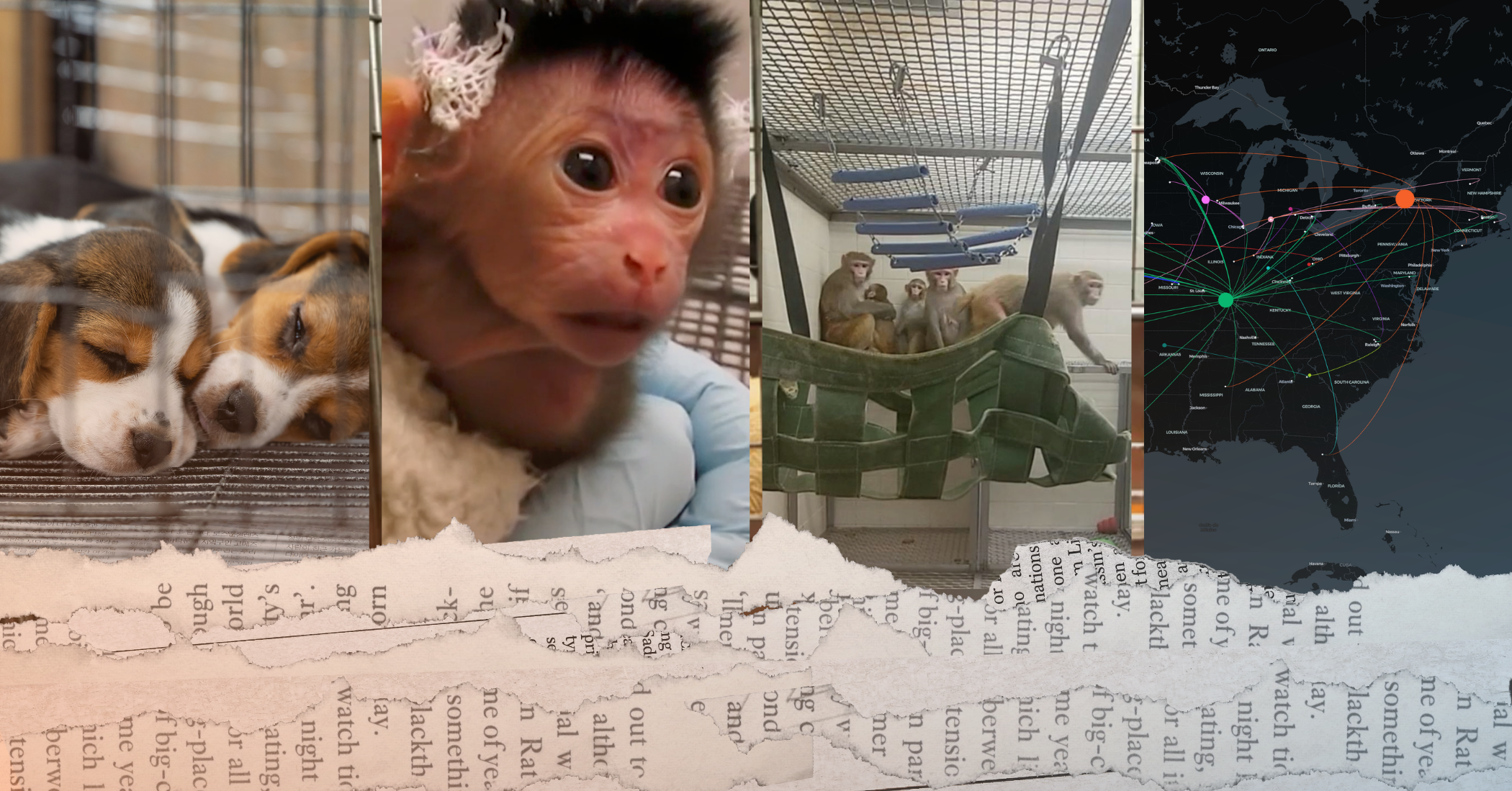
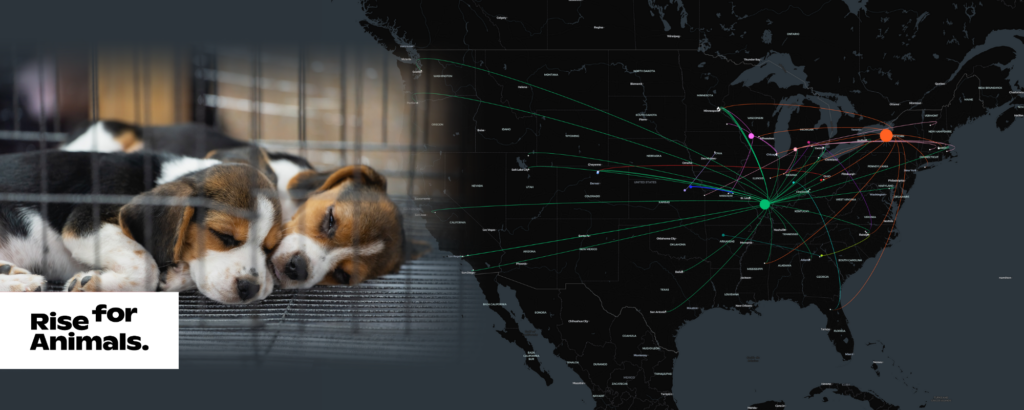
We’ve compiled, analyzed, and mapped public records to reveal how breeders, labs, universities, and other institutions move thousands of dogs through the U.S. research system.
Check out our top five takeaways, plus explore the interactive map: 📰 Explore the “Lab Dog” Trade →
U.S. national primate research centers face an uncertain future
Calli McMurray, The Transmitter, 10/9/2026
“‘The primate centers in particular, and the primate research community in general, feels endangered at this point, and feels like their work is under a kind of scrutiny that we have not experienced in the past,’ says J. Anthony Movshon, professor of neural science and psychology at New York University. ‘Nobody knows how it’s going to play out.’”
“In 1960, Congress allocated $2 million to set up the first two primate research centers and breeding colonies, and five additional centers soon followed. Members of the NIH committees that established the centers wrote that they should exist ‘for the next hundred years.’ Since then, the centers have knit themselves into the fabric of biomedical research and facilitated the growth of the primate model. Hosted at universities and research institutes in California, Georgia, Louisiana, Oregon, Texas, Washington and Wisconsin, they collectively house roughly 28,000 monkeys and 200 labs, including more than 60 neuroscience labs. Along with additional NIH-funded colonies, they accounted for a quarter of research monkeys in the U.S. in 2025. On their own, the seven centers bred 3,546 monkeys in 2021—a little more than one-tenth the number of monkeys imported to the U.S. that year, which totaled nearly 32,000. But they have had an outsized influence over primate research in the U.S.”
“ . . . directors of these facilities say they are struggling to remain cutting edge while operating on a static, shoestring budget. . . . ‘We’re working with the same dollars as we were 20 years ago, and the costs in the world are not the same,’ says Corinna Ross, director of the Southwest National Primate Research Center. ‘There’s no extra wiggle room to innovate and try new things.’ . . . The primate center directors are enthusiastic about efforts to improve NAMs and reduce the use of animals as quickly as possible, Ross says—but NAMs are still very much a complement to animal work, not a replacement for it.” 📰 Full Story →

Nearly 300 dogs are used in research at Triangle universities. Most are at UNC
Jane Winik Sartwell, The News & Observer, 10/12/2026
“More than 270 dogs are used for research purposes at the area’s major research universities. . . . Seventy percent of those dogs are at UNC-Chapel Hill. Researchers there maintain and perform tests on a decades-old breeding colony of dogs with inherited blood disorders.”
“At UNC, the Francis Owen Blood Research Laboratory, founded in 1947, breeds dogs with inherited bleeding disorders that are used as models for human disease. The dogs have Hemophilia A and B, Willebrand disease, Glanzmann thrombasthenia, and other deficiencies. The lab also keeps normal dogs for a control group. The dogs at UNC, referred to in the lab description as ‘bleeder dogs,’ were judged in 1999 to be an important national resource that should be made available to the research community.” 📰 Full Story →
UW-Madison former primate lab worker shares experience, lawsuit details
Sonia Bendre & Sean Walsh, The Daily Cardinal, 10/15/2026
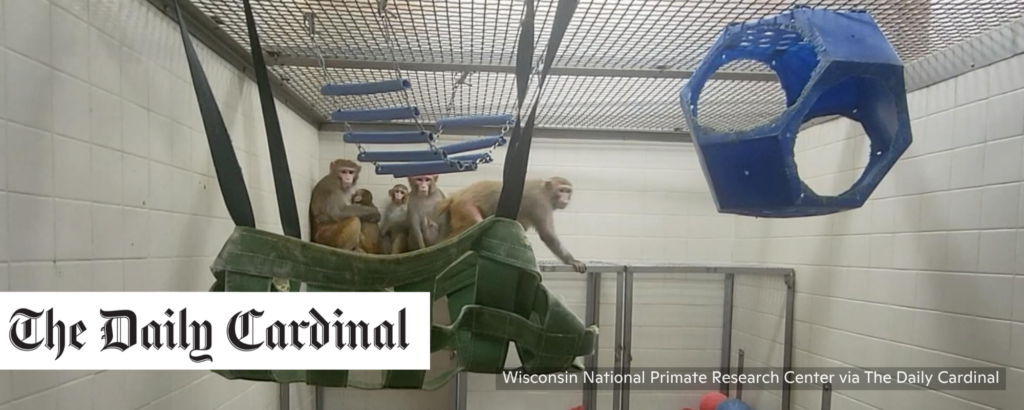
“[University of Wisconsin-Madison alumna and animal activist Madeline] Krasno joined UW-Madison’s Harlow Center for Biological Psychology — one of two major primate labs on campus along with the Wisconsin National Primate Research Center (WNPRC) — as an undergraduate . . . Krasno said she and another student were tasked with caring for over 500 monkeys on weekends, adding she was never involved in the research side. . . . she recalled several experiences from her time caring for the monkeys which she described as psychologically traumatic.”
“Krasno said she was later diagnosed with PTSD. She said she struggled to grasp what she had seen in the lab, but was determined to speak out for other lab employees. . . . Krasno claimed animal research harms the people who carry it out, not just the animals.” 📰 Full Story →
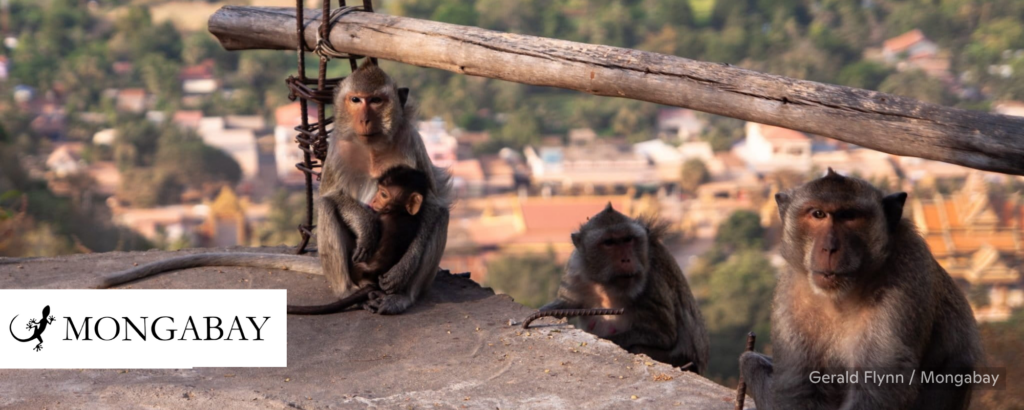
Cambodia was told to clean up its monkey trade. Regulators say it still hasn’t
Gerald Flynn, Mongabay, 10/15/2026
“Global wildlife trade authorities say Cambodia has made little progress in cleaning up its monkey export industry, a year after the country was flagged as needing major reforms in how it manages the capture, breeding, and export of monkeys used in biomedical research. . . . The statement comes ahead of the Nov. 2-6 CITES Standing Committee meeting in Geneva, where parties to the convention will assess progress made by countries placed under review.”
“Cambodia has faced widespread condemnation since a five-year United States Fish and Wildlife Services (USFWS) investigation found substantial evidence of Cambodian monkey farms laundering wild-caught monkeys as captive-bred. . . . In the Oct. 5 document, the wildlife trade regulator said it ‘remains concerned about the limited progress achieved’ in meeting the list of six recommendations issued to Cambodia in 2025. The CITES Secretariat stated that the Cambodian government has failed to produce enough evidence that any of the recommendations have been fully implemented.”
“Due to the failure to implement these recommendations, the CITES Secretariat said Cambodia had also failed to prove its export permits reflect the accurate number of long-tailed macaques entering or leaving the country.” 📰 Full Story →
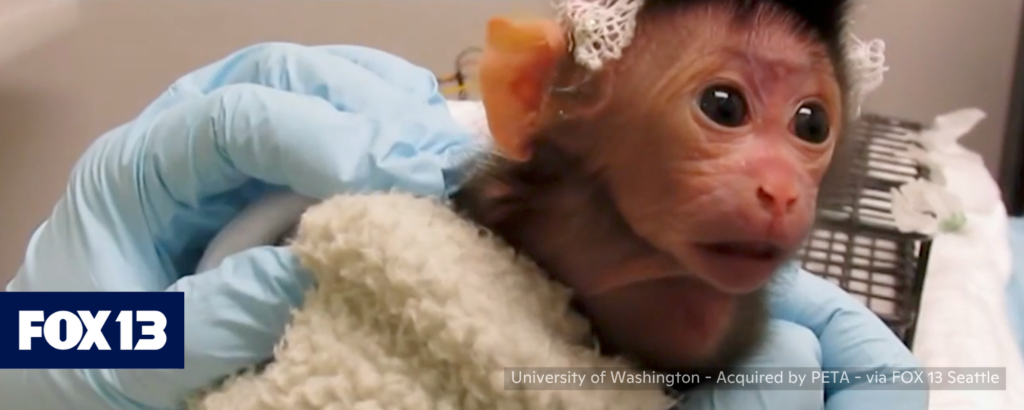
Disturbing video of infant monkeys at UW lab reignites debate over primate research
David Rose, FOX 13 Seattle, 10/15/2026
“The footage, released this week by People for the Ethical Treatment of Animals (PETA), shows infant macaques — some only days old — lying on laboratory tables with their heads shaved and electrodes attached to their bodies as researchers test their development.
“The experiments shown in the video took place about six years ago, but PETA says similar research involving young monkeys has continued at UW and argues advances in technology have made the use of primates unnecessary.” 📰 Full Story →

Huntingdon MP calls for animal testing to be phased out
Sarah Cliss, The Hunts Post, 10/11/2026
“Huntingdon MP Ben Obese-Jecty raised his concerns at the Conservative Party Conference during a meeting with Isobel Martin of Animal Free Research UK. They discussed the Government’s failure to deliver its manifesto pledge to phase out animal testing. MBR Acres, a facility that breeds dogs, specifically beagles for scientific, medical, and veterinary research in the UK, is in Mr Obese-Jecty’s constituency. Owned by Marshall BioResources, it can breed up to 2,000 dogs a year and sells them to laboratories for testing.”
“Mr Obese-Jecty said: ‘MBR Acres continues to be a focus for campaigners as the Government continues to use legal action on individuals to prevent campaign interference against it. The Home Office continues to issue licences for animal testing despite the Government’s pledge and publication of the Replacing Animals in Science strategy later this year last year [sic].’ He also questioned the effectiveness of the Home Office’s Animals in Science Regulation Unit, particularly its lack of regular unannounced site audits. The concerns come ahead of a Home Office report on animal welfare failings in British laboratories.” 📰 Full Story →
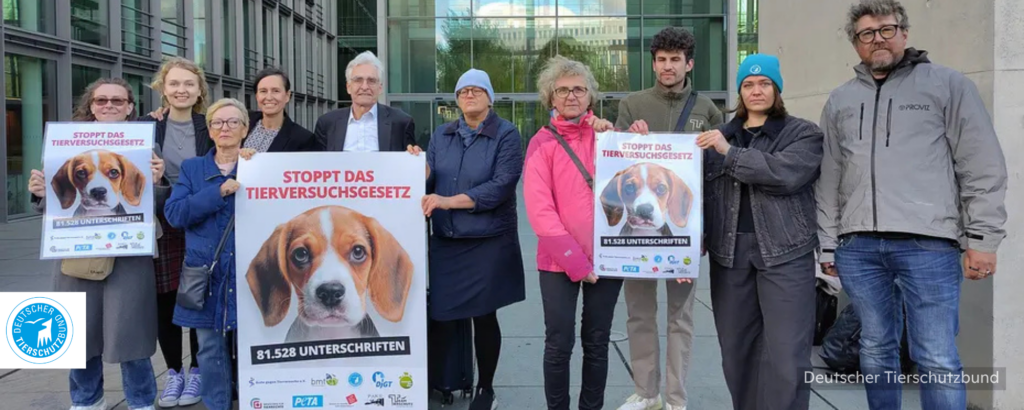
Coalition Calls on Federal Government to Reconsider Its Position at Public Hearing
Deutscher Tierschutzbund, 10/13/2026
“ . . . the German Bundestag’s Petitions Committee deliberated on the petition against the proposed Animal Experimentation Act, which was signed by more than 84,000 people. The Bundestag petition, initiated by a coalition of ten organizations*, garnered more than two and a half times the 30,000 signatures required for a public hearing. During the hearing, the coalition reiterated its core demand: The federal government must not remove the regulations on animal testing from the Animal Welfare Act and consolidate them into a separate law. This would threaten to weaken the already inadequate protection of millions of animals in German laboratories.”
“During the hearing, despite repeated inquiries to the federal government, it remained unclear why a standalone animal experimentation law is necessary, even though – according to the Federal Ministry of Agriculture – problems with approval procedures and uniform enforcement could be resolved through a revision of the General Administrative Regulation (AVV)—without lowering animal welfare standards.”
“The Petitions Committee will now deliberate on the arguments presented and decide how to proceed with the petition. The coalition calls on the federal government to refrain from enacting its own animal testing law, to under no circumstances lower animal welfare standards but rather to improve them, and to consistently advance the transition to modern, animal-free research.” 📰 Full Story →

Most Brits Are Opposed To Bloodsports, Animal Testing, Fur, And Factory Farming
Liam Pritchett, Plant Based News, 10/12/2026
“Most Brits find bloodsports, animal testing, fur, and factory farming ‘unacceptable,’ according to a new survey by The Vegan Society.”
“The Vegan Society’s ‘Empathy Index,’ which tracks evolving public attitudes to animal welfare and cruelty over time, is a nationally representative survey of 2,000 people. . . . Dog fighting (95 percent), bullfighting (93 percent), and fox hunting (87 percent) were all described as unacceptable by most respondents, as were cosmetic animal testing (87 percent), trapping and snaring animals (85 percent), and hunting deer with guns (77 percent). Many forms of animal use were deemed unacceptable by more people in 2026 than in 2024….” 📰 Full Story →

From rats to monkeys, strict new rules for lab animal testing
M. Sai Gopal, Telangana Today, 10/14/2026
“Experimenting on animals [in India] in scientific laboratories across multiple locations is set to come under much stricter oversight as regulatory authorities have now decided to overhaul the entire framework. . . . The Committee for Control and Supervision of Experiments on Animals (CCSEA), under the Union Ministry of Fisheries, Animal Husbandry, has recently released a comprehensive draft framework—the Prevention of Cruelty to Animals (Control and Supervision of Experiment, Breeding and Trading of Laboratory Animals) Rules—aimed at modernising scientific accountability and closing regulatory loopholes.”
“Historically, India’s regulatory oversight was heavily dependent on a creature’s physical footprint, i.e., its size. Bureaucratic hurdles for experiments on large animals like dogs or monkeys were notoriously stringent. However, permissions to conduct lab experiments on smaller-sized animals like rats were always quick because the regulators did not consider the amount of pain and distress actually caused by the experiment in the laboratory. Under the new upcoming framework, the system of permitting animal experiments will transition to a strict, case-by-case four-tier severity scale classification.” 📰 Full Story →
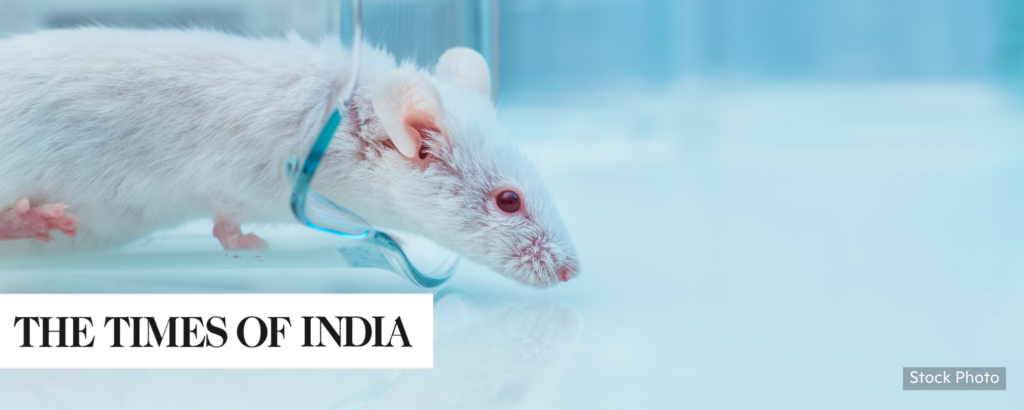
Tanuvas not to sanction animal experiments involving Forced Swim Test
Bosco Dominique, The Times of India, 10/14/2026
“Tamil Nadu Veterinary and Animal Sciences University (Tanuvas) has decided not to sanction animal experimentation proposals involving Forced Swim Test (FST). In FST, mice, hamsters, and other small animals are administered test substances, placed in water-filled beakers and forced to swim to avoid drowning. It is purportedly used to study human depression. . . . Research suggests FST may be less reliable than a coin toss in determining antidepressants’ effectiveness….”
“Following Peta India’s encouragement, Pharmacy Council of India issued directives in April 2025 and Jan 2026 urging its institutions to review and act on continued FST use. More than 100 scientists and experts back its call to end it. Peta India is urging Committee for Control and Supervision of Experimentation on Animals to impose a national ban.” 📰 Full Story →