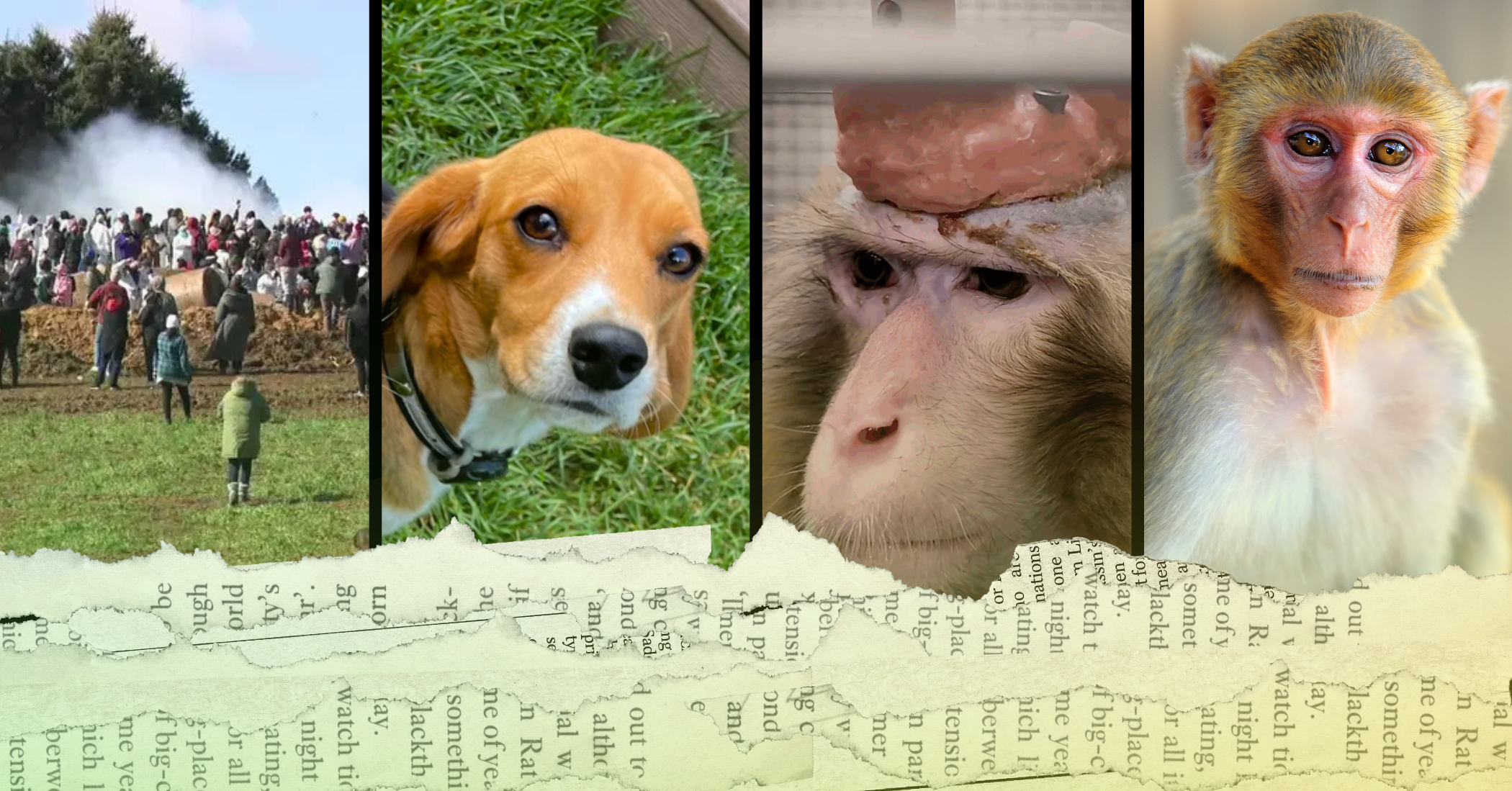
Here’s a roundup of the latest, biggest news stories related to animal research—all the recent media coverage you need to know right now to be the most effective activist for animals in labs.

Teddy and Ellie: Rescued from Research
Katie Koser, Guest Author, Rise for Animals
Beagles Teddy and Ellie beat the odds—among the unimaginably small number of animals who make it out of the animal research industry alive. Their journey from confinement to comfort is a powerful reminder of both what animals endure and who they are when given the chance to live. Take a look back at this story of survival, healing, and love. 📰 Full Story →
New Investigation Exposes Dogs Bred to Suffer In NIH-Funded Muscular Dystrophy Experiments
World Animal News, 4/27/2026
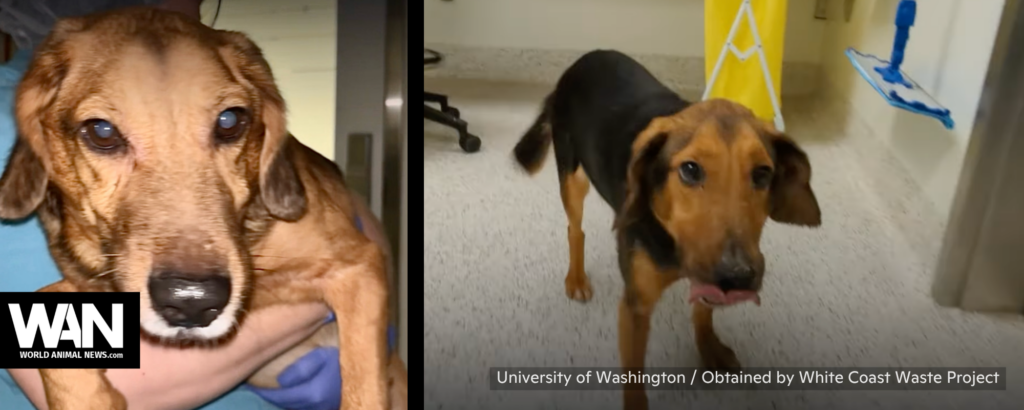
“Another disturbing investigation by White Coat Waste (WCW), released on World Day for Laboratory Animals on Friday, has uncovered the ongoing use of taxpayer dollars through grants from the National Institutes of Health (NIH) to fund horrific experiments on dogs deliberately bred to suffer from a crippling and fatal disease, all inside a federally funded laboratory in Seattle.”
“Based on videos and other documents obtained by WCW through the Freedom of Information Act, experimenters at the University of Washington (UW) have been breeding and maintaining a colony of dogs with muscular dystrophy for decades, using them as living test subjects for invasive and often deadly experiments. . . . the animals endure a series of painful procedures. Records reveal that dogs are subjected to repeated muscle injections, up to 50 injections per muscle, as part of the experiments. They are also injected intravenously with experimental substances, undergo repeated muscle biopsies, and are forced through neurological and strength testing that involves electrical stimulation of their nerves while under restraint or anesthesia. . . . Symptoms documented in records and videos include difficulty walking, muscle wasting, and an inability to control basic bodily functions. Some footage shows dogs limping, struggling to move, or unable to keep their tongues in their mouths—clear signs of severe physical deterioration. After months of experimentation, the dogs are ultimately killed so their tissues can be dissected and analyzed.”
“Even more disturbing, documents indicate that the colony is actively maintained, and that experimenters intend to expand studies, with ongoing breeding to ensure a steady supply of diseased animals for future experiments. The dogs are also used across multiple federal grants, further extending their suffering.” 📰 Full Story →

Activists sue Ridglan Farms, Dane County sheriff over April 18 clash
Bryan Polcyn, FOX6 Milwaukee, 4/27/2026
“The class action lawsuit filed in federal court accuses Ridglan and the sheriff of conspiring to injure and contaminate what it calls ‘non-violent demonstrators.’ The plaintiffs claim deputies used excessive force by deploying ‘chemical weapons.’ It also accuses Ridglan Farms of building a biologically, hazardous, manure-filled trench.”
“In response, Ridglan Farms issued a statement calling the activists a ‘violent mob.’” 📰 Full Story →

Gov. Moore signs law making Maryland a national model for animal-free testing
Humane World for Animals, 4/28/2026
“[] Gov. Wes Moore signed S.B. 423, the Animal Research Modernization and Best Practices Act. This legislation, which passed with extensive bipartisan support, mandates the use of approved non-animal methods instead of animals when testing chemicals, pesticides, household cleaners and food additives. It also outlaws cruel practices like devocalization of dogs and cats used in experiments and requires annual reporting of how many animals are adopted after their time in research has ended.”
“Maryland made history in 2023 as the first state to fund non-animal testing technology development. S.B. 423 closes the loop—requiring industry to use those methods once federally approved.” 📰 Full Story →

The battle over rescuing 2,000 beagles from lab research is not over
Maria Bolotnikova, VOX, 4/29/2026
“Many casual observers will encounter Ridglan as an isolated story — one controversial facility subjecting dogs to lives of confinement and experimentation that would make dog-loving Americans recoil in horror — but it’s also part of a much grander strategy. ‘Ridglan is like a stand-in for all industrialized animal abuse,’ Justin Marceau, a law professor at the University of Denver and head of its Animal Activist Legal Defense Project, told me.”
“The ultimate prize for the animal rights movement is to persuade people to connect the suffering of beagles to that of the many more animals raised for food on factory farms, whose exploitation is made possible by the same legal structure that treats animals as property with few limits on what can be done to them. It is a goal that’s always eluded the animal movement: Can the public’s empathy stretch beyond the animals we’ve chosen to love to reach cows, pigs, and chickens?”
“We can’t yet know what Ridglan will mean for animal rights’ momentum — the unprecedented scale of this rescue attempt, the ferocity of law enforcement’s response, and the seriousness of the criminal charges that movement leaders now face have been variously described to me by participants as electrifying and galvanizing for the cause, and also tragic and dangerous. It has been, if nothing else, a bold and bruising experiment in broadening the movement’s tent beyond the already converted, and carrying animal rights forward into the realm of mass politics.” 📰 Full Story →

Animal rescue group says it bought 1,500 beagles from Wisconsin facility targeted by protesters
Scott Bauer, Associated Press, 4/29/2026
“Big Dog Ranch Rescue and the Center for a Humane Economy said they have entered into a confidential agreement with Ridglan Farms to buy 1,500 of the facility’s roughly 2,000 beagles for an undisclosed price. It’s unclear what the plans are for the remaining dogs. . . . [Lauree Simmons, president and founder of Big Dog Ranch Rescue] said she could not discuss the payment for the dogs, how long the deal had been in the works or how many beagles remain at Ridglan after the deal.”
“The 1,500 dogs will be transported later this week from Ridglan to partner agencies as well as to Big Dog Ranch Rescue facilities in Florida and Alabama, Simmons said. They will receive medical exams, microchips and vaccinations before they are assessed for adoption, she said.”
“Simmons said her group was not involved in the recent protests that drew increased attention on Ridglan, but she credited activists with raising awareness about what was happening. ‘What they did was put the message out,’ Simmons said of the activists. ‘What we did, we wanted to do legally and in the best way and for the best outcome of these dogs for the future.’” 📰 Full Story →
Coalition of Veterinarians, Scientists, and Health Care Professionals Launches the “Save Science Oregon” Campaign to Prevent Closure of the Oregon National Primate Research Center (ONPRC)
Oregon Voices for Biomedical Research, PR Newswire, 4/29/2026
“Oregon Voices for Biomedical Research (OVBR), a nonprofit advocacy group of veterinarians, scientists, healthcare professionals and concerned Oregonians, is launching a campaign to protect the Oregon National Primate Research Center (ONPRC) from closure. The campaign begins this week with messages on billboards, public transport, and social media. . . . OVBR is responding to recent political pressure for OHSU to close the center.” 📰 Full Story →
At York University’s primate lab, allegations of bruises, bloody wounds and escapes
Stacey Kuznetsova, University of Toronto Dalla Lana School of Public Health, 4/30/2026
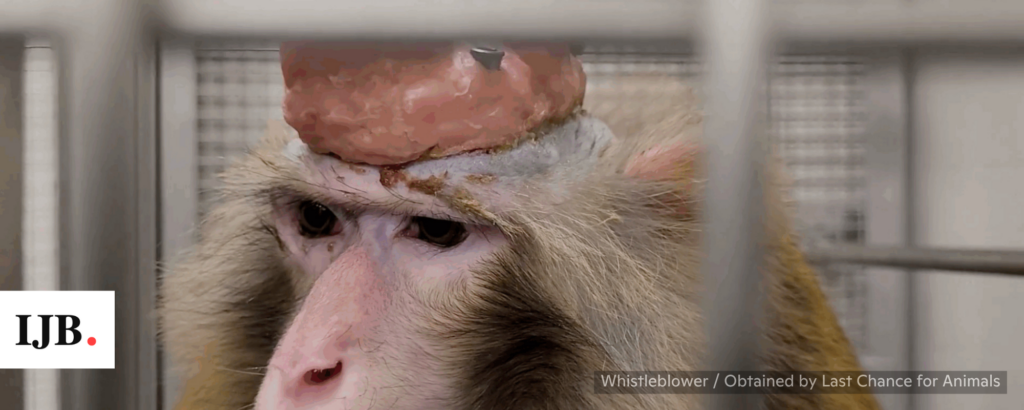
“After more than a day of scratching at his protruding brain implant until it bled, Kenny, a research macaque who lives inside a York University lab, reportedly pulled out the implant from his right ear, revealing an oozing wound. Kenny is one of at least nine research macaques held at York — Canada’s fourth largest university — as part of its biomedical research into brain systems controlling vision and actions of the eyes, head and hand. The treatment of those macaques is the subject of a formal inquiry by the Canadian Council on Animal Care (CCAC).”
“Video footage recorded inside the lab between September 2024 and March 2025 by a whistleblower working with the U.S.-based group Last Chance for Animals (LCA) revealed macaques outfitted with metal head posts extending upward from the top of their heads, protected by acrylic caps. Some macaques were recorded constantly pacing and swaying in their cages, scratching at the implants, and struggling to swallow in tight collar restraints.” 📰 Full Story →
Help spread the word. Share this news compilation on Facebook, X, or Bluesky.