
Here’s a roundup of the latest, biggest news stories related to animal research—all the recent media coverage you need to know right now to be the most effective activist for animals in labs.
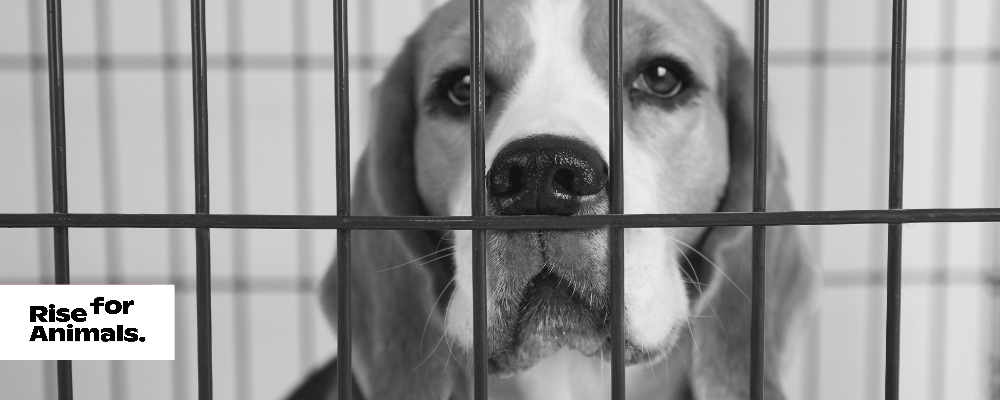
52 Beagles, Two Labs, One Public University
Lindsey Soffes, Rise for Animals, 11/06/2026
Public records obtained by Rise for Animals expose the fates of 52 beagles purchased by the University of Illinois Chicago (UIC) from Marshall BioResources, the nation’s largest breeder and supplier of dogs for experimentation.
Between November 2025 and March 2026, UIC bought 42 seven- and eight-month-old male and female beagles for toxicity and pharmacokinetics research and 10 male beagles (identified not by age but by “grade”) for cardiac research. 📰 Full Story →
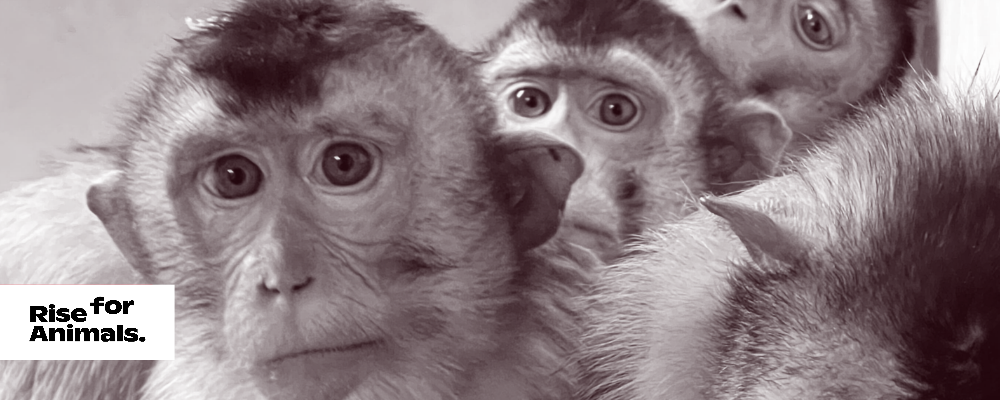
No More Monkey Labs: NIH Must Stop Funding Primate Research
Lindsey Soffes, Rise for Animals, 11/10/2026
When it comes to experimenting on monkeys, the federal government is trying to have it both ways.
The National Institutes of Health (NIH) says it wants to move science beyond animal research, but its funding decisions tell a different story.
NIH has acknowledged that animal research is both ethically and scientifically fraught, as well as profit-motivated. It has backed and financially invested in human-relevant science. It has even considered sanctuary transition for the primate center at Oregon Health & Science University.
Yet, at the very same time, NIH has continued directing billions of taxpayer dollars to the animal research industry.
Nowhere is this contradiction more apparent than in nonhuman primate experimentation. 📰 Full Story →
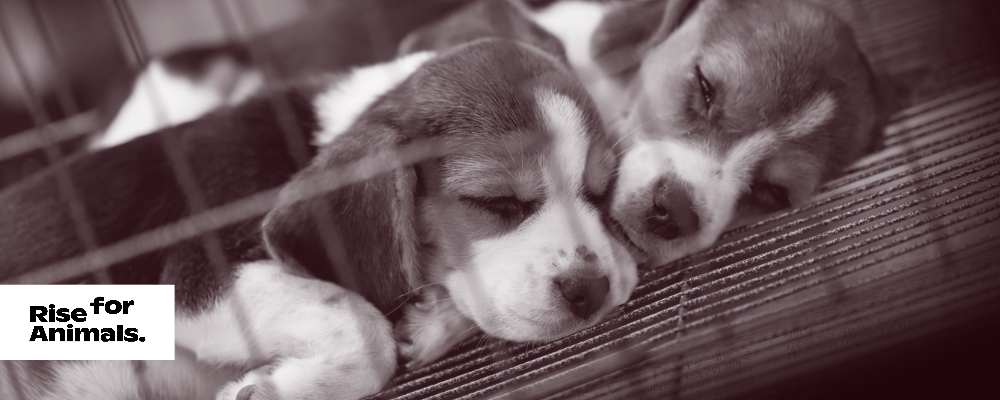
U of Cincinnati Bought Dogs to Cut Out Their Voice Boxes
Lindsey Soffes, Rise for Animals, 11/12/2026
Earlier this year, the University of Cincinnati (UC) bought dogs from Oak Hill Genetics for research funded by the National Institutes of Health (NIH).
These dogs were fatally injected immediately upon arrival at the University, then cut open—and apart.
The researchers insisted that the dogs were required for the research, even while conceding structural, or “morphological,” “differences between canine and human larynges.” 📰 Full Story →
Fewer laboratory animals needed for UT research
Rense Kuipers, u today, 11/05/2026
“A total of 454 laboratory animals were used for research under [University of Twente]’s licence in 2025. The 372 mice and 82 rats were used in studies into cancer, stomach, liver and intestinal diseases, and disorders of the nervous system. This is a 15 percent decrease in the number of laboratory animals compared with the previous year. The decline is expected to continue sharply in 2026.”
“As part of the reorganisation of the Faculty of TNW, UT closed its own animal testing facility at the end of last year. Two of the three UT researchers who used laboratory animals in their research were made redundant as part of the reorganisation. Since then, UT researchers who still wish to conduct animal experiments have had to turn to external partners, such as the Central Animal Laboratory in Nijmegen. It is likely that only a handful of researchers are involved, as hardly any UT researchers still use laboratory animals.” 📰 Full Story →
Prices Surge to RMB 260,000 Per Animal as Some Facilities Sell Out: Who Is Scrambling for Laboratory Macaques?
CLS, Futubull, 11/05/2026
“‘The market quotation for a single crab-eating macaque has approached RMB 260,000, yet some breeding enterprises have no monkeys available for sale.’ Recently, a Cailianshe reporter, acting as a buyer, learned from two breeding enterprises in Wuhan and Guangzhou that prices in the domestic experimental monkey market continue to rise, with supply shortages occurring for commercial monkeys in certain age groups. Meanwhile, as demand for innovative drug development recovers and AI-driven drug discovery expands wet-lab orders, the demand for non-human primate experimental animals in preclinical research continues to increase.”
“For CRO companies reliant on external procurement, rising prices for experimental monkeys directly increase the cost of acquiring laboratory animals, while fluctuations in supply cycles may also impact project scheduling. . . . For projects requiring non-human primates for testing, the ability to obtain experimental monkeys that meet quality standards and can be delivered in a timely manner directly impacts project acceptance and execution. As domestic demand for R&D outsourcing recovers, the capability to secure monkey supplies has also become a fundamental condition considered in the competition among preclinical CRO companies.” 📰 Full Story →
EU’s animal testing phase-out hinges on regulators, not labs, says Tsiodras
Rapporteur, 11/06/2026
“Europe has spent heavily on finding alternatives to animal testing. The harder task, according to Dimitris Tsiodras, is persuading regulators to use them. ‘The main obstacle is the gap between developing promising methods and making them usable in regulatory decisions,’ said the Greek MEP, who is steering key parts of the EU’s One Substance, One Assessment (OSOA) reform through the European Parliament.”
“The EU has published a roadmap towards phasing out animal testing in chemical safety assessments. Tsiodras wants it to come with ‘clear responsibilities, realistic timelines and measurable milestones’. Europe has invested substantially in research on New Approach Methodologies (NAMs), the umbrella term for non-animal testing techniques. The priority now, he said, must be ‘their validation, qualification and practical uptake’. ‘Funding should support the entire journey from scientific discovery to regulatory use,’ he said, adding that researchers and companies need clearer guidance on what evidence is required to show a method is reliable and fit for a particular purpose.’” 📰 Full Story →
One step closer to opening up animal experiments
Cruelty Free International, 11/09/2026
After “[a] specially-convened panel of three Upper Tribunal judges agreed with [Cruelty Free International] that section 24 of the Animals (Scientific Procedures) Act 1986, which prohibits the Home Office from disclosing information animal researchers give it in confidence (which in practice is everything), could not stand with Article 10 of the European Convention on Human Rights,” Cruelty Free International has “now been given permission to take [its] fight to the Court of Appeal, which sits just below the Supreme Court, to ask for appropriate remedies to force the Home Office finally to open up how it licenses animal experiments.”
Cruelty Free International “believe[s] that greater transparency should lead to a substantial reduction in the number of experiments” and “hope[s] that the appeal will be heard sometime in 2027.” 📰 Full Story →
India draft animal testing overhaul raises alarm over cosmetics loopholes
Sabine Waldeck, personal care insights, 11/12/2026
“In 2014, India banned animal testing for cosmetics and the import of animal-tested cosmetics. The pending Prevention of Cruelty to Animals (Control and Supervision of Experiment, Breeding, and Trading of Laboratory Animals) Rules do not change the cosmetic testing ban — however, PETA India has ‘serious concerns’ about the draft’s weakening of oversight.”
“Some substances used in cosmetics have non-cosmetic applications, which can muddy clarity and consistency between regulatory frameworks. PETA India says any new framework governing animal experimentation must explicitly reinforce the integrity of existing legal protections for animals. Dr. Noopur Jain, Science & Research Policy Advisor at PETA India, tells Personal Care Insights that the draft currently ‘fails to do so.’ Jain exemplifies a gap in Europe’s animal testing safeguards, which could serve as a ‘disturbing warning’ for India’s proposal. She details that despite the EU’s cosmetics animal-testing ban, animal experiments continue to be required for ingredients that may be used in cosmetics under its chemicals legislation, Registration, Evaluation, Authorization and Restriction of Chemicals.” 📰 Full Story →