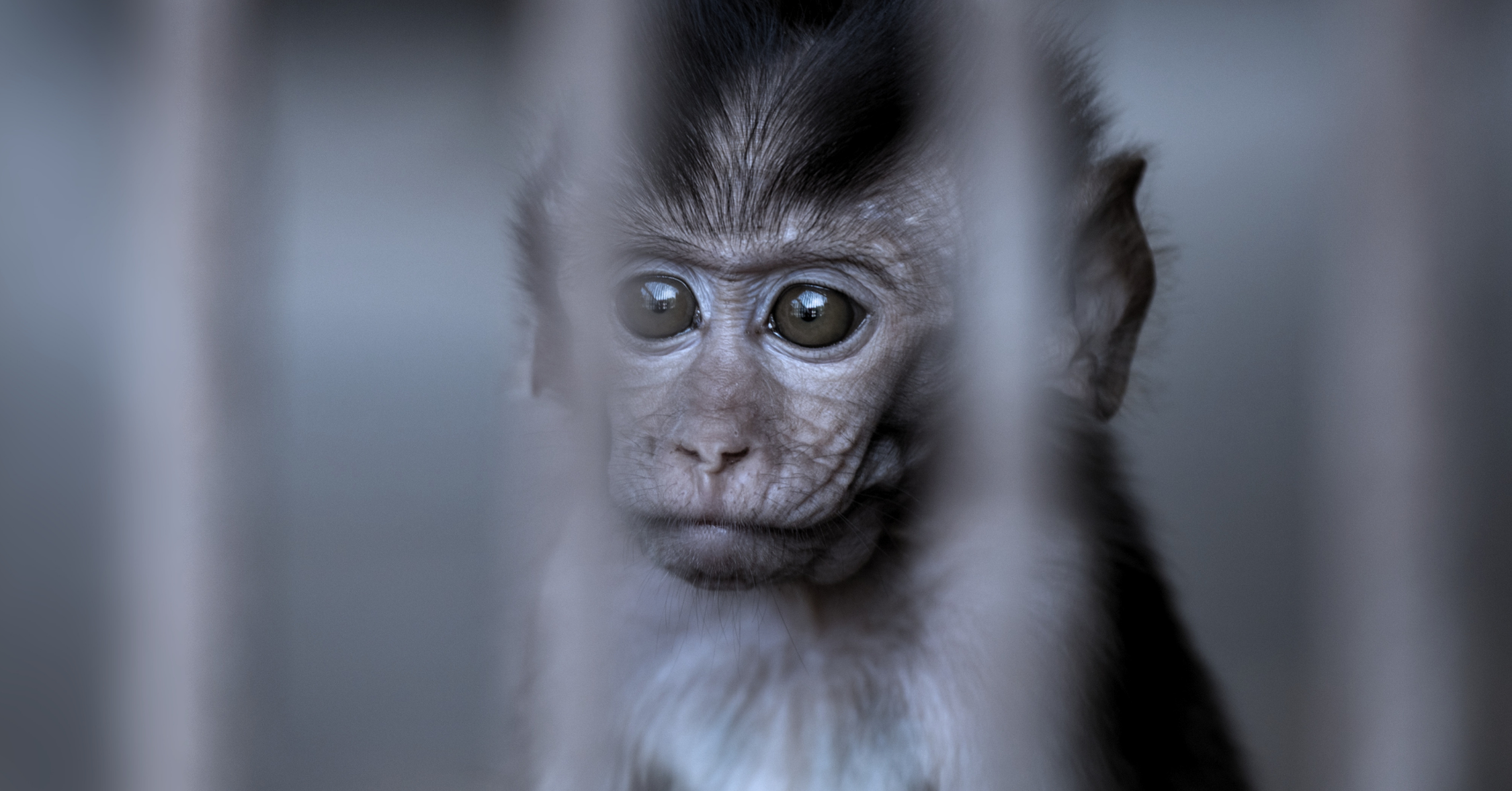
Why This Matters: A newborn macaque was placed in a cooler—still alive—at UW’s primate center, exposing the deadly difference between “oversight” and actual protection of animals in labs.
On the morning of June 30, 2025, staff at the Washington National Primate Research Center (WaNPRC) observed a limp newborn macaque in the arms of a grown female macaque, believed to be their mother.

A USDA inspection report says that staff assumed the infant monkey was dead.
Staff opened the cage and removed the small, lax monkey from the older monkey’s maternal clutches. They tucked the tiny animal into a biohazard bag and shut it inside a cooler.
But the infant monkey was still alive.
No one noticed for around an hour.
Still Breathing
Abandoned in cold storage, the ailing monkey’s condition didn’t improve.
About 60 minutes passed before University of Washington (UW) staff returned to collect the monkey to begin necropsy procedures—the postmortem dissection of their remains. It was then that staff realized the baby was still breathing.

Only after this discovery did veterinarians intervene and elect to euthanize the infant.
The laboratory system calls this animal care.
Countdown to Accreditation
As the story breaks of this living newborn being treated as a dead body, UW’s animal research apparatus is actively preparing to present itself as a model of animal care.
UW’s Office of Animal Welfare maintains a public webpage dedicated to the upcoming AAALAC International site visit scheduled for July 20–23, 2026.

The page includes a countdown, a site-visit timeline, self-evaluation tools, focus points, preparation tips, and virtual chats for staff ahead of the accreditation review.
In other words, UW is guiding its staff through a detailed process designed to influence AAALAC inspectors’ observations and secure renewal of accreditation.
The Illusion of Oversight
AAALAC accreditation is often presented as the “gold standard” of animal care.
But our analysis of more than 14,000 USDA inspection records between 2014 and 2025 shows otherwise.
As reported by Science, although AAALAC-accredited laboratories made up only about 42% of facilities inspected, they were responsible for approximately 73% of all direct and critical citations. These are the most serious animal welfare violations documented by the federal government.

And now, as UW prepares for renewed accreditation, the public has learned that a living, breathing infant macaque was removed from their mother, placed in a biohazard bag, and shut inside a cooler.
Claims of oversight do not protect animals from the violence of the laboratory system.
They manage the system.
They legitimize the system.
They do not save the animals trapped inside it.

As long as researchers use animals in experiments, the suffering will continue, because there is no such thing as “humane treatment” in a laboratory.
The only way to truly protect animals in laboratories is not better oversight.
It is liberation.
Your Call to Action: Animal researchers are panicking. They’ve admitted that the SPARE Act could “decimate” the animal research industry, and they’re fighting hard to protect the perverse status quo.
Urge your U.S. elected officials to support this bill and end federally-funded animal research now.