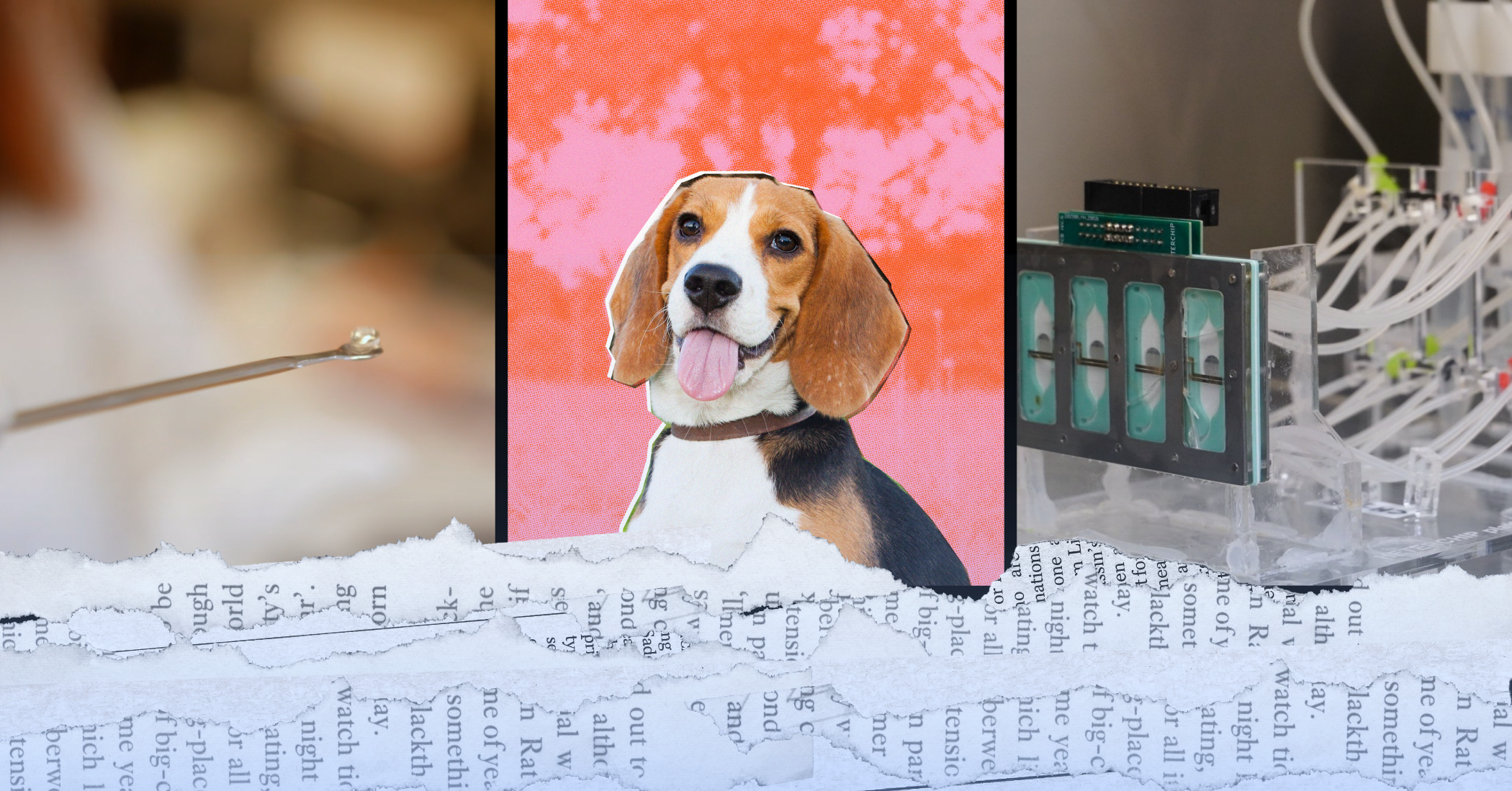
While the animal research industry continues to breed, buy, cage, torture, and kill sentient beings, progressive scientists are busy proving that human-relevant science is not only possible but, in fact, better for us all. Highlights in science from the last month are below.

Neither alive nor dead: disembodied human brains put to use in human medicine
Pierre-Marie Lledo, Polytechnique Insights, 7/1/2026
“By restoring certain functions of intact brains taken from deceased donors, the start-up Bexorg hopes to create a more accurate experimental environment for the development of drugs to treat neurodegenerative diseases. . . . This technological platform offers researchers an unprecedented tool for designing new therapies targeting brains ravaged by neurodegenerative diseases – Parkinson’s disease, Alzheimer’s disease, amyotrophic lateral sclerosis.”
“The Bexorg journey began with a strikingly simple observation: the obvious shortcomings of animal models for testing drugs intended for the human brain. There is no guarantee that a molecule which easily crosses the blood-brain barrier in a mouse will make the same journey in humans; and a toxic overdose or an ineffective underdose is enough to doom a promising therapy before it has even had a chance to prove itself.”
“Beyond drug trials, these brains could reveal new markers of pathological processes, such as the neurodegeneration specific to Alzheimer’s disease, whose diagnostic and prognostic value would be invaluable to clinicians. . . . As Bexorg expands its scope, the company could turn its attention to other pathological conditions, such as psychiatric disorders and certain forms of brain cancer. . . . The company is also developing a machine learning model called NeuroLens, a ‘virtual brain’ trained on physiological readings, donors’ medical records, and protein and microscopic data from brain tissue. This digital avatar could one day enable researchers to test new molecules before even using a physical brain.” 📰 Full Story →

Fish-Inspired sensor detects heartbeat of lab-grown cardiac organs
Drug Target Review, 7/2/2026
“Researchers at the University of Tokyo and international collaborators have developed a reusable, fish-inspired sensor capable of detecting real-time pressure changes in beating cardiac organoids. . . The team believes the technology could significantly improve drug screening and, in the future, support more personalised treatments.”
“The design takes inspiration from the lateral line found in fish, a sensory organ that detects subtle changes in water pressure to help identify prey, predators and movement in the surrounding environment. . . . Researchers say the sensor’s ability to detect subtle changes in heartbeat makes it particularly useful for assessing how cardiac tissue responds to different medicines. . . . The researchers believe the scalable design could eventually allow hundreds of cardiac organoids to be monitored simultaneously, accelerating pharmaceutical research and bringing personalised medicine a step closer.”
“‘It also has a key advantage over animal testing as we can directly test drug treatments on human tissue, opening the way for future more personalised drug therapies which consider a person’s individual genetics….’” 📰 Full Story →

Anthropic Launches In-House Drug Discovery for Neglected Diseases
Ala Smith & AI Research Desk, gentic.news, 7/4/2026
“Anthropic launched drug discovery programs for neglected diseases Big Pharma ignores. Novartis CEO Vas Narasimhan said AI could cut development from 12 to 7-8 years.”
“The company plans to research treatments for diseases that traditional pharma and biotech firms consider unprofitable, focusing on early, preclinical-stage drug development. Anthropic says the move aligns with its nonprofit mission and will help it build better AI models and tools for the broader industry through firsthand experience.”
“Other AI companies are also pushing into medicine. DeepMind CEO Demis Hassabis co-founded Isomorphic Labs with Alphabet to apply AI directly to drug discovery. Google DeepMind‘s protein structure prediction tool AlphaFold remains one of the most cited AI breakthroughs in biology. OpenAI has also entered the space with initiatives like ChatGPT Health, though neither has announced an in-house drug discovery program as Anthropic has. The structural difference matters: Anthropic is not just selling tools to pharma—it’s becoming a drug developer itself, at least at the preclinical stage. That creates a potential conflict of interest for any future tool sales to pharma partners, but it also gives Anthropic direct data on where its models fail in wet-lab reality.” 📰 Full Story →

Can this algae make animal testing obsolete?
Katharine Schantz, Deutsche Welle, 7/6/2026
“A German startup has developed what it says is the world’s first pregnancy test made without animal-derived antibodies. Instead of producing antibodies using animals such as rabbits or mice, the test uses marine microalgae. The European Union (EU)-certified product has been on sale since 2025. Its founders hope the technology will make diagnostic testing more Sustainability [sic] while helping reduce the use of animals in medical research.” 📰 Full Story →

Han leads organ-on-chip tech at new $15 million NIH center
Amy Leifeste, Texas A&M University, 7/8/2026
“Since ancient times, animals have been used to test the safety of chemicals for human use. But animal testing is a slow, expensive and ethically contentious process, causing major bottlenecks in safety evaluations for an ever-increasing list of products. Dr. Arum Han, electrical and computer engineering professor and associate dean for research for the Texas A&M University College of Engineering, is leading organ-on-a-chip technology development efforts in the newly established $15.3 million National Institutes of Health (NIH)-supported center, which he says has the potential to significantly reduce or even replace animal testing in the future.”
“This effort is part of the recently established New Approach Methodologies (NAMs) Decision Center at Texas A&M. Han and his team will work alongside other teams within the lab and across the country to advance organ-on-a-chip technology with a focus on modeling human biological responses and improving chemical toxicity testing. Their goal is to achieve chemical safety testing that is faster, more accurate, less costly and reduces or replaces animal use. This funding is one of the first awards under a national initiative called the Complement-Animal Research in Experimentation (Complement-ARIE) program.” 📰 Full Story →

NSF Backs Automated 3D Printing of Lab-on-a-Chip Devices
Paloma Duran, 3D Printing Industry, 7/8/2026
“George Mason University and North Carolina company Phase Inc. have [sic] been awarded a National Science Foundation STTR grant to develop a new class of 3D printed microfluidic devices. The goal is to carry the technology out of the research lab and into wider use, yielding a more dependable route to the tools that organ-on-a-chip development and human-centered biomedical research increasingly depend on.”
“Phase isn’t testing drugs or growing tissue, it’s building the manufacturing layer beneath that work. Complex PDMS [polydimethylsiloxane] chips still depend on cleanrooms and hands-on tuning, which locks out small labs and makes results hard to reproduce. Phase aims to turn chip fabrication into an automated, repeatable process.” 📰 Full Story →

Organ-on-a-chip, Organoids, but Drug Testing on Whole Organs? This Startup is Betting On It
Arundhati Parmar, MedCityNews, 7/8/2026
“One biopharma executive . . . says organoids or organ-on-a-chip company approaches may not be sufficient when it comes to developing drugs. Her company, Revalia Bio, is all about drug testing using donated human organs that cannot be used in transplants. She believes whole organ perfusion must be part of the vocabulary of human-based testing and the industry shouldn’t solely rely on organ-on-a-chip, organoid or other forms of human-based in-silico testing. To that end, the company has developed what it calls its Human Data Trials platform that integrates data from donor organs, organoids, and organ-on-chip systems into a comprehensive translational system.”
“New Haven, Connecticut-based Revalia Bio’s Human Data Trial Platform has intrigued government agencies. Last December, the company won an ARPA-H (Advanced Research Projects Agency for Health) contract worth up to $26.7 million to ‘lead the effort to build advanced AI-driven models trained on Human Data Trials, living systems derived from donated human organs, organ-on-chip platforms, and multimodal datasets,’ according to a Revalia news release.” 📰 Full Story →

Why Drug Discovery Needs Human-Relevant Models
Laura Elizabeth Lansdowne, Technology Networks, 7/13/2026
“Developing a new medicine is a long, costly, and complex process with significant risk. Despite decades of scientific advances and billions of dollars invested in research and development, around 90% of drugs entering clinical trials ultimately fail. Often, this is because the preclinical models used to predict how a drug will behave in humans are not physiologically relevant enough to accurately predict efficacy and safety. . . . traditional models [] cannot fully capture the complexity of human physiology. As a result, researchers are increasingly shifting their focus away from refining animal models and towards developing more predictive human-relevant systems instead.”
“According to Dr. Joseph C. Wu, director of the Stanford Cardiovascular Institute and co-founder of Greenstone Biosciences, the promise of NAMs [“New Approach Methodologies (NAMs)—a broad and evolving collection of technologies designed to improve how we study disease, predict the safety and efficacy of new medicines, and assess other regulated products”] relates to their ability to work together. Rather than relying on a single innovation, NAMs bring together advances in stem cell biology, organoids, organ-on-a-chip technologies, and artificial intelligence (AI), creating a more human-relevant approach to drug discovery. ‘The emerging paradigm is not replacement, but integration,’ Wu explained. ‘In silico approaches enable efficient prioritization and design, while experimental NAMs provide mechanistic validation and translational grounding. Together, this complementary framework supports a more predictive, scalable, and human-centric drug discovery pipeline.’”
“Importantly, these technologies are not competing to replace one another. They should be seen as an interconnected toolkit, where the strengths of one approach balance the limitations of another.” 📰 Full Story →

AI-powered methods shake up animal testing
Cormac Sheridan, Nature Biotechnology, 7/14/2026
“Two papers recently published back-to-back in Nature highlight the increasing virtualization of biology, a trend that is beginning to have substantial effects on drug discovery and development and that could ultimately wean the biopharmaceutical industry off its unproductive use of animal research.”
“In one of the two Nature papers, a Google-led group reported on a multi-agent AI system, called Co-Scientist, which they trained to perform structured scientific thinking and hypothesis generation. They validated the system in three biomedical fields: drug repurposing, target discovery and the mechanisms underpinning antimicrobial resistance. A second group, led by scientists at FutureHouse, a not-for-profit AI research lab, developed a multi-agent system, called Robin, which suggested boosting phagocytosis of retinal pigment epithelium as a novel therapeutic strategy for dry age-related macular degeneration. What’s more, it identified a drug-repurposing opportunity with ripasudil, a Rho kinase inhibitor already approved in Japan for treating glaucoma. It also uncovered further details about the drug’s mechanism, which pointed to another potential target, the ATP-binding cassette transporter A1 (ABCA1) lipid efflux pump.”
“Human data that could potentially aid the hunt for effective new drugs can come from areas not traditionally associated with drug discovery. Scientists and clinicians at the Toronto Lung Transplant Program — the world’s largest — recently described an AI-powered digital twin of a human lung that can aid efforts to uncover new therapies for chronic conditions, such as idiopathic pulmonary fibrosis (IPF) and chronic obstructive pulmonary disease.”
“Parallel Bio has developed human lymph node organoids to replicate the human immune system. They are grown within a robotic system that allows the company to conduct automated screening experiments at scale. . . . The company will shortly publish a study in which it will show that its lymph node organoids exhibit a shock-like response to TGN1412, whereas neither human blood nor non-human primate blood responded.”
“Simulation can reduce the need for clinical testing in humans, as well as preclinical testing in animals. Physiologically based pharmacokinetic modeling of drugs’ absorption, distribution, metabolism and excretion properties is now routinely conducted in silico. For example, a team of scientists from Basel, Switzerland-based Novartis recently reported that they had avoided the need for at least ten additional clinical pharmacology studies in the development of the company’s chronic myeloid leukemia drug Scemblix (asciminib). They used Certara’s Simcyp simulation software to assess possible drug–drug interactions, to evaluate the compound’s potential for organ impairment, and to bridge clinical pharmacology data obtained at one dose to two higher dose regimens. In all, over 120 FDA-approved drugs have availed themselves of the platform, and almost a dozen drug regulators around the world now accept drug applications containing Simcyp-generated data and predictions.” 📰 Full Story →

Top-five global pharma signs deal to test Kangstem’s hair follicle organoids for hair-loss drugs
Kim Ji-hye, Korea Biomedical Review, 7/16/2026
“One of the world’s five largest pharmaceutical companies has agreed to test hair-loss drug candidates using human hair follicle organoids developed by Kangstem Biotech, the Korean company said….”
“A central challenge with skin organoids is that many develop inside out, with the outer skin layer forming internally. That makes it difficult to test how a compound penetrates the skin from the surface. Kangstem says it solved this problem, producing flat, correctly structured tissue it calls Real Skin Organoid.”
“Kangstem said [the] agreement is the first known direct contract between any organoid company and a global top-five pharmaceutical company.” 📰 Full Story →

Why animal-free drug testing is no longer science fiction
Juliana Hilliard & Robert DiFazio, World Economic Forum, 7/17/2026
“For decades, nonhuman primates have occupied a privileged place in preclinical drug research. They theoretically mirror human biology more closely than mice, which is why we use them to test compounds before they move into human trials. And while our primate cousins sometimes provide a close-enough likeness to our own biology, they also diverge in some of the most important features that determine whether a drug will be safe or effective. Primate testing didn’t catch theralizumab’s dangerous side effects because human immune systems are wired fundamentally differently than macaques’. The drug’s molecular target is expressed on different types of white blood cells in humans and macaques, meaning it triggers wildly different responses between the two species. . . . the biological machinery of humans and our close evolutionary relatives differs in ways that can’t always be predicted.”
“Primate models can also fail in the opposite direction, flagging safe drugs as dangerous. Compounds that cause adverse reactions in macaques are typically abandoned before human testing ever begins. We’ll never know how many effective drugs didn’t reach patients because they failed a test that didn’t reflect human biology. On the other hand, ineffective drugs regularly sail through animal testing. Between 2002 and 2012 alone, 99.6% of Alzheimer’s drug candidates fizzled out in clinical trials, despite showing promise in animal models. These patterns add up in the current state of the pharmaceutical industry. Over 95% of drugs that pass preclinical animal testing fail clinical trials, clearly demonstrating that the animal models we use to test drugs before clinical trials aren’t a reliable indicator of whether they’ll work in humans. The animals themselves make this worse: lab populations are typically inbred, genetically uniform and young – nothing like the diverse patients a drug actually has to work in. Testing on our closest animal kingdom cousins has historically been thought of as an ethical issue. It’s also a scientific and economic one.”
“There was a time when testing drugs in primates was the best option available. That time has passed. Medicine isn’t a fast-moving field, but it has always adapted when better technology arrived: the stethoscope gave way to the imaging scan; the scalpel to the laparoscope. Better tools for testing drugs are already here. It’s time we start using them.” 📰 Full Story →

Patient-Derived Organoids: A Powerful Tool in Precision Oncology
Katie Brighton, Technology Networks, 7/20/2026
“Unlike stem cell-derived organoids, where cultured pluripotent stem cells are nudged into developing into a 3D model of specific tissue, patient-derived organoids (PDOs) use cells from a patient’s tumor. PDOs therefore retain the genetic, epigenetic, and phenotypic characteristics of the original tumor, offering a more accurate reflection of the specific cancer than cell line models, animal models, or stem cell-derived organoids, which is critical for precision medicine [“also known as personalized medicine”].”
“Leveraging PDOs to identify responsive patient populations before a clinical trial could increase the likelihood of treatment success in a patient cohort and drug approval, which could, in turn, improve patient access and outcomes.”
“Studying the chemical and biological landscape within a PDO offers a way to understand drug resistance, a critical challenge in cancer treatment. . . . Preclinically, PDOs can be used to identify markers linked to drug responses, allowing clinicians to determine which drug works for each patient based on their responses.”
“Within the Colorado Center for Personalized Medicine, Soragni and her team have launched a functional precision medicine initiative to bring organoid-based technologies into the clinic. ‘In the future, a patient could come to the hospital, their doctor could request a PDO assay, and the results from the assay could flow back to the patient’s chart to inform their care,’ she said. Clinical trial data to support the use of PDOs in the clinic are accumulating, Soragni said. More evidence of patient benefit from PDO-based assays, along with regulatory approval, is likely to transform precision oncology.” 📰 Full Story →

Human-Based Research Provides Much Needed Insight Into Symptoms of Alzheimer’s Disease
Physicians Committee for Responsible Medicine, 7/22/2026
“Researchers at Hesperos, a biotechnology company focused on human-on-a-chip technologies to improve preclinical drug development, and collaborators developed a new human-based model to better understand and evaluate motor deficit symptoms of Alzheimer’s disease. They created a human cell-derived organ chip model of the neuromuscular junction: a microscopic connection between a motor neuron and a muscle fiber that transmits signals to trigger muscle contractions. The model incorporated cells carrying genetic variants that are associated with Alzheimer’s disease and demonstrated changes in motor neuron signaling and muscle contraction over time, suggesting that these variants cause impairments in the neuromuscular junction and can decrease stability and increase muscle fatigue in patients with Alzheimer’s. These findings also suggest that although Alzheimer’s disease is traditionally characterized as a central nervous system cognitive disorder, it can also impact motor function in an independent manner via the peripheral nervous system. Chief scientist at Hesperos and senior author of this study, James J. Hickman, PhD, notes that this work ‘should change the drug development paradigm for [Alzheimer’s disease]’ by identifying a need for effective treatments that address both the central nervous system and peripheral nervous system impairments.”
“Species-specific biological and physiological differences between humans and nonhuman animals limit how accurately Alzheimer’s disease research using animals can replicate the biological mechanisms and development of the disease in humans. Human-based methods such as the one used in this study can avoid these differences, leading to more effective, patient-specific treatments.” 📰 Full Story →

A Heart-on-a-Chip to better understand how the human heart responds to drugs
IDIBELL, 7/22/2026
“The development of new drugs is a lengthy, costly process with a high failure rate: about 90% of drug candidates do not make it through clinical development. One of the main reasons is cardiotoxicity, the adverse effects that some drugs can have on the heart, which in many cases are not detected until advanced stages of clinical trials. Now, a team from IDIBELL’s Regenerative Medicine Program (RegenBell), led by Dr. Ángel Raya, together with the Barcelona Institute of Microelectronics (IMB-CNM-CSIC), has developed a ‘Heart-on-a-Chip’, a small microfluidic device capable of reproducing key aspects of the human heart function.”
“The research team presented the model in a recent study published in Advanced Healthcare Materials. The platform integrates three types of cardiac cells –cardiomyocytes, cardiac fibroblasts and endothelial cells– derived from the same stem cell line, enabling a more faithful recreation of the structure and behaviour of living cardiac tissue. Designed through bioengineering and manufactured entirely at IMB-CNM-CSIC, the chip could significantly improve the way drug safety is assessed before medicines reach patients.”
“‘They have the potential to reduce animal experimentation in preclinical testing, but they can also improve the reliability of models, since they allow us to work with human cells,’ says Dr. José Yeste, researcher at the IMB-CNM and co-author of the study. ‘Animal cells do not always respond in the same way as humans to certain compounds,’ he adds.” 📰 Full Story →

Virtual human could revolutionize medicine
China Daily, 7/22/2026
“In healthcare, AI assists or even replaces physicians in diagnosing and treating diseases, while VR helps create virtual replicas of patients’ organs or pathological conditions. Surgeons can rehearse, evaluate and refine surgical plans on these virtual organs before performing operations on real patients.”
“A medical virtual human could provide medical students with highly realistic digital models of healthy and diseased human bodies for anatomical education, surgical training and other clinical exercises, substantially reducing reliance on animals and cadavers. Personalized virtual models of patients’ organs could be created to simulate, evaluate and refine surgical procedures, improving both precision and success rates. Virtual humans could also replace some animal experiments and early-stage human testing in the development of pharmaceutical drugs and medical devices, shortening research and development cycles while reducing costs and risks.” 📰 Full Story →

Three More Pilot Projects Selected to Advance Human-Based Research Models
FNIH, 7/22/2026
“FNIH has selected three additional human-based research platforms for development into pilot projects to help advance New Approach Methodologies (NAMs) through the Validation and Qualification Network, a public-private partnership that’s currently under development. The program aims to continue building confidence in models that mimic human biology, advancing regulatory acceptance and stakeholder adoption. These efforts will support faster, more cost-effective testing — reducing, refining or even replacing the use of animals in scientific research and accelerating the pace of drug development and chemical safety testing.”
“There are now seven pilot projects under development — all based on a call for submissions from the scientific community — including four that were chosen earlier this year. The three new projects will investigate: • Developmental Toxicity: A lab-based model uses human stem cells to determine if compounds cause birth defects. This will support safer drug development. • Cardiac Safety: A human stem cell-based platform combines imaging with AI to assess whether drug candidates can harm cardiac tissue. This will help identify safety risks earlier in drug development. • Cancer Therapies: An advanced human tumor platform combines engineered tissue models with AI to recreate how cancer interacts with the immune system. This will support earlier, more accurate predictions of treatment response.” 📰 Full Story →

New NIH Grant Could Lead to Better Research Tools and Less Reliance on Animal Testing
Rob Seal, University of Virginia Engineering, 7/23/2026
“A University of Virginia researcher has received a five-year, $2.1 million National Institutes of Health grant to develop advanced laboratory tissue models that could improve drug testing, deepen scientists’ understanding of disease and reduce the need for animal testing.”
“Steven R. Caliari, associate professor in UVA’s departments of Chemical Engineering and Biomedical Engineering, received the grant through the NIH’s Maximizing Investigators’ Research Award program. Caliari’s lab develops hydrogels — water-rich materials designed to mimic the physical properties of living tissues. By re-creating key features of tissues in the laboratory, researchers can better understand how cells sense and respond to mechanical cues — such as the degree to which the tissue is stiff or soft or elastic — that affect health and disease.”
“The research addresses a major challenge in biomedical science: understanding how cells behave within complex tissues without relying exclusively on animal studies. While animal models can capture the full complexity of a biological process, they can make it difficult to determine exactly which factors are driving cellular changes.” 📰 Full Story →

Complement-ARIE NAMS Reduction to Practice Challenge
HeroX, 7/26/2026
“NIH has selected [twenty] Phase 1 winners to share in the $7 million prize pool of the Complement-ARIE NAMs Reduction to Practice Challenge.”
Each team will receive $80,000 to advance human-based technologies—including organ-on-a-chip systems, human organoids, artificial intelligence, and computational models—designed to better predict human outcomes and reduce reliance on animal experiments. The strongest projects will progress toward prototype development, testing, and independent validation. 📰 Full Story →

South Korea transfers liver organoid tech to Daewoong, accelerates animal-test shift
Yeom Hyun-a, ChosunBiz, 7/28/2026
“The Ministery of Food and Drug Safety-supported research and development on a human-based liver Organoid (mini organ) toxicity assessment technology has been transferred to Daewoong Pharmaceutical . . . It is a platform that produces and cultures liver Organoids using human stem cells and uses them to evaluate drug toxicity. . . . this platform not only reproduces liver tissue but also the bile excretion structure to improve predictivity for humans, and its functions are maintained even after long-term culture or freeze-thaw cycles, enabling repeated toxicity testing and use in industrial settings.”
“The Ministery of Food and Drug Safety is also pushing to standardize the technology internationally so it can be adopted as an Organization for Economic Cooperation and Development (OECD) test guideline. If adopted as an OECD test guideline, test methods developed in Korea can be submitted to regulatory agencies around the world. The Ministery of Food and Drug Safety expects that if a toxicity testing method using liver Organoids is adopted, it would be the first case in the world.” 📰 Full Story →

NAMS Beyond Pharma: Advancing Food Safety With Alternatives to Animal Testing
Alexander Beadle, Technology Networks, 7/31/2026
“ . . . new foods and food ingredients are required to undergo extensive food safety testing and toxicology assessments to prove that they are safe for consumption before they ever reach our shelves. Conventional food safety testing has primarily relied on animal testing to identify any hazards associated with long-term consumption of new food products. However, these animal tests have notable limitations, beyond even the general rising opposition to animal testing in society; these tests can be time-consuming, incur high costs, and may not have translational relevance to human health.”
“As science and technology have advanced, new methods to replace animal testing have risen in prominence within the drug and pharmaceutical sectors. . . . Taking a leaf from this book, food safety testing is also increasingly making use of NAMs for the same reasons—to reduce the use of animals and improve the relevance of testing to human health. . . . ‘NAMs are not generally developed specifically for “food safety” assessments, but for toxicology and safety assessment more broadly,’ . . . ‘Food safety “borrows” from this large toolbox that is ever-increasing. So almost any in vitro or in silico method with a plausible link to a relevant toxicological endpoint or mechanism can, in principle, serve a purpose in food safety testing.’ While limited in number, there are examples of scientific dossiers that have been submitted and accepted without the need for in vivo animal toxicity data.” 📰 Full Story →
When you share these breakthroughs, you’re helping expose a truth the animal research industry wants to hide: ethical science is better for everyone.
Share this science news roundup on Facebook, X, or Bluesky now.