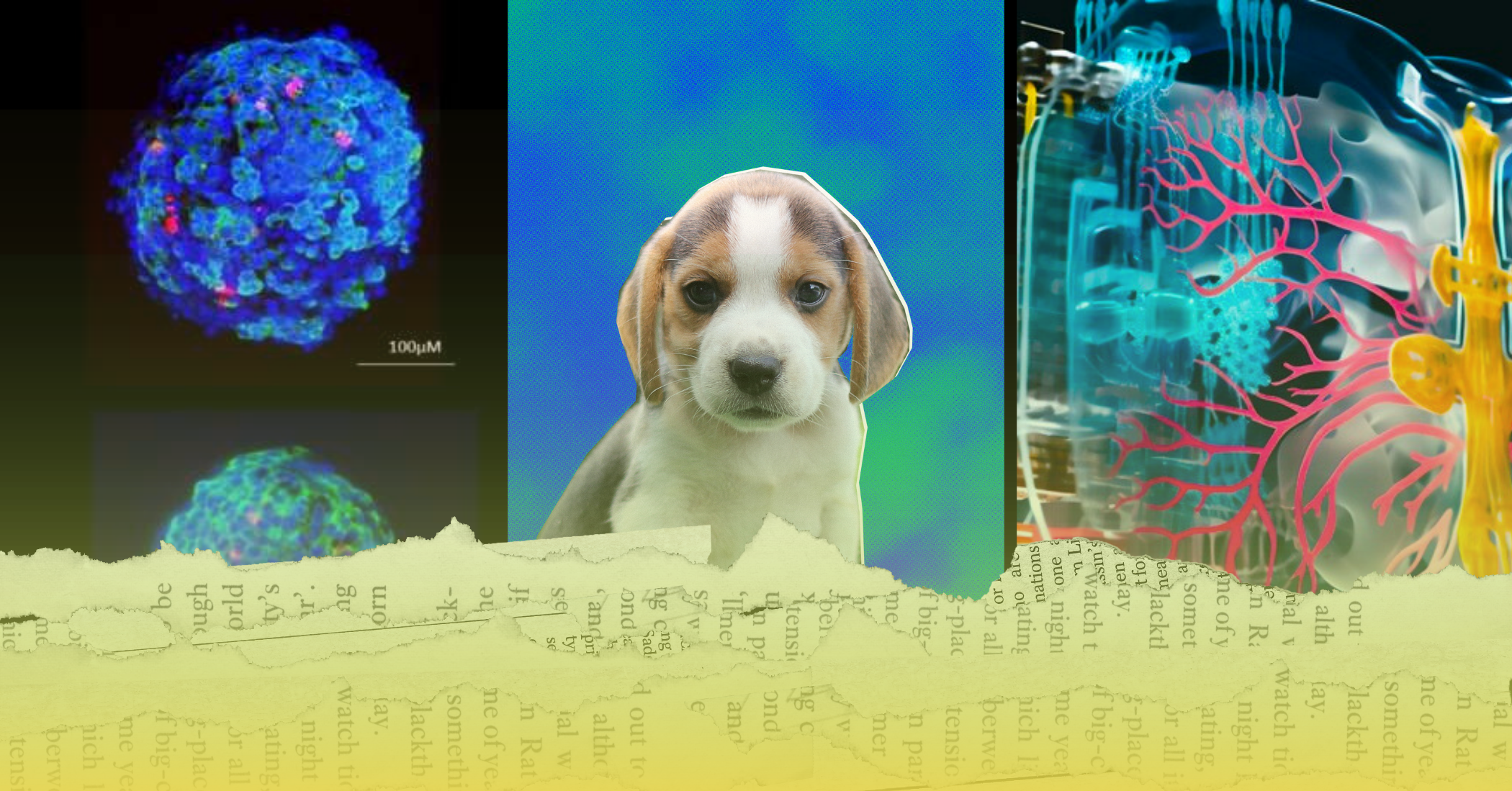
While the animal research industry continues to breed, buy, cage, torture, and kill sentient beings, progressive scientists are busy proving that human-relevant science is not only possible but, in fact, better for us all. Highlights in science from the last month are below.

L’Oréal Develops New Animal-Free Method for Cosmetic Allergen Testing
Physicians Committee for Responsible Medicine, 1/2/2026
“Scientists at L’Oréal have developed a faster and more reliable method for identifying cosmetic allergens using an advanced animal-free chemical safety test.”
“Currently, most allergy testing relies on the use of animals or in vitro experiments that can take up to 24 hours. This new animal-free method assesses reactions in the skin in about an hour and provides a more in-depth insight into a chemical’s skin-irritating properties.” 📰 Full Story →

Fighting Skin Diseases with 3D Bioprinting
Bionity.com, 1/5/2026
“Alternatives to animal testing: At TU Wien, researchers are developing three-dimensional (3D) printing techniques that can be used to create living biological tissue – for example, to study skin diseases.”
“Roughly one quarter of Europe’s population suffers from chronic inflammatory skin diseases such as psoriasis, eczema, or acne. Developing new therapies for these conditions is often difficult. Animal experiments – aside from their ethical concerns – frequently fail to produce reliable results, because animal skin differs greatly from human skin in both its anatomy and immune response . . . Using 3D bioprinting technologies established at the TU Wien, skin models can be produced in a controlled and highly reproducible manner, allowing different diseases to be studied.” 📰 Full Story →

3D-bioprinted lung aims to realistically model influenza and bacterial co-infections
Lucia Gartner, 3Printr.com, 1/5/2026
“Which pathogen combinations increase risk and which immune responses become dysregulated is still only partially understood, despite many animal and cell-culture studies. A team led by microbiologist Julia Oh at the Duke School of Medicine and bioprinting researcher Ibrahim Ozbolat at Penn State University aims to address this gap with a 3D-printed lung model . . . built from stem cell-derived lung cells.”
“In the long term, the platform could help evaluate vaccine and therapeutic candidates more specifically and tackle respiratory research questions with fewer animal experiments.” 📰 Full Story →

Innovative Lung-on-Chip Models Human Alveoli
American Medical Journal, 1/6/2026
“Researchers have developed a cutting-edge human lung-on-a-chip, called iLoC, that could transform how clinicians and scientists study respiratory infections, including tuberculosis (TB). Unlike traditional 2D cultures or animal models, this platform recreates a 3D alveolar environment using human induced pluripotent stem cells (iPSCs) from a single donor, providing an immunocompetent and experimentally accessible model.”
“The iLoC represents a physiologically relevant, genetically tractable platform for studying human alveolar biology, early TB infection, and host-pathogen interactions. Unlike animal models, it allows for human-specific observations and controlled genetic manipulation, offering a new avenue for investigating TB pathogenesis, inflammatory responses, and testing potential therapeutics . . . This pioneering work provides clinicians and researchers with a powerful tool to bridge the gap between molecular mechanisms of infection and patient-relevant lung pathology, advancing precision medicine for TB and other respiratory diseases.” 📰 Full Story →

3D bioprinting of artificial livers: U.S. research project relies on patient-derived cells
Lucia Gartner, 3Printr.com, 1/13/2026
“The shortage of donor livers has for years been one of the greatest challenges in transplant medicine. A new research project at the UT Southwestern Medical Center is now pursuing an additive approach to produce functional livers using 3D printing . . . At the heart of the project, called VITAL, is the combination of patient-derived cells, induced pluripotent stem cells, and precise bioprinting technology.”
“Beyond the prospects for transplantation, the participants also see potential for drug development. Bioprinted livers could serve as physiologically relevant test systems and partially replace animal experiments.” 📰 Full Story →

Female-led Swiss BioTech FluoSphera secures €1.23 million to advance animal-free, human-relevant drug discovery
Rahul Raj, EU-Startups, 1/12/2026
“Geneva-based BioTech startup FluoSphera [“a spin-off from the University of Geneva that provides a suite of systemic, in vitro drug discovery solutions”] today announced that it has raised €1.23 million (CHF 1.15 million) in funding to make drug discovery faster, safer, and more human-relevant with its patented multi-tissue platform . . . The startup will use the funding to scale commercial collaborations, grow its business development team, and expand its AI and automation capabilities for large-scale imaging analysis.”
“‘We’re building the next generation of preclinical tools, not just to get new medicine faster to market and at a lower cost, but also to enhance the quality of drug discovery processes. By improving human relevance and reducing reliance on animal models, we help our partners bring safer, more effective treatments to patients faster,’ said Dr Clélia Bourgoint, CEO and co-founder of FluoSphera.” 📰 Full Story →

How organ-on-a-chip technology delivers human-relevant results
CN Bio, SelectScience, 1/13/2026
“For nearly a century, animal testing has been at the cornerstone of drug development, however, its limitations are stark. Billions are invested into drug discovery annually, yet most drugs never reach the market because inherent species differences cause inaccurate predictions of drug responses in humans. For example, rodents have a fundamentally different metabolic profile to humans and express a wide range of different key metabolic enzymes. This problem is becoming exacerbated by the influx of new drug modalities which rely on human-specific modes of action for which animal testing is even less suited, often with human-specific drug targets not even found to be present in animal tissues.”
“Organ-on-a-chip (OOC) technology, also known as microphysiological systems (MPS), generates 3-dimensional organ and tissue mimics that are perfused by fluidic flow to recreate the bloodstream. These lab-grown mimics have been demonstrated to function and respond to drugs in a more human predictive manner, plus they can be linked together to simulate processes such as drug absorption and metabolism to more accurately predict a drugs bioavailability, or to understand interactions between organs, such as inflammation, which drive disease and cause unexpected toxicities.” 📰 Full Story →

Durham Skin Lab leads safer sunscreen push
Bdaily Business News, 1/13/2026
“A skincare research company is advancing safer sun protection and developing a new generation of specialist products through cutting-edge laboratory testing. Durham Skin Lab, based at Drum Industrial Estate near Chester-le-Street, has invested in new technology that allows SPF testing directly on people, helping to improve the accuracy and reliability of sunscreen products.” 📰 Full Story →

Non-animal testing gains ground with RIFM’s new signature-based grouping framework
Cassandra Stern, CosmeticsDesign, 1/13/2026
“As cosmetic and fragrance ingredient portfolios continue to expand, safety assessors face growing pressure to evaluate increasingly diverse chemistries without relying on animal testing as legislation phasing out the practice gains momentum.”
“One of the biggest challenges in non-animal safety assessment is ensuring chemicals are grouped for scientifically meaningful reasons. Traditional grouping methods primarily rely on broad structural similarity, which can overlook subtle but toxicologically important differences in how ingredients interact with biological systems . . . [the Research Institute for Fragrance Materials (RIFM)’s] signature-based approach adds mechanistic context . . . we consider how structural features influence biological activity . . . The result is a more reliable and reproducible foundation for non-animal safety evaluations.” 📰 Full Story →

Novel Liver Organoids-on-Chip for Drug Safety Testing
Scienmag, 1/16/2026
“In a groundbreaking advancement in the field of pharmacology and toxicology, researchers have developed a pioneering platform utilizing human liver organoids-on-chip technology to evaluate drug-induced liver injury.”
“This innovative organoid-on-chip platform emulates the complex architecture and biological functionality of human liver tissues, offering an unprecedented glimpse into drug metabolism and potential toxicological responses. Traditional methods, including animal models, have long faced criticism for their inability to accurately replicate human liver responses. By contrast, this new organoid technology harnesses human stem cells to create miniature liver tissues capable of mimicking the organ’s critical functions while enabling sophisticated drug testing and evaluation.”
“The platform allows researchers to conduct high-throughput assessments of numerous compounds concurrently, offering efficient analysis and the potential for rapid screening . . . By employing this organoid-on-chip technology, researchers can significantly accelerate the identification of liver toxicants much earlier in the drug development process. Notably, the researchers’ study exemplifies the ability of this technology to discern inter-individual variability in drug metabolism and toxicity. Each patient’s liver responds differently to drugs due to genetic factors, pre-existing conditions, and environmental influences. The organoid system allows for the modeling of patient-specific responses, potentially paving the way for personalized medicine approaches in the field of hepatotoxicity assessment.” 📰 Full Story →

KronosRx: How Cedars-Sinai is Using AI ‘Avatars’ to Replace Animal Testing
hlth, 1/16/2026
“Cedars-Sinai has been awarded a $5.05 million contract from the Advanced Research Projects Agency for Health (ARPA-H) to develop KronosRx, an AI-driven platform designed to predict drug toxicity more accurately in humans. The initiative aims to address a major bottleneck in drug development: the high failure rate of clinical trials caused by adverse drug reactions that are often missed by animal models.”
“KronosRx pairs human stem-cell–derived organoids and organ-on-chip systems—miniature, functional models of organs such as the heart and brain—with deep-learning models trained on millions of anonymized, longitudinal EHR records. These patient avatars allow researchers to observe how experimental drugs affect human tissue in real time, while the AI layer learns from real-world clinical data. According to project lead Nicholas Tatonetti, PhD, this approach enables dynamic modeling that accounts for age, comorbidities, and polypharmacy, rather than relying on static animal tests that often fail to translate to human outcomes.”
“Cedars-Sinai leaders say the platform targets the so-called ‘valley of death’ in drug development, where promising therapies are abandoned after significant investment due to unexpected toxicity in early human trials.” 📰 Full Story →

AI ends animal testing? Researchers create “most accurate” skin irritation prediction model
Sabine Waldeck, personal care insights, 1/21/2026
“Osmo and the Institute for In Vitro Sciences (IIVS) have spared over 19,000 rabbits from animal testing. The collaborators have demonstrated how artificial intelligence (AI) can transform skin safety testing for thousands of chemicals without subjecting animals to experiments.”
“The study used AI to evaluate the skin-irritation potential of over 3,000 chemicals, using validated non-animal testing methods. The results generated safety data that would have required up to 19,134 rabbits under traditional approaches. The research represents ‘the first’ time an AI tool for predicting skin irritation has been trained on data generated by validated human-relevant laboratory methods rather than on often-irrelevant animal testing data.”
“‘Training our AI entirely on human-relevant, non-animal data is critical because the goal is to predict human skin responses, not outcomes from other species. Animal models often fail to translate to humans in cosmetic safety, leading to the elimination of safe ingredients and, at times, accidentally letting through risky molecules,’ says Jacob Sanders, senior machine learning engineer at Osmo . . . ‘Cosmetic animal testing is less aligned with human biology and heavily constrained on throughput, and a machine learning model based on human-relevant, non-animal data avoids both of these limitations.’” 📰 Full Story →

‘No more animal testing’: Scientists in Zlín developing lab model of the human small intestine
Daniela Lazarová & Michaela Kočendová, Radio Prague International, 1/22/2026
“In cooperation with the Institute of Biophysics of the Czech Academy of Sciences, researchers in Zlin aim to create laboratory-grown tissue that closely mimics the real small intestine and could help drug development and research into intestinal diseases without the need for animal testing.”
“According to [Petr] Humpolíček [“head of the research team”], many human tissues can already be produced with such precision that animal testing is no longer necessary. ‘Tests on eye tissue or lung mucosa no longer have to be carried out on animals; researchers can use an in vitro model instead. Intestinal tissue, however, is significantly more complex than other tissues or mucous membranes, which is why researchers have been using animals. Our primary goal is to make the model as real as possible and technologically simple enough so that researchers can easily make it themselves in their own laboratories.’”
“The project has received 11 million crowns from the Czech Science Foundation, and the completed model of the human small intestine is expected to be presented at the end of 2027.” 📰 Full Story →

A miniature human liver transforms toxicology testing of food contaminants
INRAE, Medical Xpress, 1/29/2026
“Assessing the toxicity of food contaminants—including carcinogenic potential—is a major challenge in evaluating the risks associated with exposure. In recent years, as part of efforts to reduce animal testing, two-dimensional (2D) analytical methods using human hepatic cell lines (which make up most of the liver) have advanced predictive toxicology for contaminants. However, these approaches have limitations, because they do not sufficiently capture the organ’s complexity. To improve toxicology studies of chemicals, the researchers developed a miniature, three-dimensional (3D) liver model that includes the different cell types that make up a human liver. ”
“‘This mini-liver model mimics the human organ. Our approach maps the effects of contaminants and reveals certain impacts that conventional methods do not detect. In the medium term, using this type of human cell model should improve our ability to predict the toxicity of certain chemicals in humans and limit the need for animal testing,’ said Marc Audebert, INRAE Research Director.” 📰 Full Story →

New Human-Based In Vitro Model Developed for Investigating Embryo Implantation
Physicians Committee for Responsible Medicine, 1/30/2026
“Scientists have developed a new human-based endometrial model to study embryonic implantation in the early stages of pregnancy.”
“The model replicated key developmental hallmarks, including early placental development and the formation of appropriate cellular structures and connections. This promising platform opens new opportunities to advance understanding of early pregnancy development without reliance on animal experimentation.” 📰 Full Story →
When you share these stories, you’re helping expose a truth the animal research industry wants to hide: ethical science is better for everyone.
Share this science news compilation on Facebook, X, or Bluesky.