Here’s a roundup of the latest, biggest news stories related to animal research—all the recent media coverage you need to know right now to be the most effective activist for animals in labs.
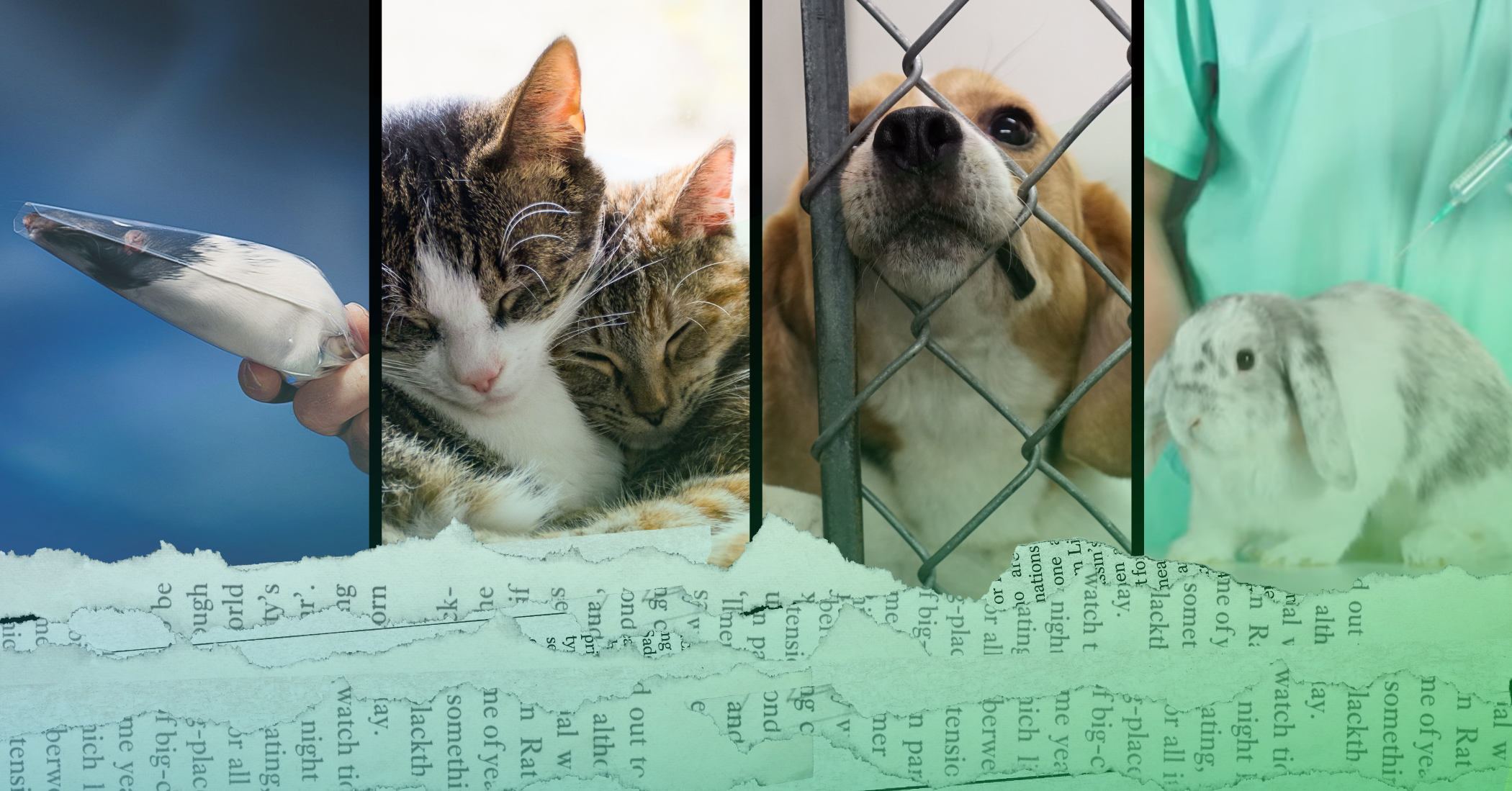
Torturing Animals, Failing Humans: The PTSD Research Scam
Rise for Animals, 3/26/2026
Animal experiments on PTSD rely on fear, pain, and forced trauma—and even researchers admit they don’t translate to humans.
Despite decades of suffering and millions spent, these methods have produced no meaningful breakthroughs for people, exposing a system driven by profit, not progress. 📰 Full Story →
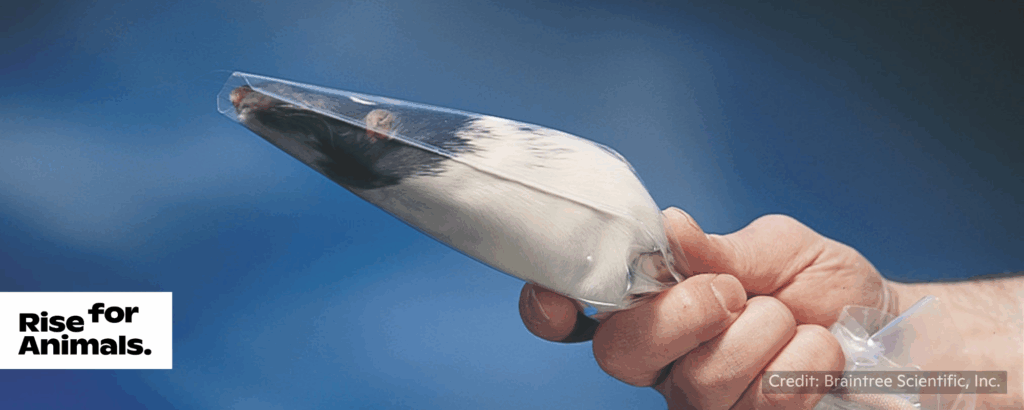
Regulators Must Act Now for the Dogs at Ridglan Farms
Rise for Animals, 3/25/2026
To avoid felony animal cruelty charges, Ridglan Farms agreed to stop breeding dogs for sale to laboratories by July 1, 2026. But more than 2,000 dogs remain inside the facility today—and state and federal regulators have the authority to act now to get them out. 📰 Full Story →
✍️ Tell USDA APHIS and Wisconsin DATCP to terminate Ridglan Farms’ dog breeding license and free the dogs now. Send your letter here.

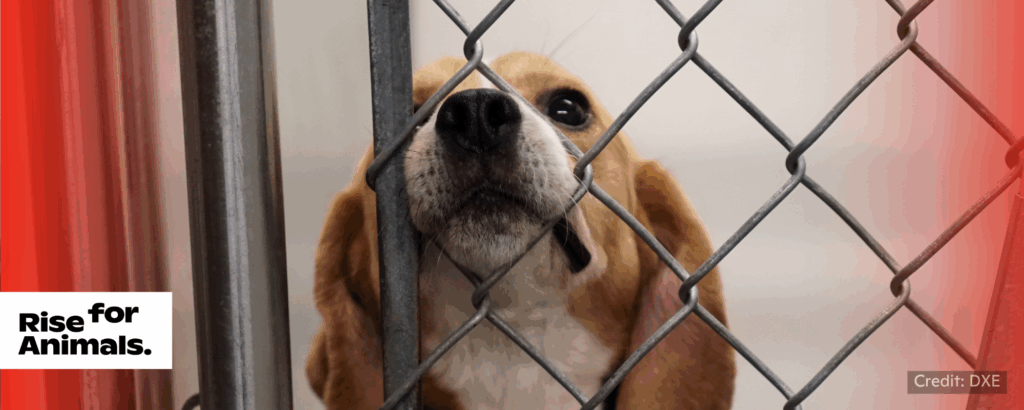
After Life In A Lab, These Bunny Best Friends Finally Feel The Sun On Their Fur
Russel Moneva, iheartdogs, 3/20/2026
“Donna and Figaro had spent their entire lives in a place where freedom did not exist, where every day felt the same, and nothing belonged to them, not even their own sense of self. They had never felt soft grass beneath their feet or fresh air brushing against their fur, and they had never been given the chance to explore, play, or simply exist as rabbits should. When their rescue finally came, it was more than a change of location. It was the first real moment they were allowed to experience life with comfort, safety, and hope.”
“For years, the two rabbits existed in a laboratory, used for testing and breeding. They were not seen as individuals. They were part of a system that left little room for comfort or curiosity. That all changed when Save the Buns stepped in and brought them to safety, placing them in the compassionate care of Woodstock Farm Sanctuary.” 📰 Full Story →
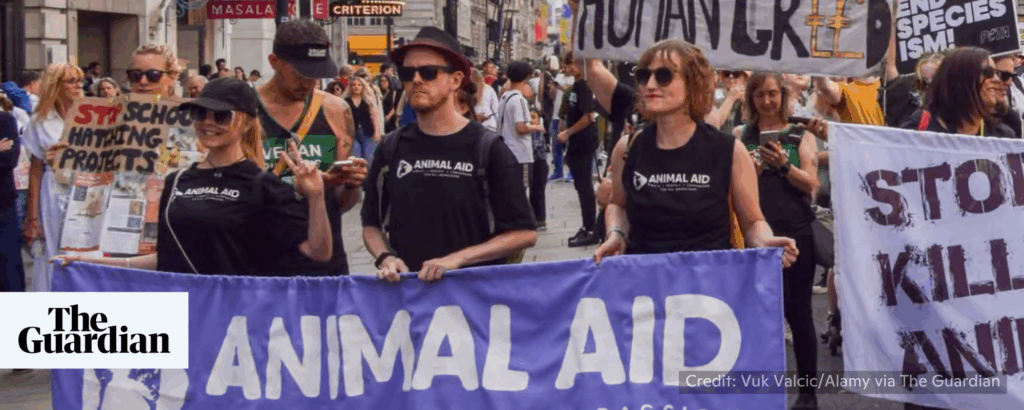
Charity challenges ‘chilling’ law change restricting protest at animal testing sites
Haroon Siddique, The Guardian, 3/20/2026
“A charity has filed a legal challenge over a ‘chilling’ change in the law that restricts protest outside animal testing facilities in England and Wales by reclassifying them as a ‘key national infrastructure’. Animal Aid says last month’s amendment to the Public Order Act . . . created a new category of ‘life sciences infrastructure’, but the charity’s lawyers argue that it does not fall within the ordinary and natural meaning of infrastructure, nor within the existing statutory context, which is confined to nationally significant systems such as transport, energy, and utilities.”
“‘Protest has been instrumental in driving the transition to human-relevant science. Indeed the government’s recently published replacing animals in science strategy would not exist without it. Decades of protest and the subsequent raised public awareness brought about the UK’s ban on animal testing for cosmetics.’”
“The grounds for judicial review state: ‘It will have a chilling effect on peaceful protesters and campaigners who are legitimately concerned by the ethical and scientific issues surrounding animal testing and experimentation.’ They say the classification encompasses every facility in the country that involves, or is related to, live animal testing or experimentation regardless of whether it offers any wider public benefit.” 📰 Full Story →
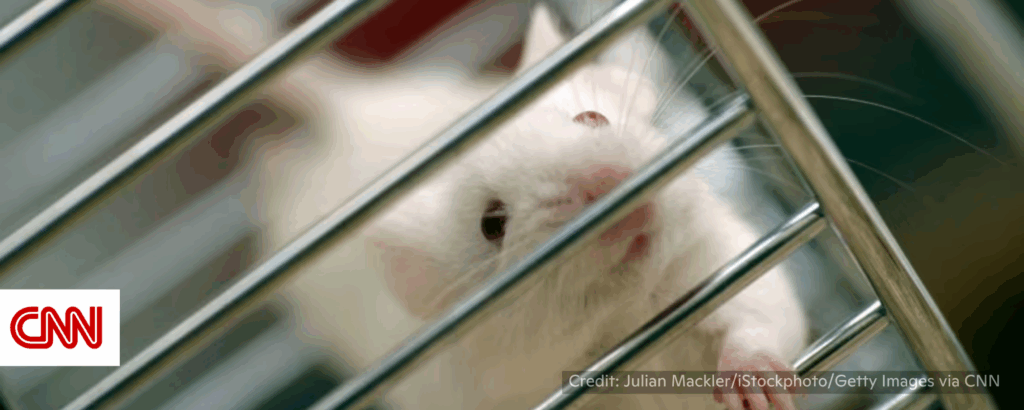
The push to end animal testing is gaining steam, but technology can’t fill the gap yet
Jen Christiansen, CNN, 3/20/2026
“A social media post from the US Food and Drug Administration this week shows a big-eyed macaque staring out from behind bars. ‘Some drugs use 144 monkeys on average for preclinical testing,’ the post says. ‘We’re changing that.’ Animal testing has been a target of the Trump administration’s Make America Healthy Again movement, and on Wednesday, the FDA released draft guidance that aims to clear up how drug developers can use alternative testing when seeking approvals from regulators. The National Institutes of Health also announced that it’s investing $150 million to develop animal model alternatives.”
“‘This draft guidance advances our commitment to replace animal testing with human-relevant, scientifically rigorous methods,’ US Secretary of Health and Human Services Robert F. Kennedy Jr. said in a statement. ‘These data can be much more predictive and also a more ethical option,’ the official said during a briefing with reporters.” 📰 Full Story →
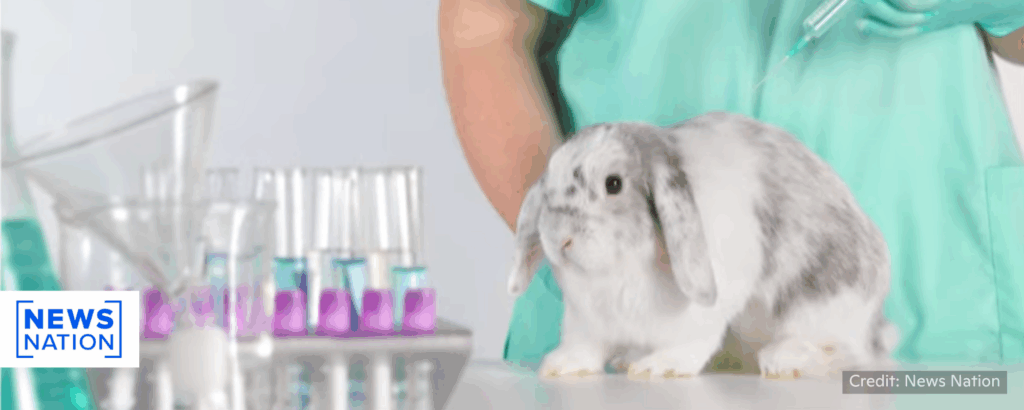
FDA to eliminate unnecessary animal testing
Katie Pavlich Tonight, NewsNation, 3/20/2026
“The Trump administration is making good on its promise to crack down on animal testing.”
Said FDA Commissioner Dr. Marty Makary: “‘The FDA has been trying to move away from animal testing. . . . We’re eliminating unnecessary animal testing . . . and modernizing. We’re going to use computational modeling . . . We’re using organ-on-a-chip technology . . . and all of this means we’re not going to need the chimpanzees and the bunny rabbits and all of these animals with nearly the frequency . . . We are modernizing the agency, using new technologies. They’re better, cheaper, safer, and they’re more humane. I don’t believe God made these animals for us to subjugate and torture.’”
“‘So it turns out animal models are just not good models to test toxicity in humans. . . . [Mice and humans are] not the same. And 90% of drugs that pass animal testing do not pass in humans, safety and efficacy. So we may actually be missing out on cures and meaningful treatments of drugs that don’t get through the animal phase. The new techniques, the laboratory techniques and the computational modeling are far superior, so we’re modernizing.’” 📰 Full Story →
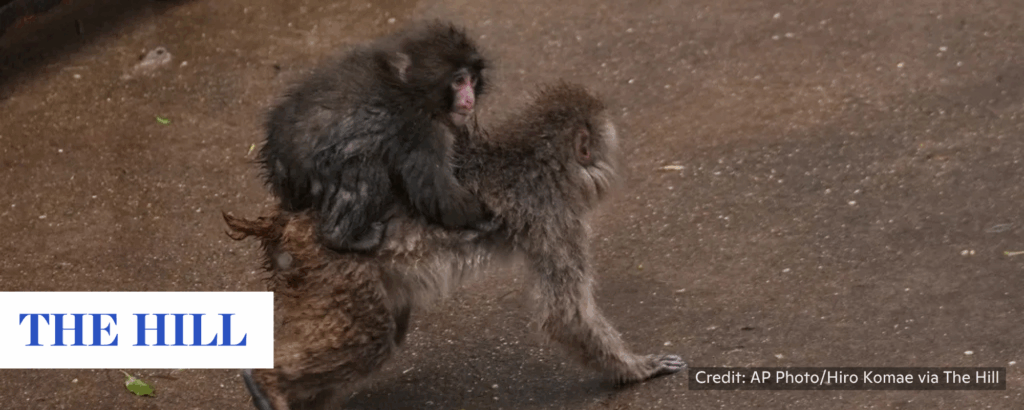
Stop importing monkeys for lab experiments. It’s cruel. And it’s dangerous.
Rep. Nicole Malliotakis (R-N.Y.), Rep. Dina Titus (D-Nev.), Edie Falco, The Hill, 3/20/2026
“By now, most of you have seen little Punch, a 7-month-old macaque who stole the hearts of animal lovers around the world. But while his viral moment is captivating, it reminds us of a disturbing truth: Monkeys like Punch are captured or bred and shipped into the United States every year, not to be loved, but to disappear into research labs. . . . It is time to stop importing monkeys for experimentation. So we are calling on Health and Human Services Secretary Robert F. Kennedy Jr. to suspend the practice immediately.”
“For decades, the United States has imported primates by the tens of thousands each year. And taxpayers help fund the whole pipeline: federal permits, quarantine facilities, inspections, and government grants. Yet the benefits for human health are far less clear than supporters claim. Many scientists increasingly question whether primate experiments translate into meaningful human treatments. We are subsidizing something that does not work as promised, while exposing communities to serious risks.”
“Kennedy has said he will review primate imports. We support that commitment and urge him to go further and suspend them now. An immediate suspension would reduce biosecurity risks, protect workers and communities, and halt a pipeline that is fundamentally unsafe and inhumane.”
“Little Punch made the world smile. The least we can do is make sure no more animals like him are shipped around the world to suffer and die.” 📰 Full Story →
Senators Collins, Peters Introduce Bipartisan Bill to Connect Retired Government Laboratory Animals with Loving Homes
Susan Collins, Susan Collins Newsroom, 3/24/2026
“[] U.S. Senators Susan Collins and Gary Peters (D-MI) introduced the Animal Freedom from Testing, Experimentation, and Research (AFTER) Act. The bipartisan legislation would ensure that every federal agency that uses animals for research has policies in place to facilitate the relocation of retired, healthy lab animals to private homes, animal rescues, or reputable sanctuaries.”
“The AFTER Act directs federal agencies to develop regulations that would facilitate the retirement of lab animals. DOD, VA, FDA, and NIH already have these rules in place. The bill also provides flexibility for each agency to devise its own policy, with the goal of ensuring that such animals, whenever possible, are retired rather than killed. The legislation also requires that animals be evaluated by a licensed veterinarian and pronounced both mentally and physically healthy before leaving an agency, helping to ensure a smooth transition to a new environment. Finally, the bill encourages federal agencies to work with nonprofit organizations to help place retired animals in sanctuaries and shelters across the country, not just those closest to the research facility.” 📰 Full Story →

Rock Springs Activist Defends Raid on Wisconsin Beagle Lab, Says Arrest Was Worth It
Jen Kocher, Cowboy State Daily, 3/25/2026
“Madhu Anderson doesn’t regret the arrest. She recalled carrying the beagle in her arms through a rainstorm and kissing her on the forehead and telling her she’d be safe as she loaded the dog into a waiting vehicle. Anderson . . . was among the 27 animal rights activists arrested on March 15 after breaking into a Wisconsin biomedical research facility and taking 30 beagles. . . . Anderson said she had no doubt she would be arrested because she’d committed to not leaving until all the animals were freed. ‘It’s not a crime to rescue abused animals when they are suffering,’ she said.”
“She called the ‘nonviolent mass beagle rescue’ a last resort because activist groups have been calling on authorities to intervene for nearly nine years following the undercover investigation that initially exposed the conditions that led to the violations and criminal charges. . . . ‘This facility has a documented history of hundreds of animal welfare violations, including performing surgeries on dogs without anesthesia or painkillers. For years, advocates tried everything else — we filed complaints and pleaded with officials,’ Anderson said. ‘When no one acted, we felt we had a moral duty to intervene.’” 📰 Full Story →
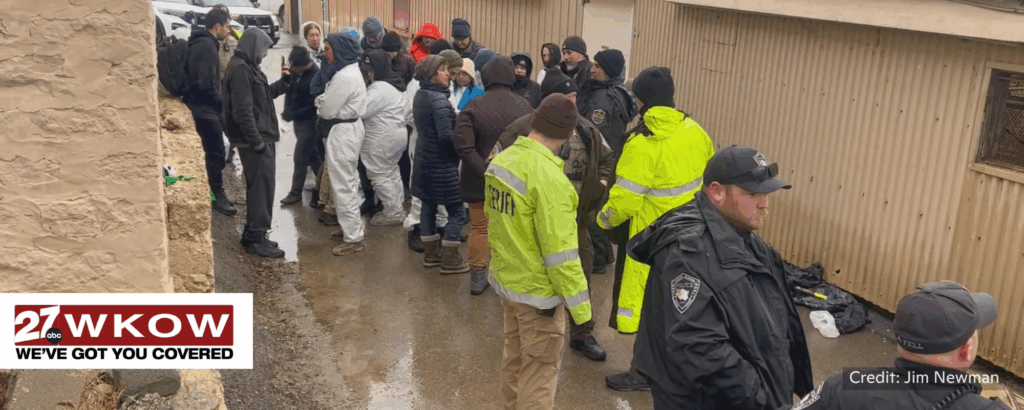
Dane County Sheriff’s Office addresses outcry from people ‘around the world’ in wake of Ridglan Farms break-in
Caroline Bach, 27 WKOW, 3/25/2026
“The Dane County Sheriff’s Office released a statement on Wednesday, saying it has received inquiries from ‘around the world’ regarding a break-in at Ridglan Farms. On March 15, about 60 animal rights activists entered Ridglan Farms and removed several dogs, which prompted multiple arrests. The facility breeds beagles that are used in biomedical research.”
“In 2025, Ridglan Farms agreed to stop selling dogs purposely bred for biomedical research, effective on or before July 1, 2026, as part of a court settlement to avoid criminal charges. The sheriff’s office, therefore, acknowledged that until July 1, Ridglan Farms is allowed to sell its remaining dogs and operate as a USDA Class A dog breeder.” 📰 Full Story →
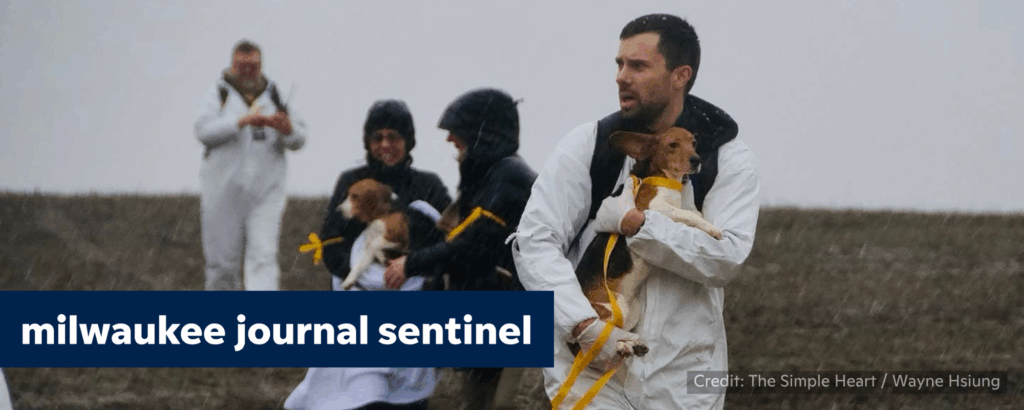
Why are dogs still used in medical research in Wisconsin and the US?
Quinn Clark, Milwaukee Journal Sentinel, 3/25/2026
“On the morning of March 15, dozens of activists in white protective suits ran through the rain carrying beagles out of Ridglan Farms, a dog breeding facility near Madison. Images of the break-in spread fast. But for many, the shock wasn’t only about the incident itself. It was that dogs are being used in medical research at all.”
“According to the U.S. Department of Agriculture’s most recent report, 42,880 dogs were used in research facilities in 2024. . . . The USDA figure doesn’t include dogs that were bred for research and are still being housed at breeding facilities.”
“The largest breeding facility was Envigo, which operated a facility in Cumberland, Virginia, but it was shut down in 2022 following federal lawsuits and investigations that found severe animal welfare violations. That leaves Marshall Farms in New York and Ridglan Farms as the primary remaining suppliers, according to USDA records.” 📰 Full Story →
Help spread the word. Share this news compilation on Facebook, X, or Bluesky.