Here’s a roundup of the latest, biggest news stories related to animal research—all the recent media coverage you need to know right now to be the most effective activist for animals in labs.
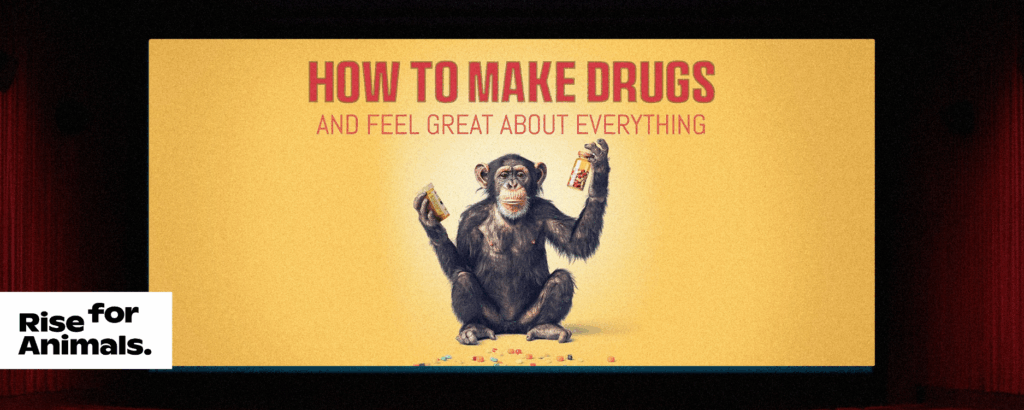
New Film, Old Lies: The Truth About Animal Experimentation
Rise for Animals, 1/19/2026
A new documentary exposes how animal experimentation survives on bad science, false hope, and a myth that refuses to die. 📰 Full Story →
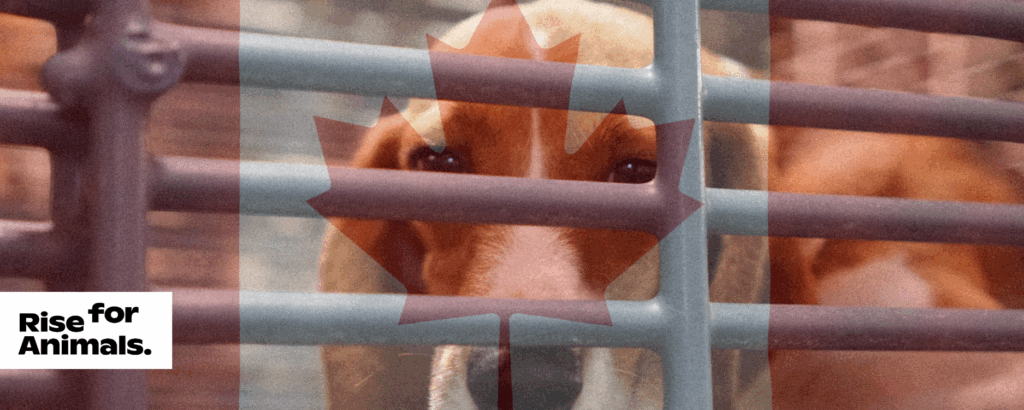
Caution: Ontario’s New Bill Is a Smokescreen
Rise for Animals, 1/22/2025
Ontario claims its new bill protects dogs and cats in research, but the fine print tells a different story. Here’s how vague language and loopholes leave animals vulnerable and labs untouched. 📰 Full Story →
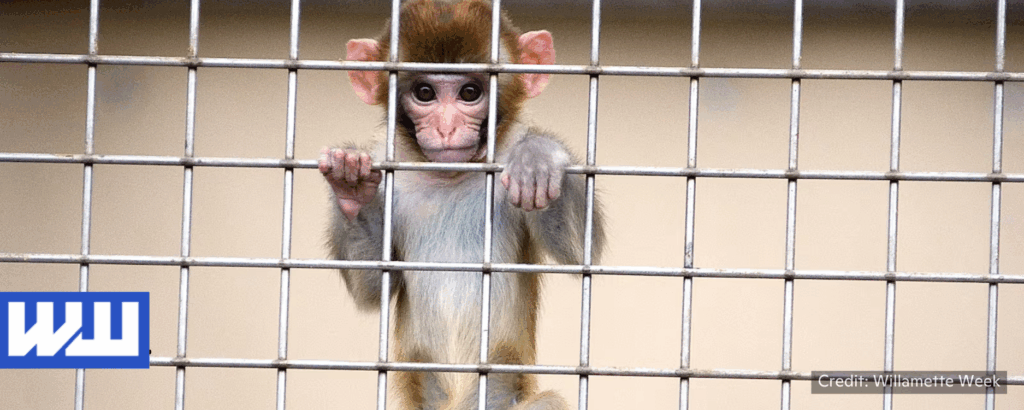
Primate Center Would Cost More to Close Than to Keep Open, OHSU-Funded Study Says
Anthony Effinger, Willamette Week, 01/14/2026
“Closing the Oregon National Primate Research Center, as Gov. Tina Kotek and some legislators would like, would cost at least $118 million, according to Oregon Health & Science University, which runs the Hillsboro facility . . . The cheapest alternative, according to Huron Consulting Group, industry experts who helped Harvard University close its primate research facility in 2015, would be to keep the center open at a smaller scale, even though it runs a deficit. That option would cost between $50 million and $70 million over eight years.”
“The Huron study failed to appease [State Rep. David] Gomberg, who requested it through a ‘budget note,’ a tool used by legislators to give instructions to state agencies on how to spend money or manage programs in the current biennium . . . ‘What we got back is a shameful justification for keeping the primate center in the business of experimenting on monkeys rather than a serious closure proposal,’ Gomberg said. ‘Six months ago, ONPRC told their staff they expected “‘devastating’” reductions in research funding. Nowhere is that acknowledged in this report.’ Nor did Huron adequately address a change in NIH policy, effective last October, that allows government-funded primate centers like ONPRC (there are seven) to charge costs for ‘rehoming/retirement of experimental animals,’ Gomberg said. The change means that closing the ONPRC would cost less than what Huron estimates, he said.”
“‘What we are told is that continuing redundant, inconclusive and outdated testing on monkeys will lose the University $70 million in the next eight years, but closing will cost even more,’ Gomberg said. ‘In what real world can that be true?’”📰 Full Story →
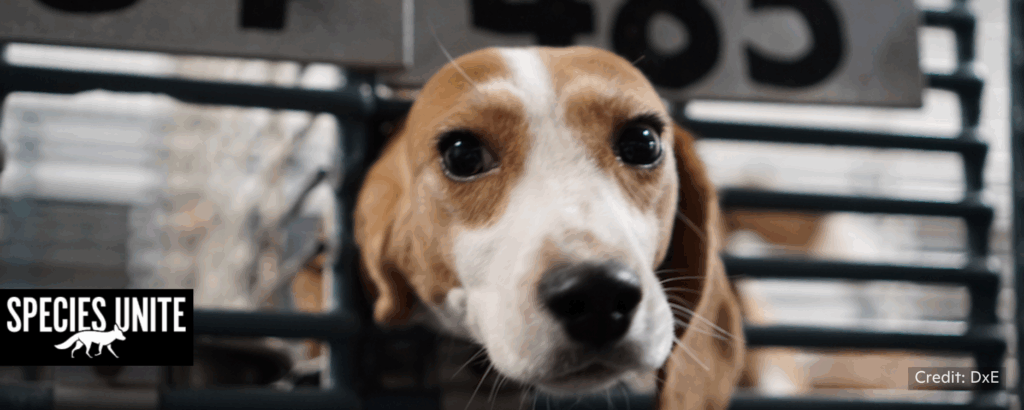
Inside the fight to stop Ridglan from killing 3200 “surplus” beagles
Tamara Bedic, Species Unite, 01/16/2026
“It’s been eleven weeks since Ridglan Farms agreed to wind down the breeding arm of its business, rather than face a criminal trial for felony animal cruelty. Despite the urging of animal rights groups, the agreement Special Prosecutor Gruenke negotiated with Ridglan Farms did not confiscate their 3,200 beagles; instead, it gave America’s second largest beagle breeder until July 1, 2026 to dispose of them.”
“Dane County Supervisor, Colin Barushok, expressed concern about the fate of unsold dogs given Ridglan’s July 1st deadline: ‘Without a state law requiring Ridglan to make dogs available for adoption, 3,000 beagles could be euthanized.’”
“Lindsey Soffes of Rise for Animals followed the money. Tracking Ridglan’s interstate domestic sales, she noted that Ridglan sold around 760 dogs January through June 2025. ‘If Ridglan follows the same sales pattern observed since 2022 (when it appears over half its annual sales were made in the first two quarters), Ridglan may sell fewer than 1,500 dogs this year.’” 📰 Full Story →

Natalie Bennett moves to block protest crackdown with rare House of Lords intervention
The Canary, 01/16/2026
“ . . . [Green Party peer Natalie Bennett] has tabled a fatal motion seeking to stop the government amendment that would criminalise and restrict peaceful protest around animal testing facilities. The motion targets the government’s recent amendment to the Public Order Act, approved in the House of Commons on 14 January by 301 votes to 110, which reclassifies life sciences infrastructure, including animal testing facilities, as ‘key national infrastructure.’ . . . redefining research laboratories as critical national assets alongside airports, power stations, and transport networks dramatically expands the state’s power to restrict protest. Peaceful demonstrations near any site linked to animal testing, including universities and research campuses, could face restrictions, bans, or even prison sentences of up to a year.”
“Fatal motions can stop secondary legislation becoming law if they are agreed to, although their success is by no means guaranteed. The date of the debate for this fatal motion has yet to be announced.” 📰 Full Story →
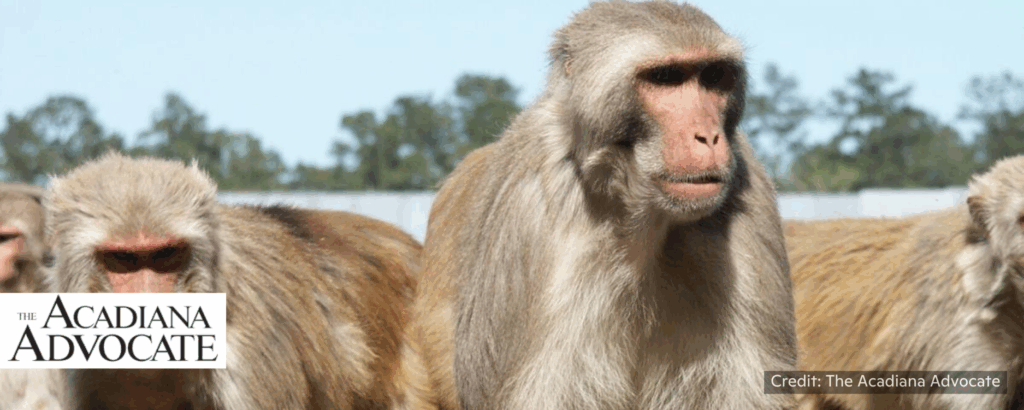
USDA says UL New Iberia Research Center violated federal rules when it transported monkeys
Stephen Marcantel, The Acadiana Advocate, 01/16/2026
“The U.S. Department of Agriculture said a University of Louisiana at Lafayette research facility in New Iberia failed to follow federal regulations when it shipped monkeys. The document . . . asked the facility to correct its actions moving forward after it shipped dozens of primates without obtaining valid health certificates, risking the spread of tuberculosis.”
“In September, PETA called on the federal agency to investigate the research center, alleging that it and a trucking company violated the Animal Welfare Act when they shipped 34 long-tailed macaques to a facility in Reno, Nevada, in January 2025. The New Iberia center conducted a routine health screening on Dec. 12, 2024, prior to shipping, but regulations require that no primate be shipped more than 10 days past its inspection date. Additionally, the federal agency found that on Jan. 27, 2025, the research facility transported 19 macaques to another facility in Louisiana, 18 days past initial inspection.” 📰 Full Story →

US FDA issues warning letter to Telangana animal testing lab for ‘serious violations’
SNV Sudhir, Deccan Herald, 01/19/2026
“The US Food and Drug Administration (FDA) has issued a warning letter to Palamur Biosciences Private Limited (PBS), a Telangana-based beagle breeder and animal testing lab, citing serious violations of regulations.”
“The FDA warning follows the January 2025 inspection and review of Palamur’s inadequate written responses. The agency concluded that the facility committed ‘serious violations of Title 21, Code of Federal Regulations (CFR) Part 58,’ stemming from systemic failures in study director oversight that question the reliability of safety data.”
“Palamur Biosciences houses over 1,200 animals, including beagles, monkeys, cows, pigs, and other species, used for experiments or, in the case of dogs, bred and sold to other labs.” 📰 Full Story →
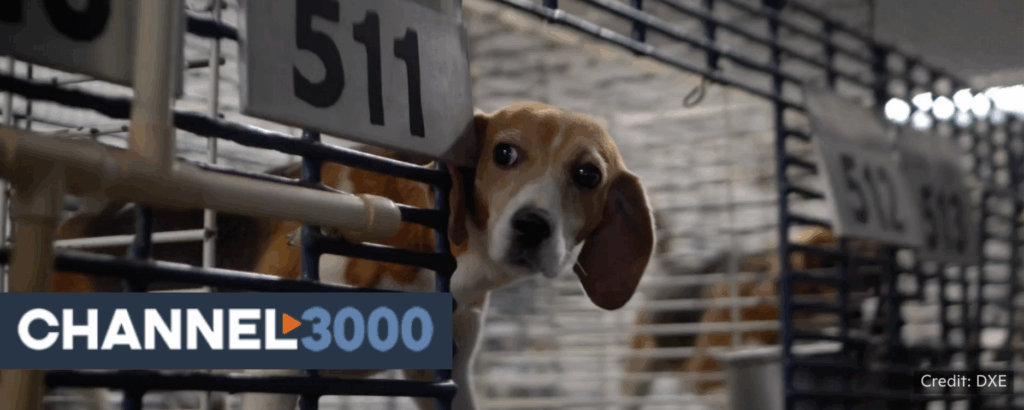
Judge dismisses Ridglan Farms case against advocacy group with prejudice
Kyle Jones, Channel3000, 01/20/2026
“A Dane County judge on Tuesday dismissed a lawsuit filed by embattled beagle breeder Ridglan Farms against an advocacy group that accused it of abusing animals. Ridglan Farms accused Dan4Dogs [sic], its founders and a former Ridglan employee of interfering with the breeder’s contractual relationships and harming its business.”
“In an order dismissing Ridglan’s suit, Judge Jacob Frost held that Dane4Dogs’ actions were protected free speech, citing decisions by the U.S. Supreme Court. Additionally, Frost wrote that Ridglan failed to prove any of its claims . . . Frost dismissed Ridglan’s lawsuit with prejudice, meaning the breeder cannot file the same claim again.” 📰 Full Story →
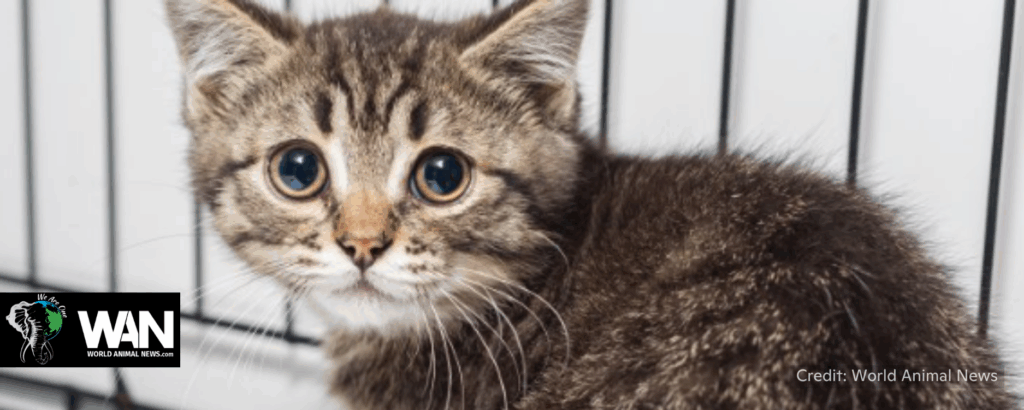
Cruelty in Canada: Investigation Uncovers Millions in NIH Funds for Animal Testing
World Animal News, 01/20/2026
“A new investigation by White Coat Waste (WCW) reveals that American tax dollars are fueling cruel and unnecessary animal experiments in Canada. The findings show that several National Institutes of Health (NIH) grants have committed more than $27 million to dog, cat, and rabbit experiments conducted at Canadian universities and for-hire animal testing labs, including nearly $3.9 million in 2025 funding alone, and with more than $316,000 already allocated this year.”
“These revelations are especially alarming as Canadian lawmakers propose bans and restrictions on dog and cat testing. While Canada debates ending these practices, the NIH is exporting cruelty across borders, forcing American taxpayers to bankroll suffering in foreign laboratories.”
“Last summer, NIH Deputy Director Nicole Kleinstreuer said the agency would phase out testing on dogs and cats and called it ‘unconscionable.’ However, the NIH has not yet announced any specific plans and continues to fund research on cats and dogs in the U.S., Canada, and other countries.” 📰 Full Story →
Help spread the word. Share this news compilation on X, Bluesky, or Facebook.