Here’s a roundup of the latest, biggest news stories related to animal research—all the recent media coverage you need to know right now to be the most effective activist for animals in labs.
Authorities Block Beagle Rescuers With Militarized Force
Rise for Animals, 4/21/2026
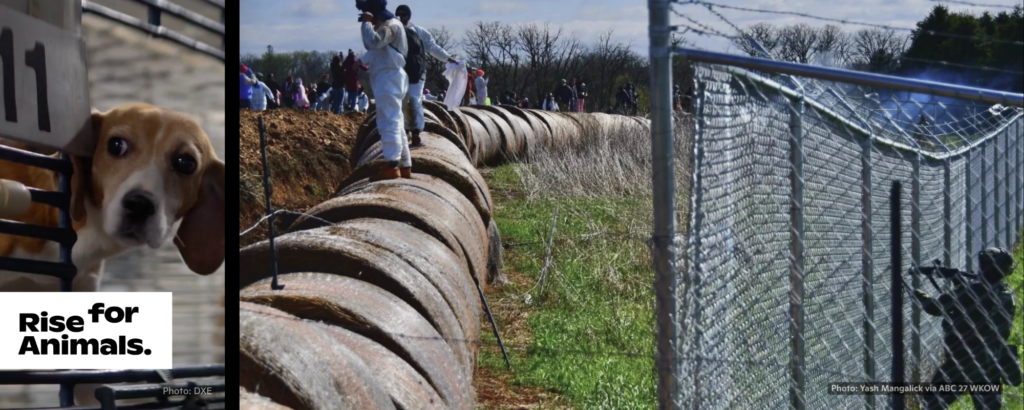
Last Saturday, a second, larger rescue attempt for beagles at Ridglan Farms was met with a militarized response, with authorities using tear gas, rubber bullets, and arrests to block animal advocates from reaching a single cage.
What unfolded reveals how the animal research industry maintains control. 📰 Full Story →
6 Times Animal Testing Failed—and Human Science Got It Right
Rise for Animals, 4/23/2026
For far too long, animal experimentation has been treated as a necessity of biomedical research. But when it comes to predicting what actually happens in the human body, it fails time and time again.
The truth is, more than 9 in 10 drugs that appear safe in animals fail in humans.
That failure carries real consequences—for animals, for patients, and for scientific progress. But there’s a better way.
This World Day for Animals in Laboratories, see how human-relevant research outperforms animal testing, and learn how momentum for better science is building across science and policy. 📰 Full Story →
Five beagles rescued from research laboratories released to fosters in Calgary
Devika Desai, Calgary Herald, 4/15/2026
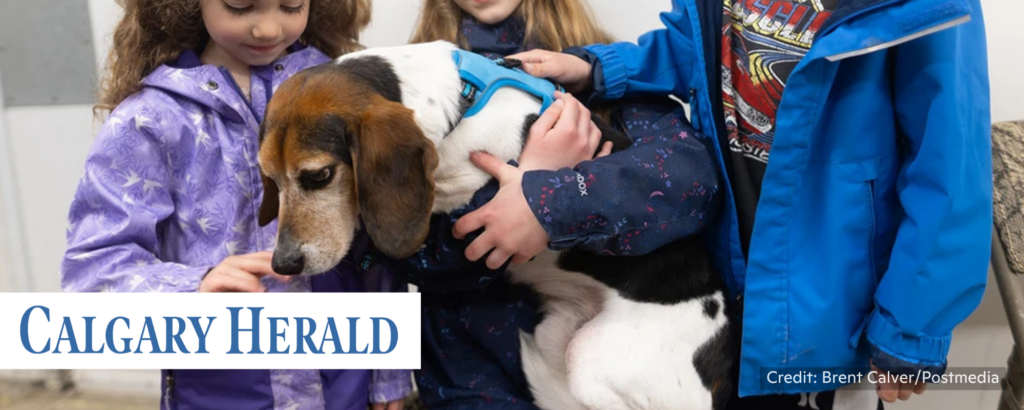
“Joey, along with four other beagles, had been transported across the Canada-U.S. border after being rescued from a life as test animals in research facilities.”
“‘We rarely ever know what was done in the laboratory,’ she [Nicole Miller, whose family is fostering Joey]. But most of the dogs they rescue exhibit similar symptoms, including post-traumatic stress disorder and anxiety. ‘They have never had a choice in their life,’ she said. ‘They were bred right into testing. So this is now their first opportunity to choose to sleep on the couch or choose to play with another dog or pick up a toy.’” 📰 Full Story →
Ohio bill would require public universities to publish annual animal testing reports
Ava Boldizar, NBC4, 4/17/2026
“A recently introduced Ohio bill aims to require public universities to disclose certain information annually about their animal testing practices. . . . The legislation would require state institutions of higher education that maintain an animal testing facility to share publicly accessible reports on their websites each April 1, starting in 2028.”
“Under the proposal, the report would include a breakdown of the number of animals the institution used by species over the previous year, and how much state funding it used to purchase and care for the animals. The report would also include an explanation of what progress the facility made, if any, to reduce the number of animals required for research, expand research methods that do not involve animals, and minimize the pain and suffering of animals.” 📰 Full Story →
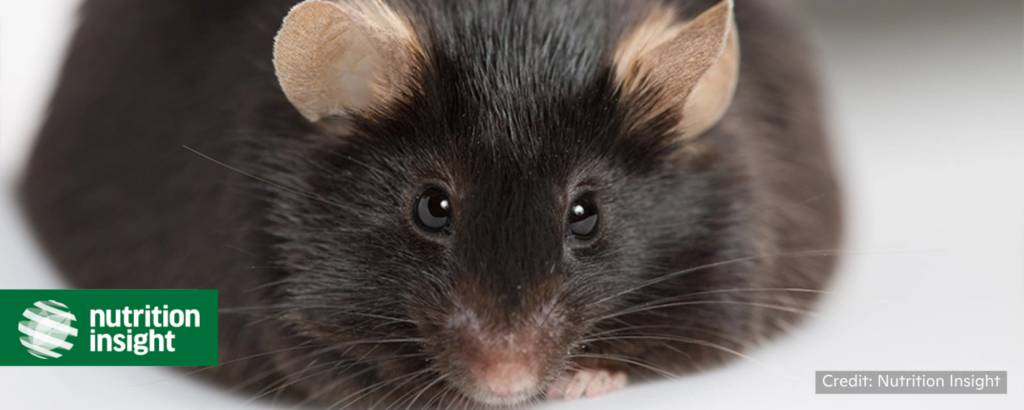
Obesity research: Animal models outpace human studies, stalling real-world strategies
Venya Patel, nutrition insight, 4/17/2026
“Research has found that although there is an increase in obesity research, scientists are heavily relying on animal models over human studies. A new review calls for experts to conduct more human research, specifically on energy balance, which is essential for effective prevention and treatment of obesity.”
“The team analyzed over 7,600 publications over the past decade, finding that animal research has risen over 10% annually. In comparison, human studies grew by only 4%. . . . ‘Animal studies are growing much faster than human studies,’….” 📰 Full Story →

Animal rights group’s youth division brings ‘Abduction’ simulation display to FGCU
Chloe Walker, WGCU News, 4/17/2026
“FGCU students got a taste of alien abduction and animal testing recently as peta2 brought its virtual reality simulation ‘Abduction’ to campus. The event invited students to step into a simulated scenario designed to mirror what peta2 said were experiences animals endure in laboratory testing.”
“As they sit in the VR chair, participants are introduced to the premise: a group of friends stranded with a flat tire who are soon abducted and subjected to testing. The simulation then depicts scenes meant to parallel animal experimentation, including confinement and forced exposure to harmful substances.”
“Michala Hooper, the Abduction tour administrator for peta2, said the simulation is meant to create an emotional connection that traditional outreach methods may not achieve. ‘Empathy needs an image. Empathy needs an experience,’ Hooper said. ‘These participants get to experience the lives of animals in laboratories through the analogy of the alien abduction.’ . . . She added that the organization encourages participants to take action after the experience, including signing petitions and advocating for alternatives to animal testing.” 📰 Full Story →
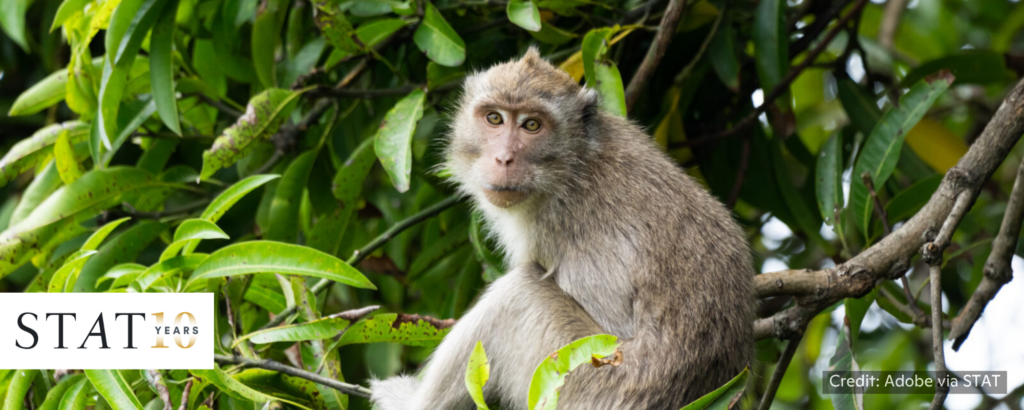
A controversy over research monkeys highlights ambiguity over health standards
Ed Silverman, STAT, 4/20/2026
“A leading animal rights group is accusing Pfizer of running afoul of its own standards in the handling of research monkeys, jeopardizing both the welfare of the animals and the integrity of scientific research. But the case also appears to highlight a lack of guidelines for assessing the health of monkeys before they are shipped for medical research. At issue are nearly three dozen monkeys that Pfizer procured in late 2024 from an academic research center before making plans to have them shipped to a contract research organization for clinical work.”
“According to documents obtained by the People for the Ethical Treatment of Animals (PETA) and shared with STAT, veterinarians at the academic research center cited possible concerns with four of the monkeys. One was flagged as having weight issues and other possible health concerns, another had a broken arm that may have required surgery, and two had Shigella, a type of bacteria that causes diarrhea. Despite the issues, the monkeys were shipped the day after being examined, a move that PETA says contradicted Pfizer’s standards for allowing shipments to proceed. . . . PETA [] sees the episode as a case in which Pfizer downplayed health issues to ensure the monkeys were available for research — a decision that in its view not only violates animal rights but threatens to compromise clinical research and subsequent trial outcomes.” 📰 Full Story →
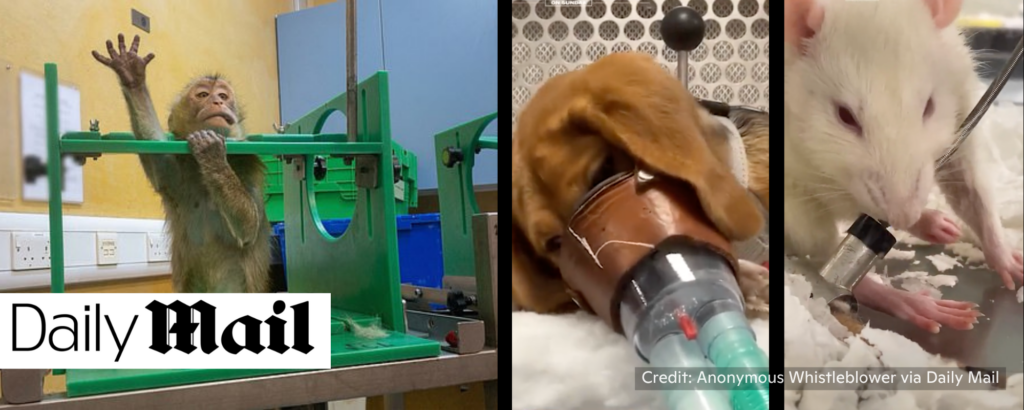
Pictured: The monkeys force-fed to test fat jabs
Tom Kelly, Daily Mail, 4/18/2026
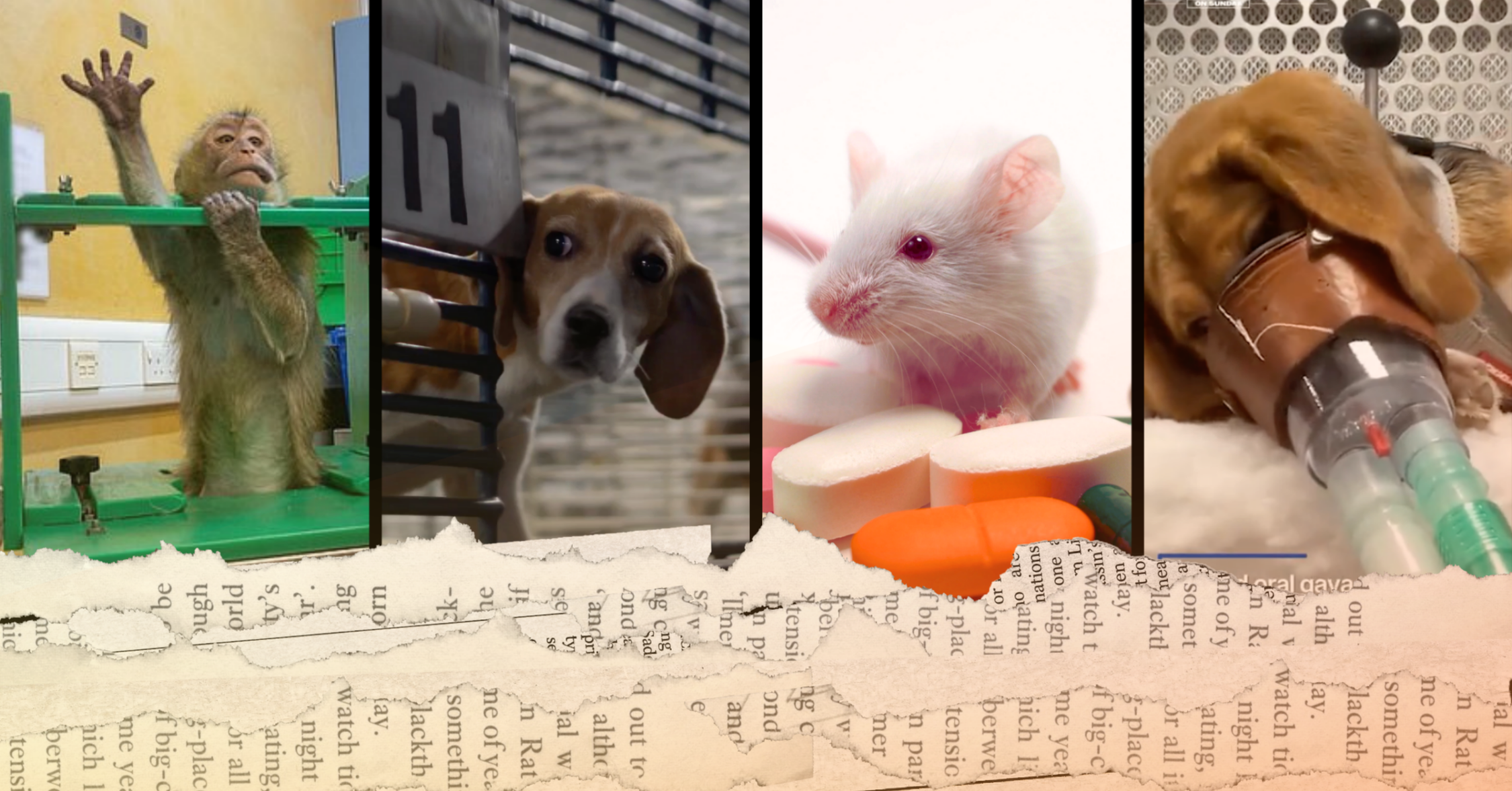
“Fingers pinching its mouth open as a tube is pushed down its throat, this disturbing image shows how monkeys are sacrificed to check the safety of new weight-loss drugs. The unprecedented footage supplied to The Mail on Sunday was secretly filmed by a lab worker at two UK testing plants who said he was horrified [sic] the ‘immense distress’ the animals endured.”
“Restrained long-tailed macaques have new anti-obesity medication fed into their stomach to help assess if it is fit for human use. Beagles, pigs, rabbits and other species also underwent ‘extreme suffering’ during trials for other new drugs before they can be sold in high street chemists, the worker said. This includes not only potential treatments for serious diseases but many new products of everyday medicines such as headache tablets, cholesterol drugs, reflux medications, antihistamines, antibiotics and antidepressants. All the animals that survive the tests are killed at the end of the process and their bodies dissected for further studies.”
“The UK testing facilities he worked at are contracted by major pharmaceutical companies to conduct required safety tests using animals before they can progress to human clinical trials. Both sites are Home Office regulated and operating completely within the law. But the former lab worker said he wanted the footage and details of what happened to be released to ensure an informed public debate on the use of animal testing. He described being ‘haunted’ by the shrieks and whimpers of animals during the trials, which could last for up to two years.”
“’I wouldn’t have taken the risks I did [to secretly film] if I hadn’t believed that the sole reason this continued was because the public didn’t know.’” 📰 Full Story →

FDA celebrates progress to end animal testing but experts warn there’s still a long way to go
Darren Incorvaia, FIERCE Biotech, 4/19/2026
“Twelve months after releasing a roadmap to shift away from animal testing requirements, the FDA has declared mission accomplished for its first-year goals. But experts have cautioned that there is still a long path ahead before animals are meaningfully removed from the drug development process.”
“Moving forward, the agency next wants to expand its NAM initiatives beyond antibodies, track changes in animal use, expand validation of NAMs that can address ‘critical drug development endpoints’ and promote a cultural shift in drug development away from animals, the agency outlined in a year one report shared with Fierce, among other efforts.” 📰 Full Story →
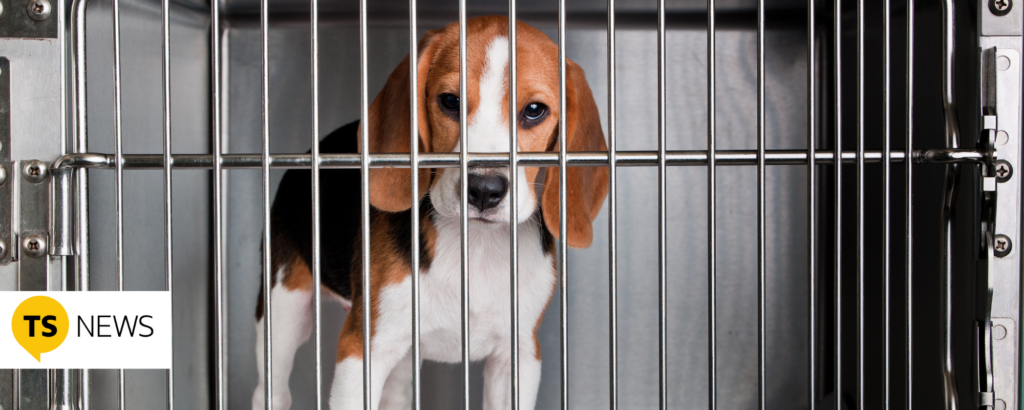
Tear Gas, Beagles, and a Federal Pivot: America’s Animal Research Reckoning Accelerates
TrialSite Staff, TrialSite News, 4/20/2026
“A failed raid on a Wisconsin animal research facility has collided with a major shift in U.S. health policy, exposing a system under strain. According to The New York Times, roughly 1,000 activists attempted to breach Ridglan Farms—a licensed breeder supplying beagles for biomedical research—triggering a law enforcement response that included tear gas, rubber bullets, and at least 26 arrests.”
“The confrontation comes as Robert F. Kennedy Jr., under the administration of Donald Trump, pushes a sweeping plan to phase out federally funded animal testing. The collision of street-level activism and federal reform signals a turning point—but also raises questions about execution. . . . This moment reveals a structural imbalance. Activism is accelerating. Policy is shifting. But infrastructure—scientific, regulatory, and commercial—is lagging.”
“The Wisconsin clash is not an anomaly. It is an early signal of a broader transformation underway. So the U.S. is moving toward a post-animal-testing paradigm—but without a fully aligned scientific, ethical, and regulatory roadmap. Until that alignment emerges, friction—both in policy and on the ground—will likely intensify.” 📰 Full Story →
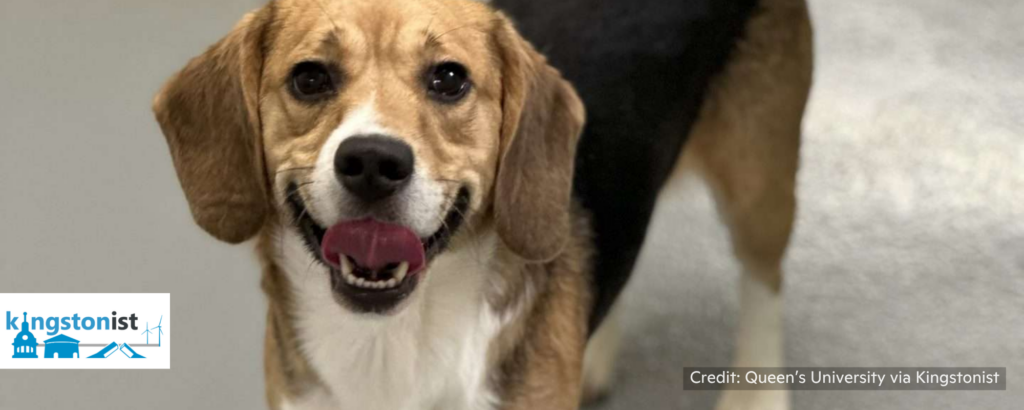
Inside Queen’s animal research as Ontario moves to restrict testing on dogs and cats
Michelle Dorey Forestell, Kingstonist, 4/20/2026
“A colony of dogs at Queen’s University in Kingston has spent decades helping researchers better understand — and potentially cure — hemophilia, a genetic bleeding disorder that affects thousands of Canadians. But as Ontario considers new legislation to restrict testing on dogs and cats, work taking place inside university laboratories is drawing renewed scrutiny — raising broader questions about how animals are used in research, how those decisions are made, and how much the public really knows about it.”
“According to Dr. Andrew Winterborn, the university’s veterinarian and Director of Animal Care Services, the colony has existed for roughly 45 years and is one of only two of its kind in the world. . . . In 2024, 43 dogs were part of the program.”
“While the hemophilia colony draws attention, it represents only a small fraction of the university’s animal use. In 2024, a total of 30,602 animals were used across 116 research and teaching protocols at Queen’s University. The vast majority — more than 74 per cent — were rodents, primarily mice, while wildlife species such as fish, frogs, birds, and reptiles accounted for roughly a quarter of all animals. Large mammals, including the 43 dogs and 57 non-human primates, accounted for less than one per cent of the total.” 📰 Full Story →

Monkey business: Churchill research lab in the crosshairs
Aidan Knight, Latrobe Valley Express, 04/21/2026
“A Monash University, Churchill facility has come under fire, following a Legislative Council motion for greater transparency of its operations.”
“In the early 2000s, Monash University developed a laboratory adjacent to its then Gippsland campus, dedicated to the breeding of monkeys, and other closely related primates, for use in medical testing trials. . . . The Gippsland Field Station, managed by the Monash Animal Research Platform (MARP), houses 850 marmosets (South American monkeys) and macaques (barbary apes)….”
“‘We can’t know for certain exactly what is happening inside this facility, but we can be sure that it’s a house of horrors,’ [Georgie Purcell, the second-ever member of the Victorian Parliament to represent the Animal Justice Party] told the Express. . . . ‘We know of at least five monkeys dying at the facility due to heart failure, chronic infections, anaesthesia errors and even extreme bullying. We know that monkeys had been deliberately infected with HIV or had their brains opened up. But the scariest part is that we don’t know much more about what’s going on every day within this facility. We don’t know whether this is common practice. Information is scarce, and it’s intentionally and fiercely kept secret by Monash University, which poses the question – why?’ . . . ‘If animal testing is justified, there should be nothing to hide,’ Ms Purcell insists.’” 📰 Full Story →

Indiana-based Inotiv cited after two beagles die during drug trial
Ryan Murphy, Indianapolis Star, 4/21/2026
“Less than two years after Indiana-based Inotiv agreed to pay the largest fine ever issued under the Animal Welfare Act, the company has once again been sanctioned for its experimentation on beagles. Two dogs died at an Inotiv-owned Fort Collins, Colorado, laboratory after they were given an unnamed experimental drug, according to a March 24, 2026 inspection report from the U.S. Department of Agriculture.”
“Both animals were subjects in a ‘dose escalation study, where a medication is given in increasing doses over time to find what’s both safe and effective. The dogs received the highest dose administered so far on Feb. 5, 2026. Two were seen by a veterinarian after researchers noted that both were ‘depressed and drooling.’ The next morning, staff found a female beagle named 1459785 dead. A male named 1524022 was euthanized after he was ‘found lethargic and minimally responsive.’”
“Earlier in March, an inspection at an Inotiv-owned facility in Pennsylvania found subsidiary company Envigo liable for the death of 72 rabbits.” 📰 Full Story →

Sheriff’s office request for walk-through at Ridglan Farms denied
Corey Moen, Channel 3000, 4/21/2026
“Wisconsin Department of Agriculture, Consumer Trade and Protection (DATCP), denied the Dane County Sheriff’s Office request to accompany them on an unannounced walk-through at Ridglan Farms. . . . DACTP [sic] acknowledged that ‘an on-site assessment by the Dane County Sheriff’s Office may be sensible, but does not necessitate DATCP participation.’”
“‘The Sheriff’s Office heard our citizens’ concerns about the welfare of the dogs at Ridglan Farms, and we’ve made every effort to address them,’ said [Sheriff Kalvin] Barrett. ‘Without DATCP’s legal authority and expertise in state-licensed animal welfare requirements, the Sheriff’s Office lacks both legal authority and expertise in state-licensed animal welfare requirements to conduct an inspection on our own.’” 📰 Full Story →

John Paul Mitchell class action claims company’s products are not cruelty-free
Top Class Actions, 4/22/2026
“A new class action lawsuit accuses John Paul Mitchell Systems of falsely advertising its products as cruelty-free. A group of more than 20 plaintiffs allege that Paul Mitchell falsely advertised its cruelty-free products as cruelty-free even though they were tested on animals to gain access to the Chinese market, where animal testing was required.”
“‘Despite founding its company on the principle that it would never test on animals, repeating that promise for over 40 years, and seeking to change California law to punish those who test on animals, JPMS prioritized its profits over its principles,’ the Paul Mitchell class action lawsuit says.” 📰 Full Story →
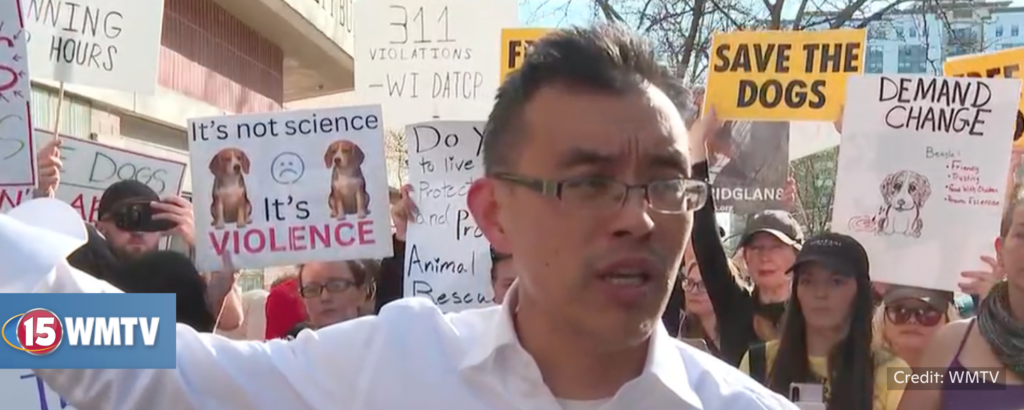
Legal expert weighs in on activists’ defense in Ridglan Farms burglary case
Tabitha Bland, 15 WMTV, 4/21/2026
“Four animal rights activists were charged Tuesday with felony burglary after prosecutors say they broke into a Dane County animal research facility and took roughly 30 dogs.”
“Prosecutors say the law is straightforward: break in, take property, that’s burglary. But Hsiung says the law is on his side. . . . Hsiung has been building his public defense, arguing the break-in was legally justified under Wisconsin statutes on necessity, coercion, and defense of others. He wants to apply the same logic used when someone speeds to get a person having a medical emergency to the hospital.”
“Criminal defense attorney Chris Van Wagner, who is not involved in this case, says the problem is simple. In Wisconsin, animals are property, not people. And the law has never recognized them any other way. ‘If you burglarize a business for the purpose of stealing the business’s animals or other property, you’re guilty of burglary and you’re guilty of theft,’ Van Wagner said. Van Wagner says the law in Wisconsin is clear. There is no case that says necessity applies to animals.”
“Van Wagner says the defense should not be counted out entirely. If the defense can get the right judge, one willing to let in evidence of conditions inside the facility, or get in front of the right jury, the calculus changes. ‘Wayne is trying to convince people that the law allows it, but really it’s your heart that allows it,’ Van Wagner said. ‘And the heart is in the bodies of the jurors.’ . . . Van Wagner said that on paper, the charge is airtight. But in a courtroom, with the right judge or the right 12 people, he says anything is possible.” 📰 Full Story →
Help spread the word. Share this news compilation on Facebook, X, or Bluesky.