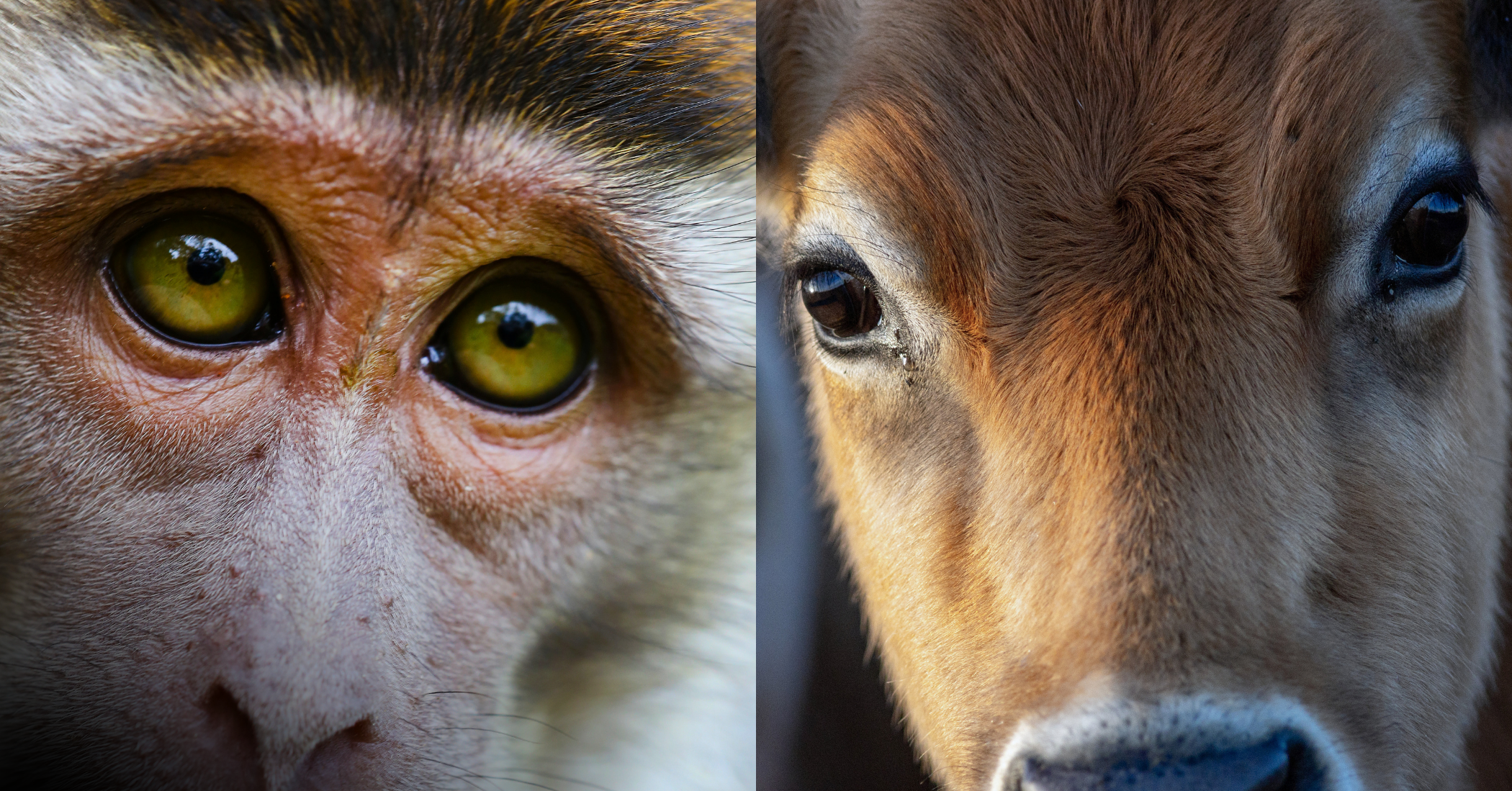
False Divide Between Animal Research & Animal Agriculture
On September 10th, animal advocates, academics, and strategists from around the world gathered virtually for Fauna Connections, Faunalytics’ fifth annual research symposium. The event joined research and practical insights designed to help the animal protection movement make more informed, effective choices.
Rise for Animals was honored to be a part of this year’s program.
Our Head of Programs, Lindsey Soffes, presented during a session called “Levers of Power: Finance, Ballots, and Political Systems,” alongside speakers examining how advocates can influence the institutions, financial systems, and political structures that shape animals’ lives.
Our presentation, “What We Lose by Treating Animal Agriculture and Animal Research Separately,” challenges one of the animal protection movement’s most deeply embedded divisions: the idea that animals exploited in laboratories and animals exploited for food belong to fundamentally different causes. In reality, they don’t.
As Lindsey explains, animals used for research are also bred, bought, sold, confined, commodified, and killed for human purposes. In other words? “Research” animals are farmed animals, too—and the industries exploiting them are far more interconnected than many people might suspect.
Our presentation traces those connections through their shared history, language, regulatory systems, federal law, government funding, lobbying, and political oversight.

A false division between research animals and farmed animals hinders the work of advocates and, consequentially, the animals we’re fighting to protect.
Treating animal research and animal agriculture as distinct fights can divide supporters, resources, campaigns, and political power, even as the industries themselves work through many of the same institutions and systems. Lindsey points to research suggesting that concern for animals used in experiments could instead become an on-ramp to broader animal advocacy, creating opportunities to build solidarity rather than reinforce artificial, industry-created boundaries.

So what would a more unified movement look like?
We propose four starting points:
- Change the way we talk about animals;
- Build campaigns that connect research and agriculture;
- Coordinate pressure on shared sources of government funding; and
- Create stronger coalitions between advocates who have historically worked in separate spaces.

When we organize around the categories that animal-exploiting industries created for us, our movement suffers. The Animal Industrial Complex benefits from our division; animals benefit when we bridge it. By closing the gaps between our causes, we can build a stronger, more unified movement for liberation.