While the animal research industry continues to breed, buy, cage, torture, and kill sentient beings, progressive scientists are busy proving that human-relevant science is not only possible but, in fact, better for us all. Highlights in science from August 2026 are below.

AI Platform Replaces Animal Models to Accelerate Parkinson’s Cell Therapy
Seungwook Choi, KorMedi, 8/1/2026
“Researchers are launching an international joint study that leverages artificial intelligence (AI) to evaluate whether next-generation cell therapies for Parkinson’s disease can function effectively in environments mirroring actual human brains. The initiative aims to replicate the complex pathological conditions of neurodegenerative disorders—which are difficult to fully model in animal testing—to assess treatment efficacy and safety prior to clinical trials.”
“At the core of the initiative is an advanced cell-therapy evaluation system powered by ‘AI-NAMs.’ New Approach Methodologies (NAMs) utilize human cells, tissues, and computer modeling to predict drug efficacy and toxicity in humans. By integrating AI, the research team will analyze vast datasets encompassing both experimental and clinical data.”
“Traditional Parkinson’s cell therapy research relies heavily on animal models. However, animal brains cannot fully capture the intricate pathological microenvironment of human Parkinson’s disease, such as chronic inflammation and localized cellular damage.” 📰 Full Story →
Researchers test heated hair products without animal testing
Fraunhofer-Gesellschaft, Medical Xpress, 8/3/2026
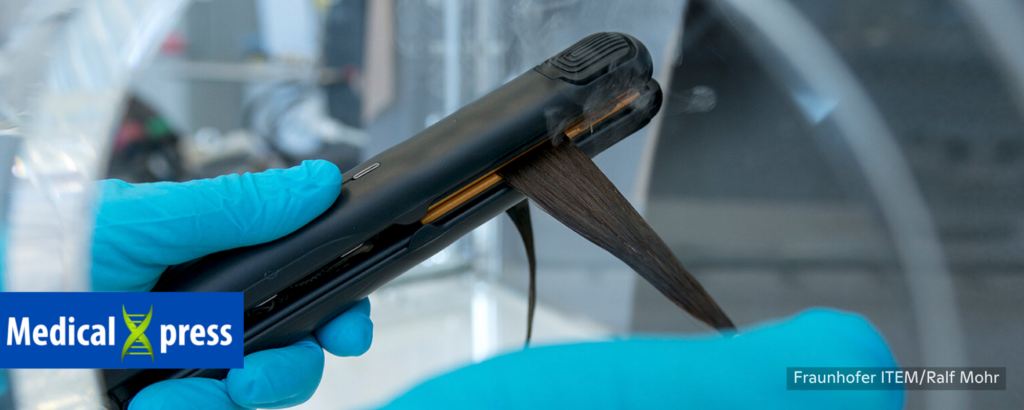
“Hair products used in hair salons release aerosols that can cause respiratory tract irritation if inhaled. Under a contract from industry, researchers at the Fraunhofer Institute for Toxicology and Experimental Medicine ITEM investigated the effects of aerosols produced when using heated chemical hair products. Using an innovative cell-based in vitro inhalation method, the researchers can estimate effects on the respiratory tract and identify potentially harmful substances. This non-animal testing method supports safe product development that is fully in line with the safe-by-design approach, which integrates safety in product development right from the start.” 📰 Full Story →
Can new approach methodologies improve clinical trial success rates?
Charlie Carter, SelectScience, 8/5/2026
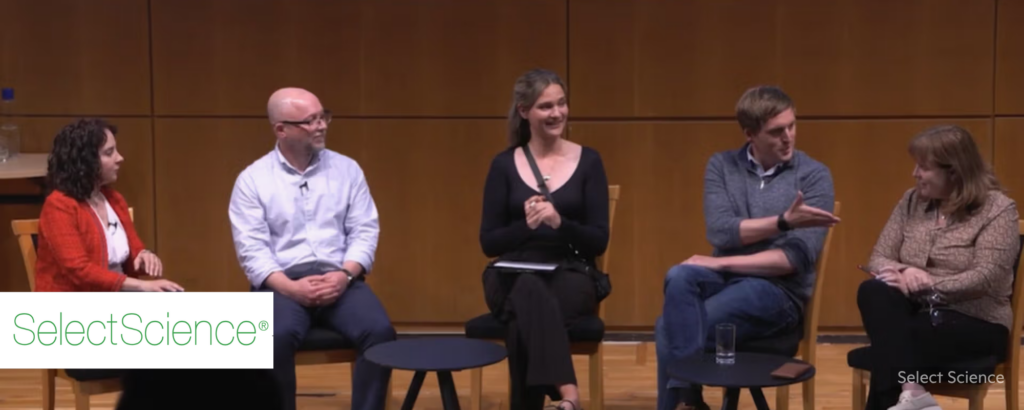
“More than 90% of drug candidates that succeed in preclinical development ultimately fail in clinical trials. The reasons are complex, but the scale of attrition exposes a fundamental weakness in how new medicines are developed: the industry remains heavily dependent on models that do not adequately reflect human biology. . . . ‘I don’t think we can really overlook our over-reliance on animal models,’ says Ross Dobie, Founder of the Centre for Human Specific Research. ‘For many, many years, we’ve become really good at artificially creating diseases in animals and then treating them and curing them. We’ve seen that this doesn’t always translate – or rarely translates – into humans.’ . . . Dobie argues that human drug discovery must therefore begin with human evidence. ‘If we want to understand human diseases and we want to understand how drugs work, then we need to, as much as possible, focus on the use of human cells, human tissue, and human data.’”
“One way to do this is through models derived from human induced pluripotent stem cells (iPSCs). These cells can be generated from adult cells and differentiated into disease-relevant cell types, giving researchers access to human biology and genetic diversity at a scale that would otherwise be difficult to achieve. Introducing human cells, however, is only one part of creating a human-relevant model. Many in vitro workflows still rely on animal-derived biomaterials, including fetal bovine serum, Matrigel, and animal-derived antibodies. Although widely used, these materials can be poorly characterized, vary between batches, and introduce uncertainty into assay performance and experimental outcomes. Replacing them is not straightforward. ‘I think scientists are sometimes quite set in their ways and won’t necessarily change something because it means that they have to revalidate everything they do,’ explains Dr. Eric Hill of Loughborough University. But he urges researchers to weigh the upfront cost of switching against the hidden cost of irreproducibility. As models become more biologically and technologically complex, removing avoidable sources of variability becomes increasingly important. ‘This is another driver for the industry to move towards animal-free, synthetic consumables, because they are more controllable products to use.’”
“The question is no longer whether human-specific approaches can contribute. In several fields, they already provide information that animal studies cannot. The challenge now is to generate the evidence, standards, consistency, and skills needed to make that contribution routine.” 📰 Full Story →
Could tissue chips overcome the limitations of animal testing?
Bioengineer, 8/11/2026
“Animal testing has shaped modern drug development for decades, but its limitations become especially visible when scientists evaluate cancer immunotherapies. These treatments are designed to stimulate the immune system to recognize and destroy malignant cells, yet the same powerful immune activation can trigger life-threatening complications in patients. Researchers at the University of Rochester are developing a human-cell-based alternative: miniature tissue models known as organs-on-a-chip that could help predict these toxicities before experimental medicines reach clinical trials.”
“The work is being led through the university’s Translational Center for Barrier Microphysiological Systems, or TraCe-bMPS. The center is building drug-development tools around modular µSiM tissue chips, devices that contain ultrathin membranes populated with human cells. Unlike conventional laboratory cultures, these systems are engineered to reproduce key features of biological barriers, including the physical separation between tissues, controlled exposure to drugs, and measurable inflammatory responses. Their modular construction also allows the devices to be manufactured in large quantities with consistent dimensions and materials. . . . By assembling reproducible chips with human cells, researchers can study how a therapy affects a tissue under conditions that more closely approximate human biology than many animal models. The design also makes it possible to modify individual components for different organs or disease settings.”
“‘The goal is to predict these toxicities from human cells on a chip, before a drug ever reaches a patient, and to do it without relying on animal models that have repeatedly failed to predict [Cytokine release syndrome, an inflammatory response that can lead to organ failure] in people,’….”
“The project has now reached an important regulatory stage. The team was accepted into the US Food and Drug Administration’s Innovative Science and Technology Approaches for New Drugs, or ISTAND, pilot program. ISTAND is intended to help evaluate emerging methods that could improve drug development and eventually support regulatory decisions.” 📰 Full Story →
Reducing drug development failures with human-relevant models and AI
Joseph C. Wu, Drug Target Review, 8/11/2026
“Researchers are [] striving to develop preclinical models that better reflect human biology. Many of these fall under the umbrella of New Approach Methodologies (NAMs), which generate data directly from human-derived systems. Rather than relying on a single technology, researchers are combining patient-derived stem cells, organoids, microphysiological systems, functional genomics, multi-omics and artificial intelligence (AI) to build more predictive preclinical workflows. For Professor Joseph C. Wu, Director of the Stanford Cardiovascular Institute at Stanford University School of Medicine, the real opportunity lies in combining these technologies rather than using them individually. ‘We view these technologies not as independent tools but as components of a unified NAM ecosystem,’ he explains. ‘Individually, each platform is powerful; together, they become transformative.’”
“‘The greatest value comes from integrating these technologies rather than using them in isolation,’ Dr Wu explains. ‘Human-derived experimental models generate biologically relevant data, whereas genomics and AI provide the analytical framework to interpret that information and make predictions.’”
“One longstanding limitation of drug development is that therapies are often evaluated using models that represent an ‘average’ patient. In reality, genetic differences among patients can lead to marked variation in treatment response, making it difficult to predict which individuals will benefit and which may experience adverse effects. Dr Wu believes that integrating patient-derived models with genomic and computational analyses could help address this challenge through what has become known as a ‘clinical trial in-a-dish.’ Rather than evaluating a compound in a single laboratory model, researchers can use this new approach to assess efficacy, toxicity and biological responses across collections of patient-derived cells and tissues representing different genetic backgrounds.” 📰 Full Story →
Scientists Are Growing Mini Human Brains in Labs
Ramarko Sengupta, NDTV, 8/12/2026
“Researchers can take adult human cells and reprogram them into induced pluripotent stem cells, or iPSCs. These cells can then be guided into becoming different types of cells, including neurons. Under the right conditions, those cells can organise themselves into three-dimensional structures called brain organoids. . . . These organoids aren’t just models of a brain, they are actual living, human-derived neural tissue, with neurons that can connect, communicate and generate electrical activity.”
“Researchers are already using these models to study neurodevelopmental and neurological conditions, and to investigate potential treatments. There is also another potentially big use case in drug testing. A drug that works in an animal does not necessarily work in a human. Brain organoids give researchers another way of testing how human-derived neural tissue responds to drugs and other substances.” 📰 Full Story →
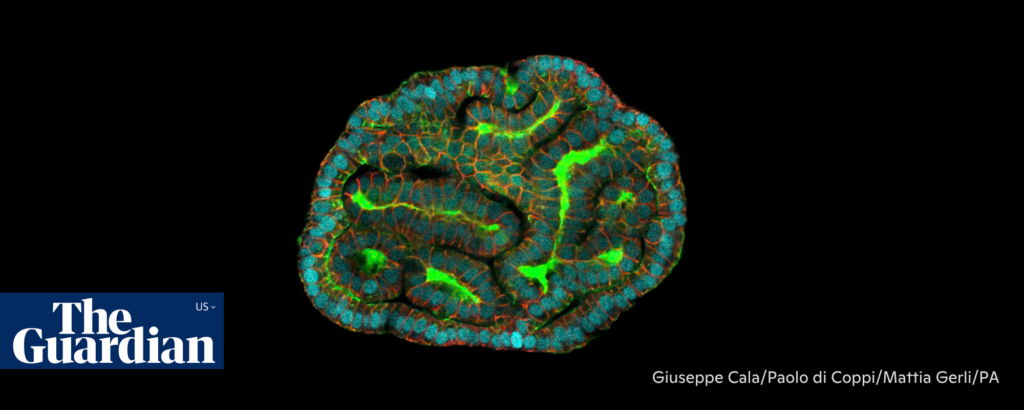
‘A mouse can’t tell us what works’: UK scientists to grow miniature human organs for drug testing
Ian Sample, The Guardian, 8/12/2026
“Miniature human organs and other tissues are to be grown from NHS patients’ cells in a drive to improve medicine testing and reduce the number of animals used in drug development. Scientists will use the clumps of tissue to learn how diseases vary between patients, helping them identify which treatments are best for different people based on the particular pathology underlying their condition. The move marks a shift away from the traditional use of animals as models for human disease, towards what researchers believe will be more accurate and reliable tests based directly on human tissues.”
“Armed with organoids grown from diseased human tissues, scientists can investigate whether new drug candidates reverse pathological changes in all or a subset of patients, and quickly identify ineffective drugs early in the process. . . . ‘A lot of human diseases either do not occur in animals or occur in a different way because they’re not human,’ . . . ‘We want tests and models that can tell us which treatments work, and in what patients, and a mouse cannot tell us that.’” 📰 Full Story →
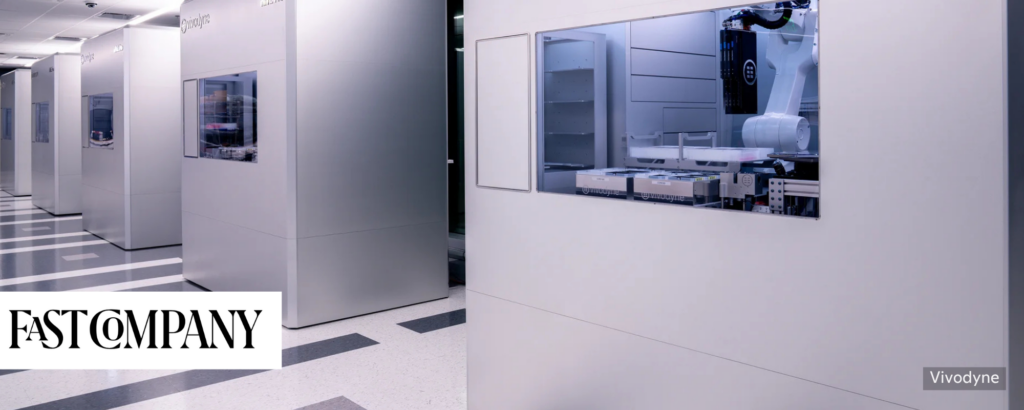
The world’s largest ‘biological datacenter’ could help make animal testing obsolete
Adele Peters, Fast Company, 8/13/2026
“There’s a big flaw in the way that drug companies develop and test medicines today: What works in a mouse often doesn’t work in a human. For decades, the industry has relied on animal testing. But in a laboratory south of San Francisco, a startup called Vivodyne is scaling up a different approach. Inside wardrobe-size mini labs, robots grow human tissue and run thousands of AI-designed experiments that could better predict how well a new drug will work—and whether it will be safe.”
“The company’s system, which now includes a dozen robotic labs called ‘hives,’ can run controlled trials on more than 3 million human tissues each year. That’s twice the capacity of all the clinical trials in the U.S. combined. The process starts with cells from humans, often taken from a blood draw. In its labs, the cells grow on ‘biological chips’ and self-assemble into living structures with blood vessels and immune cells that reproduce some of the functions of the original organ, whether that’s a liver or a kidney. (The tissues don’t look like full-size organs, but like large biopsies, with hundreds of thousands of cells.) The automated system can deliver drugs to the tissues, dose with cell therapies, knock out genes, and run complex tests and analysis. AI can design experiments and then use the results to continually design new experiments and improve.”
“A clinical trial might test one drug in thousands of people. Vivodyne can test thousands of different drugs across human tissues at once. And while people in a drug trial only have occasional visits to a clinic to track results, the system can continually test how human tissue responds. The process is also faster than running animal tests. If a drug company is trying to discover a new target for a disease, for example, it might use genetically modified mice. But just waiting to get the modified mice can take a year and a half, and then there’s the actual testing. ‘By that time, we’ve done 25 cycles of our own tests,’….” 📰 Full Story →
National Institute of Toxicological Research identifies GenX neurotoxicity in human mini-brains
Seyoung Moon, DongA Science, 8/12/2026
“GenX, known as a safer alternative to per- and polyfluoroalkyl substances (PFAS) — so-called “forever chemicals” that are poorly degraded and accumulate in the body — has now been shown to be toxic. The findings suggest that PFAS replacement substances may also pose risks. The National Institute of Toxicological Research announced on the 12th that the research team . . . has identified the developmental neurotoxicity of GenX using human stem cell–derived ‘cerebral organoids (mini-brains).’”
“This study evaluated developmental neurotoxicity from multiple angles using human-derived cerebral organoids instead of animal experiments, highlighting the potential application of next-generation new approach methodologies (NAMs). The finding that PFAS alternatives may carry new risks is expected to serve as scientific evidence for future chemical safety assessments and the development of international test guidelines.”
“Principal Researcher Hyun Sung-ae, the corresponding author of the study, said, ‘This research is a case in which developmental neurotoxicity was evaluated in a multilayered manner using a human-derived organoid platform,’ adding, ‘We will continue our efforts to establish a standardized testing framework that can be used internationally, so that the safety of new chemicals can be assessed more quickly and accurately.’” 📰 Full Story →
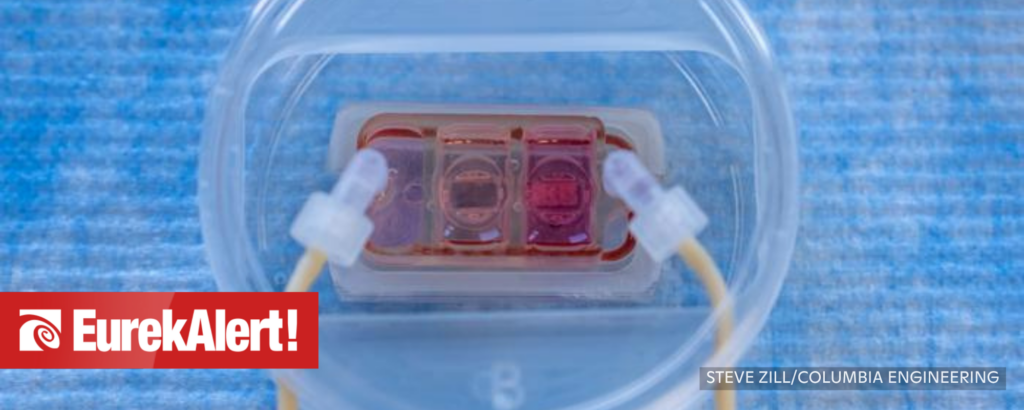
New chip mimics how cancer spreads
Columbia University School of Engineering and Applied Science, EurekAlert!, 8/19/2026
“Cancer spreading beyond the primary tumor – a process known as metastasis – is responsible for at least two-thirds of cancer deaths. Drugs targeting the metastatic progression have largely failed, in part due to the lack of predictive models that would help identify the underlying mechanisms of metastasis. . . . the persistent clinical failures of drugs targeting metastatic progression suggest that the differences between human and rodent biology cannot be discounted.”
“In a study published on August 19 in Science Translational Medicine, Columbia Engineering professor Gordana Vunjak-Novakovic and her team report the development of a multi-organ chip that mimics how cancer cells spread from vascular flow to distant organs, the first model of cancer metastasis of its kind. The chip includes compartments with millimeter-sized engineered human bone and lung tissues, and the vascular flow that contains circulating breast cancer cells and allows the dynamic cross-talk of the tissues being colonized. . . . The study sheds light on a critical phase of metastasis, known as organ colonization, which is difficult to study using animal models.”
“This multi-organ chip allows scientists to investigate, in detail, metastatic progression with actual patient cells and tissues, as opposed to using animal models that don’t always reflect human biology. The platform enables controlled experimentation of cancer cell-tissue interactions within organ-specific microenvironments, towards revealing molecular pathways and therapeutic targets for metastasis. . . . ‘The key advantages of this advanced model of metastasis are that it is human and can be patient-specific,’Vunjak-Novakovic said. ‘It faithfully mimics some of the key aspects of human metastasis that are otherwise largely inaccessible for direct study.’” 📰 Full Story →
A ‘renaissance for biomedicine’: human brain organoids model development for 5 years
Marissa Russo, FIERCE Biotech, 8/19/2026
“Scientists’ ability to recapitulate the human brain in a dish has always been hindered by the inability to model the full capacity of the brain and its development through time. In a new study published Aug. 19 in Nature, researchers from Harvard University show that a brain organoid, derived from a vial of blood, is able to record the passage of time and remain alive in a dish for five years. Over the five years that these brain organoids were kept alive, they tracked the transcriptional and epigenomic changes through time and found that the organoid developed cells and aged over the years consistent with human brain development after birth.”
“‘For biomedicine, we might see a renaissance of new therapies that will emerge, where for decades and decades, nothing worked.’ Paola Arlotta, Ph.D., professor of stem cell and regenerative biology at Harvard University and corresponding author, told Fierce. ‘This system is an approach and a pipeline that must be used in the context of biotech, startups and industry. It has demonstrated to be able to do some powerful things that no other model in the past [could do]. It is a link to patients.’” 📰 Full Story →
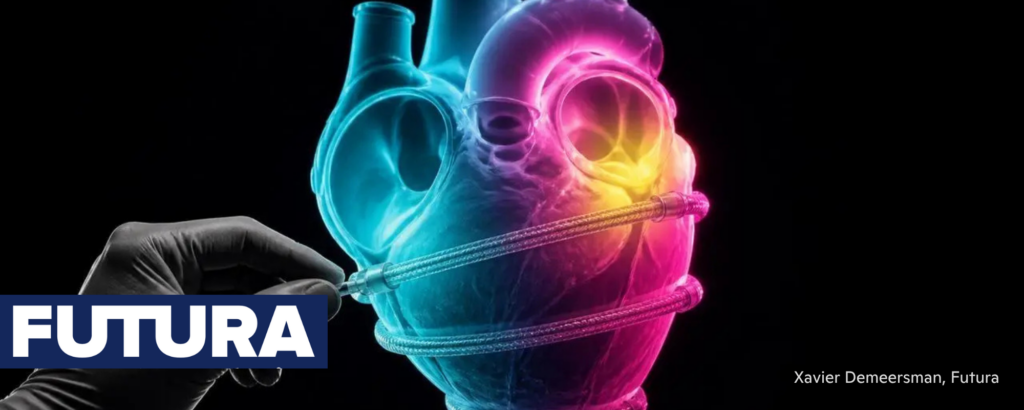
A robotic heart that “mimics failure”–is this how we’ll finally cure ours?
Futura, 8/22/2026
“A team at UNSW Sydney has developed a fully synthetic, programmable soft heart. What’s truly remarkable is that this artificial heart meticulously reproduces both the internal structure and the twisting motions of the human left ventricle—that’s the chamber responsible for pumping oxygen-rich blood throughout the body. . . . It lets scientists mimic real-world heart malfunctions—think leaky valves or backward blood flow—which could accelerate the development of more effective medical devices while reducing the reliance on animal testing.”
“For designers of implants, catheters, or surgical tools, such a simulator could become the ultimate testing ground to fine-tune new medical devices. Ultimately, the goal is to create personalized replicas tailored to each patient’s specific heart disease, allowing doctors to prepare for surgeries with greater precision and reduce the risk of complications.” 📰 Full Story →
Why AI-Driven Drug Discovery Is Becoming Pharma’s Next Big Bet
Tim Bajarin, Forbes, 8/24/2026
“The research firm TD Cowen’s recent proprietary survey of 80 industry leaders and experts provides concrete figures to back up what many of us suspect: AI can reduce preclinical drug development costs and timelines by 70%. . . . The demand signal is already evident in growing investments in software, sequencing equipment, and computational methods to develop more experimental drugs over the next five years.”
“AI is not replacing scientific intuition—and it is unlikely to do so anytime soon. What it can do is make the costly, time-consuming R&D work that precedes clinical trials more efficient. In drug discovery, that means the computer screen is becoming nearly as essential as the lab bench: a core tool for exploring possibilities, testing hypotheses and guiding scientists toward the most promising compounds. That shift is familiar across industries, where digital tools increasingly become part of the craft rather than merely an add-on. . . . There’s also a policy angle to consider. The Trump administration’s push for less animal testing in biomedical research will accelerate the shift towards computational tools, 3D human tissues, and other approaches to predict compound toxicity.”
Based on TD Cowen survey results, the greatest increase in demand for advanced software capable of simulating biological processes—predicting drug interactions or adjusting dosage based on a patient’s age or condition (e.g., newborns or pregnant patients)—is expected between now and 2028. The money flows into ‘in silico’ platforms that allow scientists to run thousands of experiments within seconds, simulating toxicity and stability of the compound without using any physical samples. The kind of tooling that was once a science fiction dream has now become a reality.” 📰 Full Story →
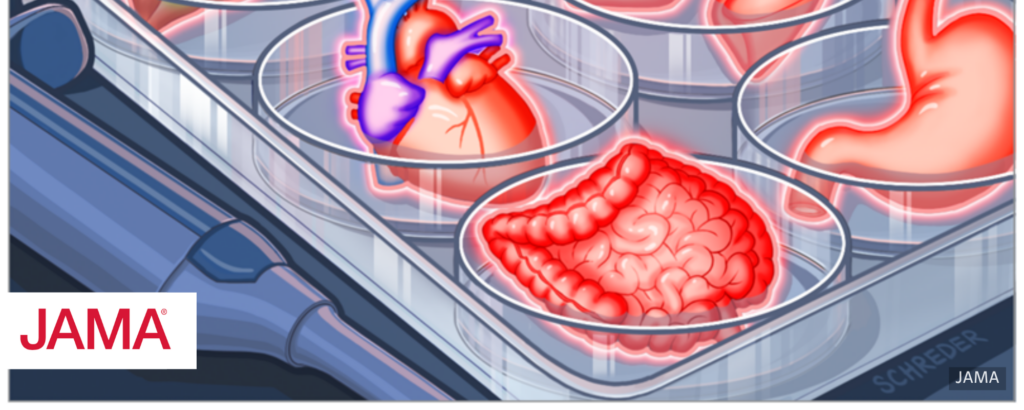
A Seismic Shift From Animal to “Human-Based” Research Is Underway—Here’s What to Know About Organoids
Jennifer Abbasi, JAMA, 8/21/2026
“Aside from alleviating the ethical concerns around animal testing, proponents say organoids created from human tumors or stem cells are often better representations of people and the illnesses they acquire than mice, rats, monkeys, and other laboratory animals that have long served as proxies in drug discovery and development. ‘Animal models have only ever been a surrogate for the species whose biology we are actually trying to understand and improve,’ said Nicole Kleinstreuer, PhD, deputy director for program coordination, planning, and strategic initiatives at the US National Institutes of Health (NIH). Largely because of this, ‘there’s a really massive translational gap between existing preclinical models and clinical success,’ she added. Organoids, she and others say, can help fill that gap.”
“Today, they are being used to model disease and study human development, identify and screen new therapeutics, test chemical or drug toxicity, and evaluate drug response. In what Kleinstreuer called a ‘watershed moment,’ the biomedical field is pairing these laboratory specimens with increasingly powerful computational tools.” 📰 Full Story →

The $275 Million Patient of the Future
Ian King, Banyan Hill, 8/26/2026
“The Advanced Research Projects Agency for Health (ARPA-H), is investing up to $125 million in a program called CATALYST. Its goal is to predict whether a drug is safe before human trials begin. To do that, researchers need to understand where a drug goes after it enters your body.”
“CATALYST is funding several teams to predict these problems. For example, Draper Laboratory is combining patient records, human tissue and lab-grown organs to predict how different people might respond to the same treatment. Inductive Bio is building AI models to spot toxic effects in the liver and heart. And researchers at the University of North Carolina are developing models for antibody drugs that account for pregnancy, when a medicine can affect both the mother and developing child. These models could help identify dangerous treatments without putting either one at risk. And private companies are pursuing this same goal. GenBio AI, co-founded by Nobel Prize winner David Baker and AI scientist Eric Xing, recently unveiled a virtual-cell system called AIDO Cell. . . . It still has a long way to go before it can reliably predict how new drugs will behave. But AIDO cell offers a glimpse of what virtual drug testing could become.”
“Of course, a virtual cell isn’t the same thing as a virtual patient. And researchers haven’t created a complete digital copy of the human body yet. . . . But these separate models could eventually work together to reduce or even eliminate our reliance on animal testing.” 📰 Full Story →
Immune-on-chip systems recreate human immunity for immunotherapy vaccines, and autoimmune modeling
Kristina Jarvis, Scienmag, 8/30/2026
“For decades, immunologists have faced an uncomfortable trade-off. Cells grown in flat Petri dishes lose the flowing blood, chemical gradients, and mechanical forces that shape immunity inside the body, while laboratory animals, however well-studied, often mislead researchers about how human patients will actually respond to a drug. A sweeping new review published on 28 August 2026 in the journal Biomedical Microdevices argues that a third option is now coming of age: microphysiological immune-on-chip systems, miniature devices that re-create the structural, biochemical, and mechanical architecture of human immune organs on platforms measured in millimeters.”
“Because many platforms can be seeded with human primary cells, stem-cell-derived immune cells, or even a patient’s own tissue samples, they offer a route to experiments that would be impossible or unethical in people, while simultaneously reducing the demand for laboratory animals. The devices also enable real-time monitoring: rather than inferring an immune response from endpoint measurements, researchers can watch it unfold—cell by cell—across hours, days, or weeks of continuous perfusion. . . . These models are already reshaping how immune-targeting drugs are tested.” 📰 Full Story →
Take Action: Save the Dogs! Investigate Marshall BioResources
Beagles at Marshall BioResources were allegedly killed while fully conscious, screaming, and thrashing. The Coalition to Save Marshal Dogs is calling for a criminal investigation. Join them—send your letter now! ⚠️ Take Action Now →