Here’s a roundup of the latest, biggest news stories related to animal research—all the recent media coverage you need to know right now to be the most effective activist for animals in labs.
The Two Inspectors Behind Marshall’s “Clean” Record
Lindsey Soffes, Rise for Animals, 8/17/2026
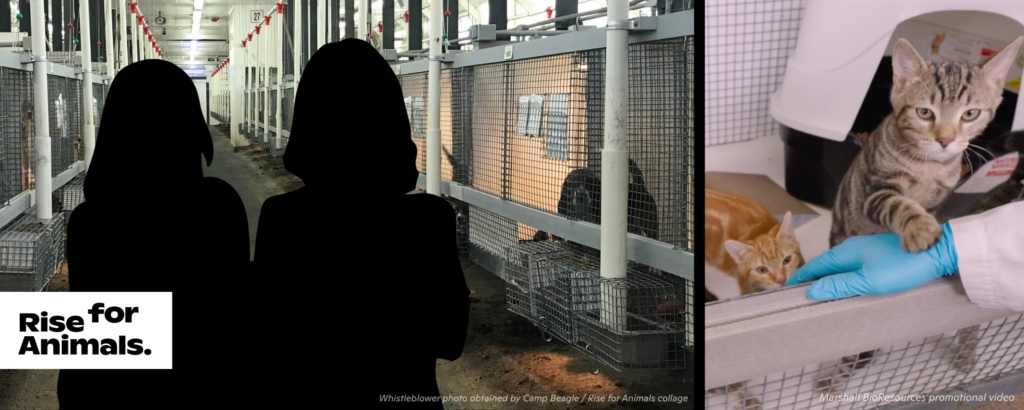
Marshall BioResources touts its “clean” USDA inspection record, but a 12-year review shows the same two inspectors led 46 of 48 inspections. The records raise serious questions about what federal oversight actually reveals about conditions for more than 32,000 dogs, cats, ferrets, and pigs bred and raised for research in New York. 📰 Full Story →
Last Chance for Animals Condemns York University for Ignoring Public Outcry and Continuing to Defend Cruel Primate Research Program Despite Investigation Documenting Suffering of Nine Macaques
PR Newswire, 8/13/2026
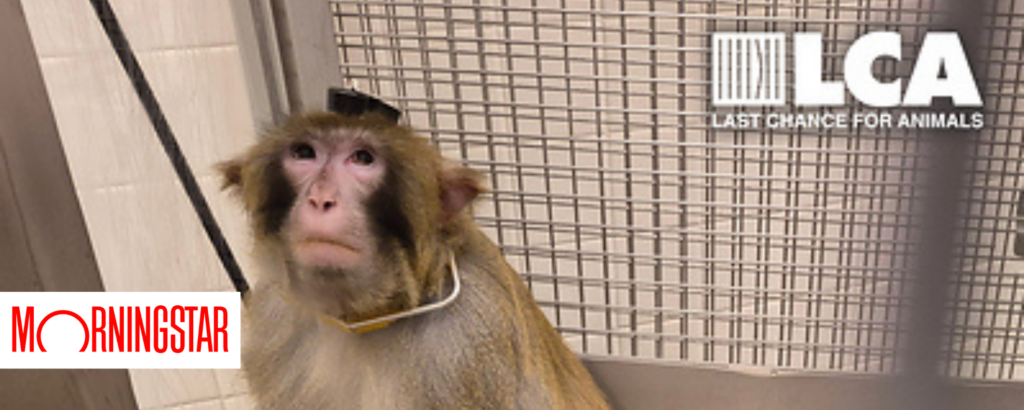
“Last Chance for Animals (LCA) received a letter from York University on August 12, 2026, stating it had allegedly been cleared by the Canadian Council on Animal Care (CCAC) of any animal mistreatment violations and stands behind its primate research. Further, York declined a meeting with LCA to discuss the disturbing investigation findings. This comes more than three months after LCA released its undercover investigation documenting the suffering of nine rhesus macaques used in neuroscience research at the university.”
“LCA’s nine-month undercover investigation, conducted from August 2024 through May 2025, documented: • Macaqueas living in small, barren cages who are unable to exhibit normal behaviors. • Macaques with visible cranial implants, some of which were encrusted with blood. One of the macaques picked at his implant and pulled it out. • Most of the macaques were socially isolated, and almost all exhibited stereotypic behavior. • All macaques wore restraint collars 24/7; some had trouble swallowing. • Most of the macaques were on water control; one macaque drank his own urine.”
“Following the release of the investigation, LCA and the Toronto animal rights community have held monthly protests at York University. Over 14,000 individual messages to York University officials have been sent, calling for an end to its primate research and the release of the macaques to a sanctuary.” 📰 Full Story →
How MAGA Stole Animal Rights from the Left
Aaron Regunberg & Astra Taylor, The New Republic, 8/17/2026
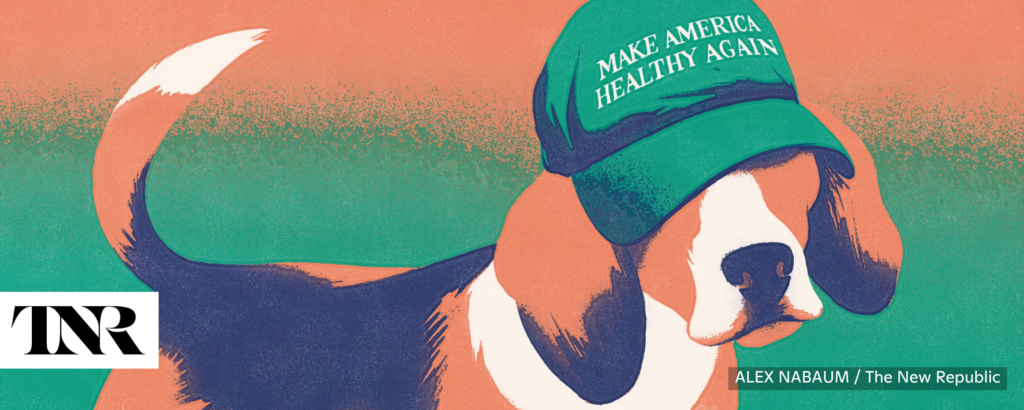
“Under past administrations, bold direct actions like the one seen in Wisconsin [at Ridglan Farms] have typically been dealt with harshly; for decades, law enforcement equated animal liberation with domestic terrorism. Yet even as it viciously suppresses First Amendment dissent in other arenas, the Trump regime has seemingly embraced some forms of militant animal activism and opportunistically seized the moment to take credit for the heartwarming Ridglan outcome. . . . The far right clearly sees political value in these animal welfare fights. So why has the left largely ceded the issue to them?”
“Our conversations with animal rights activists revealed a personal and profound sense of betrayal with regards to the wider left—the ideological and political community, or constellation of communities, separate from the Democratic Party. Consider the fact that the Ridglan protests were covered by mainstream and right-wing news outlets, but barely made it onto the radar of liberal and left media, a massive direct action against a corporate target seemingly unworthy of serious coverage or consideration. This resistance on the left to even a basic vocalization of compassion for nonhuman animals helps explain why the animal rights movement celebrated some MAGA figures who have begun stepping into the vacuum.”
“Much of the reluctance to embrace animal rights seems to stem from a broader, zero-sum assumption that these fights distract from or are irrelevant to more traditional leftist issues. . . . Far from the prevailing sense of animal rights as a sort of individualistic lifestyle issue, disconnected from a broader critique of capitalism, ending systemic violence against animals actually requires taking on a range of fights that fit in perfectly with the populism that is driving the left’s current political resurgence.”
“Rather than allow compassion for animals to become another tool in the right’s system of hierarchical politics, the left has the ability—and, indeed, a duty—to elevate a moral framework for animal rights that objects to violence against humans and nonhumans alike on universal grounds. Fundamentally, any project that aims to decrease needless suffering—which has always been an essential goal of the left—is simply and glaringly incomplete if it does not recognize the vast suffering that humans needlessly inflict on nonhuman animals. Living beings that are capable of joy and pain, affection and sadness, deserve moral recognition. And addressing their immiseration is not at odds with fighting an authoritarian oligarchy that exploits us all. Indeed, not doing so poses serious political risks.” 📰 Full Story →
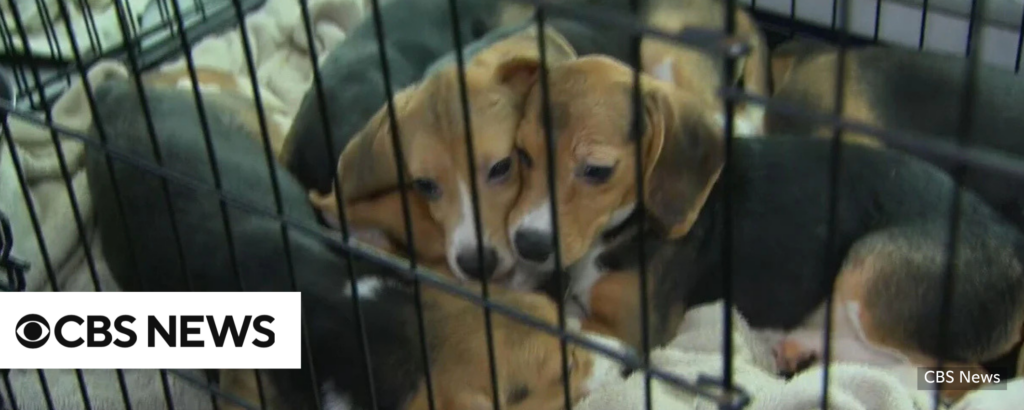
Thousands of beagles bred for research get a new life as questions mount over federal oversight
Adam Yamaguchi, CBS News, 8/18/2026
“Wisconsin’s Department of Agriculture, Trade and Consumer Protection investigated Ridglan between 2024 and 2025 and identified 494 violations, with several pertaining to dogs being handled in a practicable and humane manner. In January 2025, Dane County Circuit Court Judge Rhonda Lanford found probable cause to believe Ridglan had committed crimes under Wisconsin’s laws against animal cruelty, and appointed a special prosecutor to investigate alleged violations. . . . Federal records, by contrast, reveal few signs of trouble. USDA inspection records reviewed by CBS News show federal inspectors cited four violations at the breeding facility and two at the research facility during inspections at Ridglan over the past decade, none classified as critical.”
“The USDA’s own inspector general has repeatedly raised concerns about federal oversight of dog breeders in general for the past three decades. Its latest audit from 2025 found problems with USDA’s inspection system and concluded that ‘inconsistent and untimely inspections may have contributed to the dog breeders’ continued violation of AWA [Animal Welfare Act] requirements.’” 📰 Full Story →
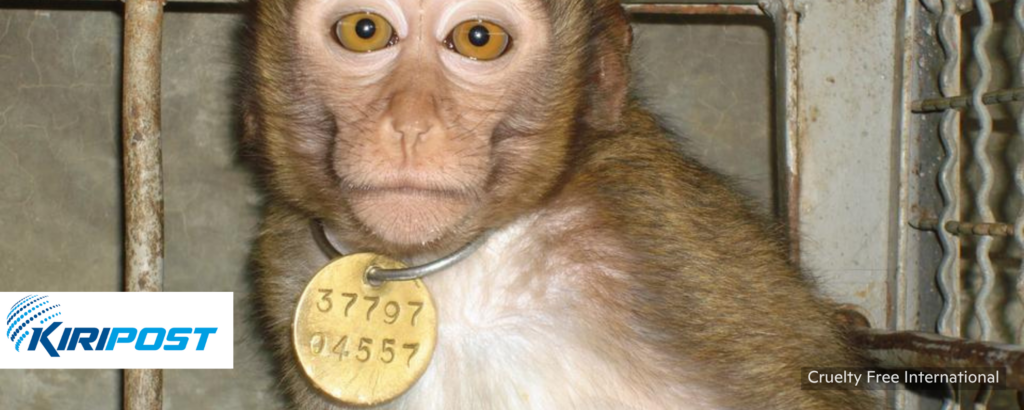
Authorities Defend Kampong Thom Farm that Supplies 40% of Monkeys to US Research Lab
Yatt Malai, Kiripost, 8/20/2026
“Kampong Thom provincial authorities have defended a nearly $500 million long-tailed macaques farming investment by USA based Charles River Laboratories (CRL), saying the operation follows strict ethical standards and does not involve the illegal capture of wild monkeys.”
“Speaking at a recent media conference, Nuon Pharath, Kampong Thom Provincial Governor, said long-tailed macaque farming has become part of the province’s livestock sector alongside the raising of pigs, chickens, ducks, cows and buffaloes. He added that the farming of long-tailed macaques is operated by CRL, which raises monkeys for experimental purposes. ‘Monkeys exported from Kampong Thom province represent approximately 40 percent of the monkeys used in the company,’ Pharath said.”
“In mid-January, Shannon M. Parisotto, Corporate Executive Vice President for Global Discovery & Safety Assessment Management, said, ‘Under CRL’s leadership, Cambodia will become an essential and reliable part of our global supply chain. This is the beginning of a shared journey, a journey of trust, development, partnership, and long-term impact.’” 📰 Full Story →
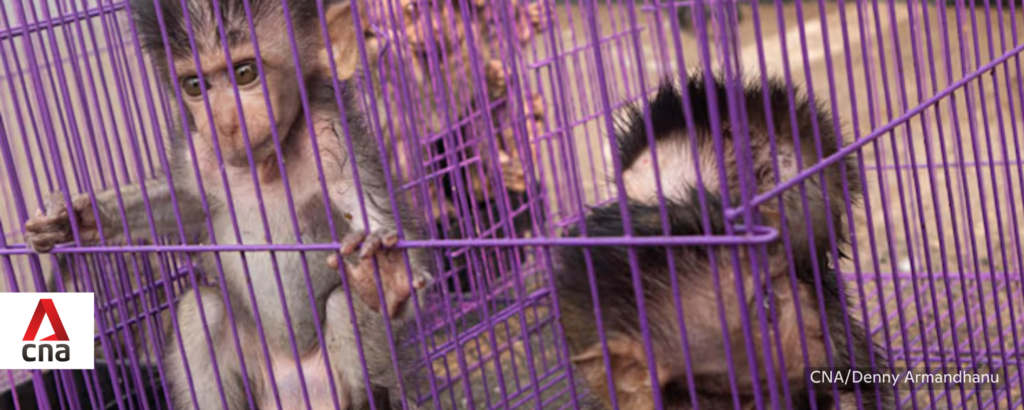
Indonesia’s renewed macaque export push pits research demand against conservation concerns
Denny Armandhanu, CNA, 8/20/2026
“Indonesia is renewing a push to supply long-tailed macaques for biomedical research, setting its first export quota in four years as it looks to tap into international demand. The government has also inaugurated a new breeding facility in Lampung province, with officials pointing to the United States as the main market and China as another potential destination.”
“Animal welfare groups have criticised the moves as undermining the protection of long-tailed macaques and out of step with moves in some countries to reduce the use of primates in research. But local officials have defended the latest moves, stressing that strict controls are in place to govern the breeding and export of the animals, while pointing to their potential economic benefits and the need to manage conflicts between the primates and local communities, which have seen the long-tailed macaques attack and injure people as well as wipe out an hectares of crops before the harvest.”
“BMNI director Reki Chandra said the Mesuji facility currently houses 804 long-tailed macaques captured in Mesuji, Tulang Bawang and West Tulang Bawang to serve as breeding stock. Their first-generation offspring, known as F1 animals, are intended for export for research. . . . Reki, the BMNI director, expects the Mesuji facility to export around 1,000 macaques a year, with each animal fetching between US$3,000 and US$4,000, depending on its quality.” 📰 Full Story →
Worcester biomedical company receives USDA warning over injured, killed lab primates
Susannah Sudborough, MassLive, 8/20/2026
“A Worcester biomedical company received an official warning from animal health inspectors last month after an inspection described its handling of lab primates as a ‘critical’ and ‘repeat’ violation of federal animal welfare laws.”
“Biomere, which tests drugs on animals ahead of human clinical trials, was issued an official warning from the U.S. Department of Agriculture (USDA) on July 29 for its alleged violation.”
“In one incident, from November 2025, a primate had to be euthanized after a technician misused an anesthesia machine, causing a lung injury and forcing air into tissue throughout the animal’s body, according to the inspection report.”
“Six primates at the facility lost parts of their fingers to bite wounds from other primates. The injuries occurred because animals were inadequately monitored during cage cleanings or housed too close together, according to the report.” 📰 Full Story →