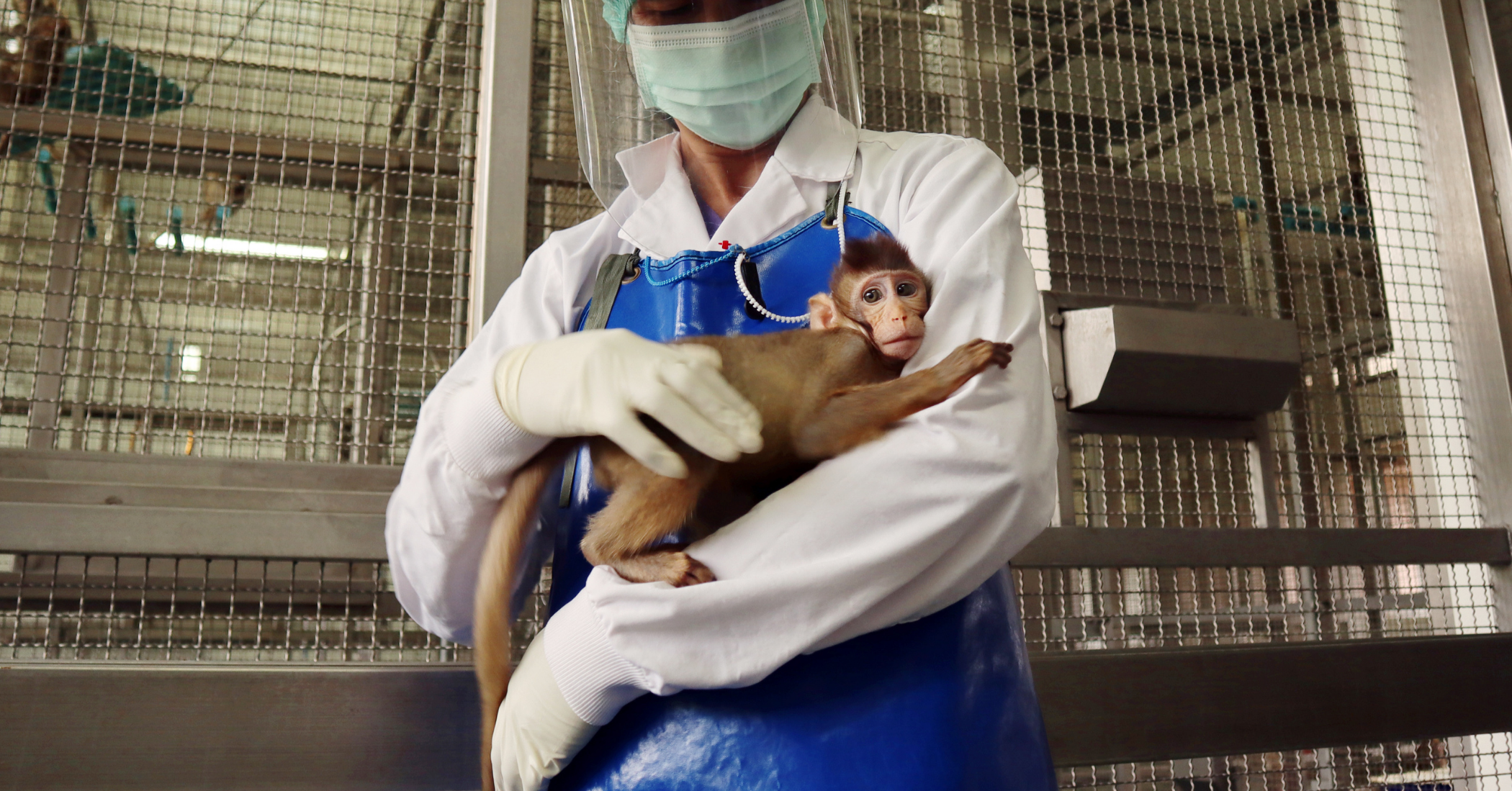
A new survey, commissioned by a group fighting to keep a primate lab open, asked respondents whether they “support biomedical animal research when veterinarians watch over it and make sure animals are treated well.” Ipsos published the results under this headline: “Most Americans Support Vet-Supervised Animal Research.”

The headline reads as reassurance for a public that has grown increasingly uneasy about what happens to animals in labs—and increasingly opposed to animal research altogether.
The Vets Who Make Animals Sick
The reassurance works by borrowing the image most of us have of a veterinarian: the doctor who makes sick animals well.
Larry Carbone spent decades as a laboratory veterinarian, including years directing animal care programs at major research institutions. He is not an outside critic. He spent his career within the animal research system, and believes in its reform.
Here is a description he invokes for the work of an animal research, or lab, vet:
. . . a vet who takes up lab work goes “from someone who makes sick animals healthy to someone who makes healthy animals sick.”
Lab Vets Don’t Oversee Most Animals
Veterinary oversight is legally required only for research regulated by the USDA, which by some estimates (including Carbone’s) covers “closer to 0 than 1% of the total number of animals in US labs.” That gap is often exploited by researchers—with the encouragement of lab vets, who advise the use of animals outside the Animal Welfare Act’s coverage precisely because doing so draws less, if any, scrutiny.
Some of those animals may still receive veterinary attention if their research is NIH-funded, but that oversight exists as a condition of a funding contract, not a matter of law, and it is not publicly known what portion of animals it actually reaches.
If a majority of animals in U.S. labs fall outside veterinary oversight requirements altogether, then public support for “vet-supervised” research would not extend to most of what’s happening in labs today.
The Job Is Keeping Animals Usable
Even when a lab veterinarian is present and has some responsibility for the animals, “watching over” and treating them “well” bear little resemblance to what the job actually involves, or even permits.

Carbone reports that, rather than protecting animals from harm or healing them, much of his focus was on making sure they were suitable for their assigned purposes, helping researchers when experiments went wrong, and keeping animals’ bodies functioning well enough for experiments to continue.
By his account, the clinical care most people picture when they think of a veterinarian makes up only a fraction of a lab vet’s actual duties. He describes a professional bias toward animals’ physical health over their mental well-being, and recalls being “[f]orbidden to treat” sick animals or improve their conditions when doing so risked interfering with a research project.
Neither the Animal Welfare Act nor NIH guidelines regulate the research being conducted, so when an animal’s welfare conflicts with researchers’ wants, the researchers tend to win out. This is especially true, says Carbone, in the particular type of research the survey asked about: the use of animals in the search for human cures.
Vets Earned Their Place in Labs by Defending Animal Research
Long before federal law carved out a specific role for veterinarians in labs, vets sought entry into the emerging, “lucrative professional space” of animal research. They gained a foothold by defending animal research against animal protection advocates calling for tighter restrictions—not by defending the animals—and they maintained that foothold by staying in researchers’ “good graces.”
Law eventually codified veterinarians’ place in labs—and the alliance that got them there never changed.
Lab Vets Are Not Independent
Carbone describes a professional culture in which vets are reluctant to be too hard on their colleagues, careful not to jeopardize their institution’s standing with regulators, and disinclined to interrupt ongoing experiments. These tendencies are reinforced by the typical financial structure that sees lab vets paid from the same cash flows that fund the research itself. Part of their job is often holding down the cost of animal care so more of that money can go to staffing and equipment instead.
When a veterinarian’s instincts run counter to a researcher’s or institution’s interests, the vet rarely prevails.
And even where vets do have influence, the animals don’t necessarily benefit from it.

Vets are often involved in designing experiments and training researchers on how to run them. Even so, Carbone described part of his job as simply checking whether researchers followed their approved protocols with “a modicum of competence.”
He estimated that at least 90% of his institution’s labs were lacking in some way. The most common failure—one Carbone says colleagues at other institutions reported as well—was staff failing to properly administer and record animal exams and pain medications after surgeries.
Vets Often Can’t Identify Pain, Even When They Want To
Those failures may be outside veterinarians’ direct control, but Carbone acknowledges a more fundamental problem:
Veterinarians have a long history of underdiagnosing pain themselves.
Lab vets, despite functioning as the default animal welfare authority in most labs, “receive little training in observing animal behavior or judging welfare.” Moreover, they often find it “virtually impossible to quantify with any precision how much pain and suffering” the animals are experiencing—even though the existing welfare regulations depend almost entirely on veterinarians being able to do exactly that.

Because another’s pain is “so difficult to see,” even vets struggle to take it “seriously enough”—let alone convince researchers around them to do so.
What Happens When No One Is Watching
In addition to supervising research, the survey also specified that veterinarians “make sure animals are treated well.” Carbone’s own account undercuts that framing.
Carbone says plainly that animals in labs often suffer severe pain with no regulatory ceiling on how much they may be made to endure, and that almost none of their lives end well.
Part of their suffering traces to a job vets don’t actually do: lab vets don’t typically perform the experimental procedures themselves. That work falls to researchers, students, and animal technicians, often with minimal oversight and wildly inconsistent training. The image of a vet standing beside every procedure, ensuring competent—much less humane—treatment in real time, describes almost no lab in the country. The consequences are documented in official records—and they are exactly as bad as you would expect.
What the Survey Actually Measured
None of this is an accusation against Carbone. He spent his career inside the system and wrote publicly about its failures precisely because he wanted it changed—and that’s what makes his account so damning.
A veterinarian who worked to improve conditions for animals in labs—and who does not condemn animal research outright—describes a job built to enable research rather than to protect its subjects.
Some lab vets, like Carbone, no doubt push for the animals in their care; but the role they fill isn’t built for it.
“Watching over” animals and making sure they are “treated well” are press-release phrases. Neither one describes the role lab vets play in animal research.

When a survey asks respondents to base their support for animal research on the idea that veterinarians are supervising animal research and making sure animals are treated well, it’s asking them to trust a safeguard that—for most-to-all animals in most-to-all labs—is illusory.
The survey measured public opinion about an industry that doesn’t exist—the one Americans are encouraged to imagine, staffed by veterinarians they picture in their minds or know from their own lives.
The industry that actually operates in labs never appeared on the questionnaire—and that absence is the finding that matters most.
Share on Facebook, X, or Bluesky
About the Author: Lindsey Soffes is Head of Programs at Rise for Animals. She holds a law degree from William and Mary Law School and has spent her career advocating for the rights of all animals—both human and non-human.