Here’s a roundup of the latest, biggest news stories related to animal research—all the recent media coverage you need to know right now to be the most effective activist for animals in labs.
Shock, Suppress, Slice, Repeat: Inside a “Fear” Lab
Rise for Animals, 3/30/2026
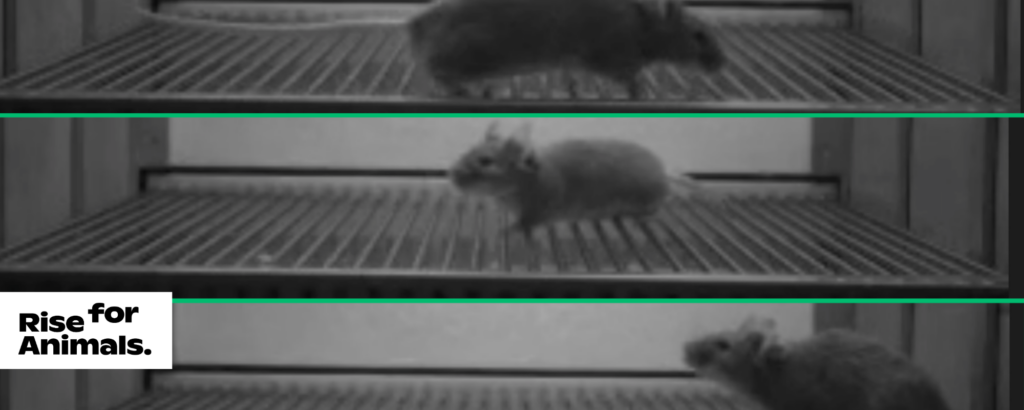
A new investigation exposes a University of Texas “fear” experiment in which mice were electroshocked, repeatedly re-exposed to trauma cues, and killed—all under the banner of PTSD-related research. 📰 Full Story →
Days After the Rescue, Ridglan Peddles Beagles at ToxExpo
Rise for Animals, 3/31/2026
Days after animal advocates entered Ridglan Farms and liberated beagles from their cages, Ridglan traveled to the 2026 ToxExpo to sell those dogs still trapped inside its walls. 📰 Full Story →
WATCH: Inside the University of Washington Primate Lab
Rise for Animals, 4/2/2026
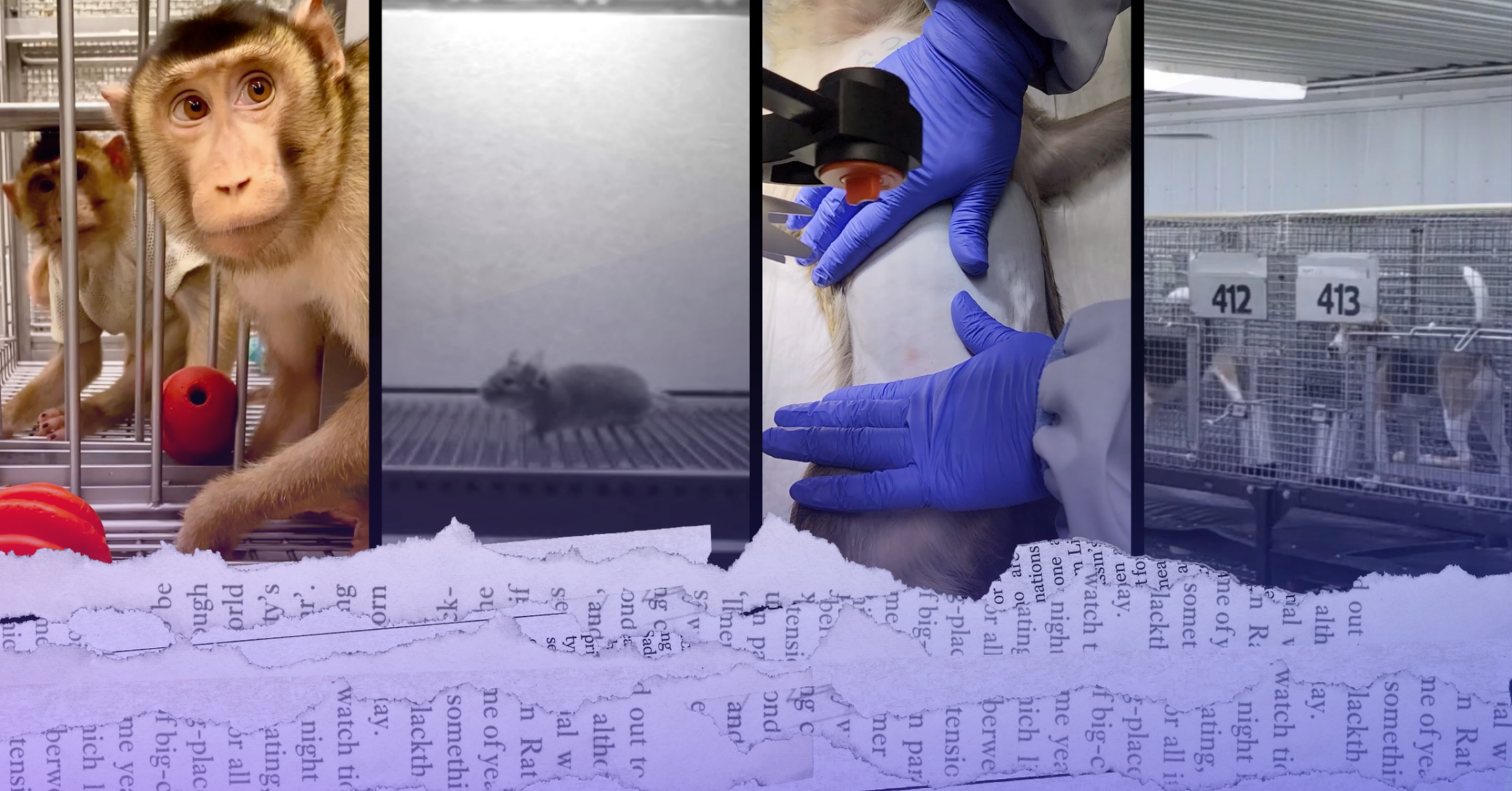
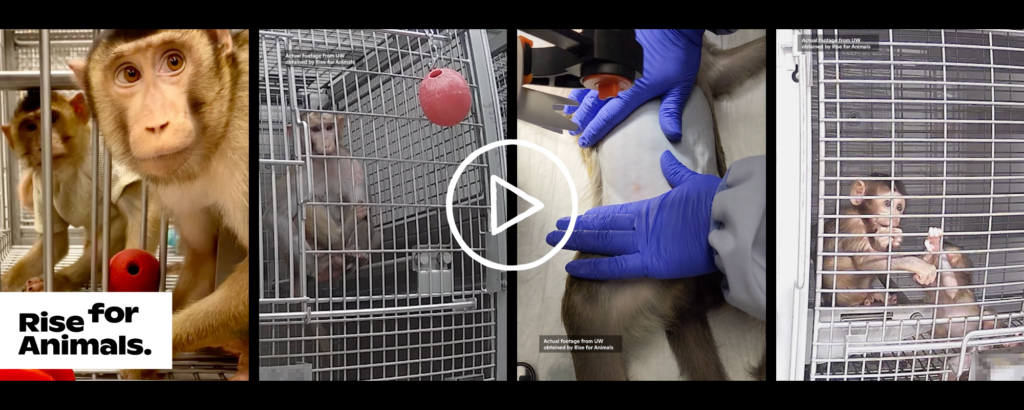
We obtained new video footage and photos that show what animal experimentation looks like behind closed doors: invasive procedures, implanted devices, animals confined in barren metal cages, and infants born into a life of captivity. 🎥 Watch on Facebook or Watch on YouTube
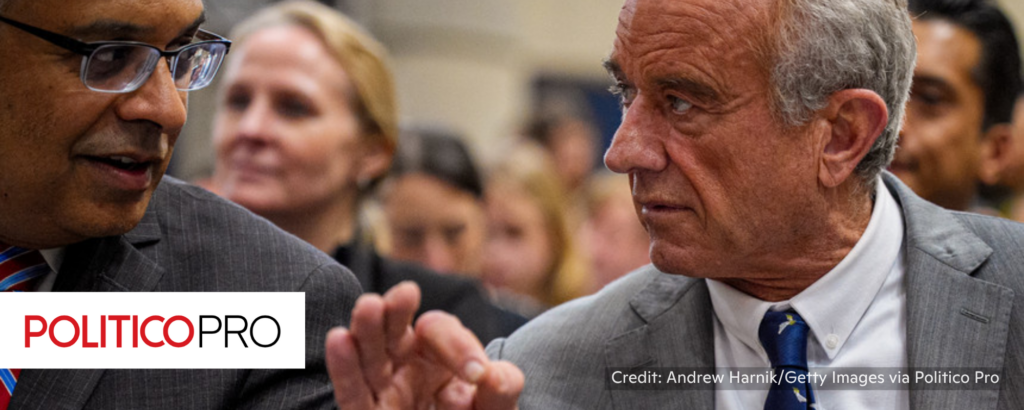
Women favor MAHA’s animal rights push
Amanda Friedman, PoliticoPro, 3/30/2026
“Health Secretary Robert F. Kennedy Jr. wants to end animal testing, arguing there are more efficient and ethical ways to test drugs. A new POLITICO poll shows more women than men may share his perspective. The poll of 3,851 U.S. adults, conducted by the policy consulting firm Public First from March 13 to 18, found that 48 percent of American male voters believe the government should continue to fund animal testing until alternative methods are just as effective compared to 31 percent of women. The almost 20-percentage point difference reflects a longstanding gender divide, animal welfare advocates say.” 📰 Full Story →
Medicines watchdog supports shift away from animal testing
Cahal McQuillan, The Pharmacist, 3/30/2026
“New measures to help phase out animal testing in drug development will be supported by the [UK’s] Medicines and Healthcare products Regulatory Agency (MHRA). The regulator has announced its support for the use of non-animal methods, known as new approach methodologies (NAMs), to help phase out animal testing in drug development. By offering early review of non‑animal data and clarifying how it will be assessed, the MHRA aims to give developers more confidence when making marketing applications based on evidence generated without animal testing.”
“The move supports the Government’s long-term strategy to reduce use of animals in drug development, where complete elimination is not yet feasible….” 📰 Full Story →
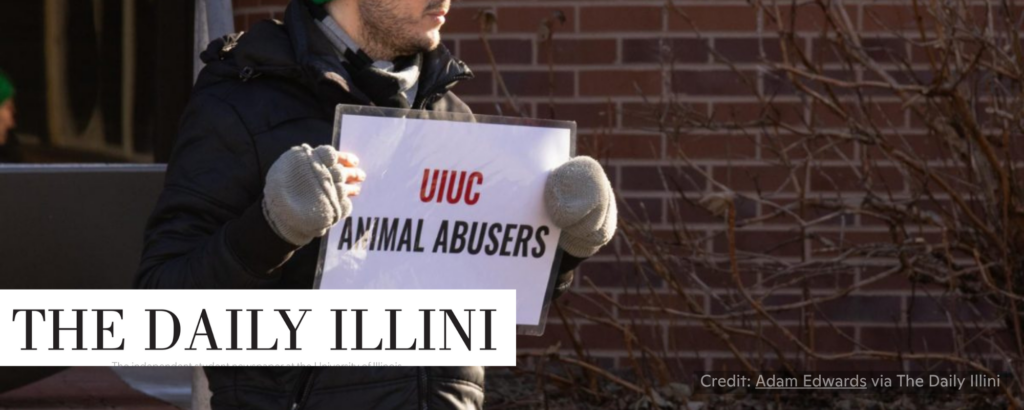
Direct Action Everywhere calls for UI to drop animal research programs
Annisyn Krebs-Carr, Adam Edwards, Aidan Miller-Hisgen, Patrick Herr, The Daily Illini, 3/30/2026
“[The Illinois Chapter of Direct Action Everywhere, a grassroots network of animal rights activists] is actively working to get the [University of Illinois] to drop its animal research programs. ‘There is a lot of unnecessarily cruel testing going on that could be done in ways that don’t have to involve animals at all,’ said co-organizer of DxE Illinois, Haley Gibbs. ‘I think for Illinois, specifically, looking at getting the big university system to stop testing on animals is a good five-year goal.’”
“There are several animal research programs at the University, primarily under the College of Agricultural, Consumer & Environmental Sciences and the College of Veterinary Medicine. A few of these research centers include the Beef and Sheep Research Field Laboratory, Orr Beef Research Center and Swine Research Center.”
“‘People care about animals,’ Gibbs said. ‘You see that your cat or your dog get scared, cuddles you, loves you … And when you meet a pig, you see that same thing in their eyes. They all do feel and love and suffer.’” 📰 Full Story →
‘Woke pseudoscience’: NIH awards new funding to transgender mice experiments after DOGE cutoff
Greg Piper, Just the News, 3/30/2026
“Less than a year after the Department of Government Efficiency abruptly halted funding for transgender experiments on animals, intended to improve so-called gender-affirming care for humans, the National Institutes of Health chose to fund at least one again. The University of California San Diego study of ‘androgen effects on the reproductive neuroendocrine axis’ to fine-tune male hormones for women who identify as men, using mice that were ‘gonadectomized,’ injected with testosterone and decapitated, received another $584,117 for fiscal year 2026, following the $646,301 it received for fiscal year 2025.”
“Last summer, a federal court ordered NIH to resume funding hundreds of studies including UCSD’s trans mice research, saying their termination had been ‘arbitrary and capricious,’ but the order applied only to the grants’ current budget periods . . . That means NIH’s legal obligation to the UCSD study ended Nov. 30 with its budget end date, said [White Coast Waste] Senior Vice President Justin Goodman.”
“‘The NIH is openly defying President Trump and blowing up claims from RFK’s team that it had stopped funding transgender animal tests,’ Goodman said.” 📰 Full Story →
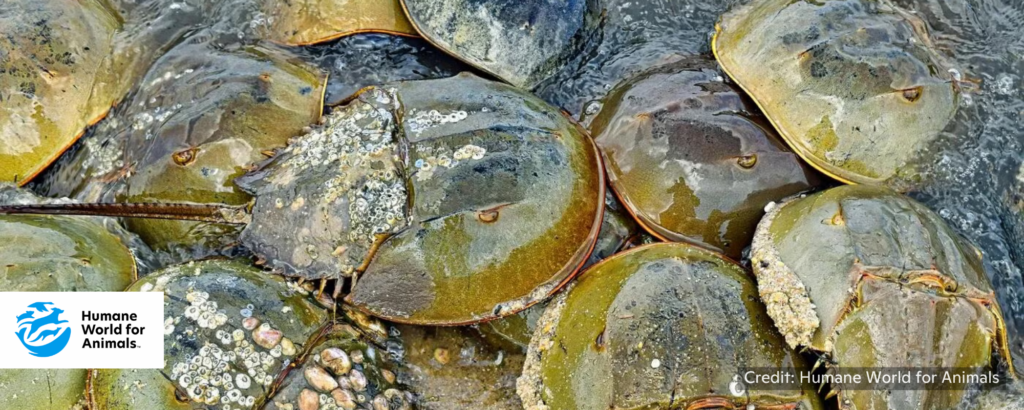
Massachusetts withdraws proposal to increase number of horseshoe crabs used for biomedical research
Brianna Grant, Humane World for Animals, 3/31/2026
“Horseshoe crab blood is highly sought after in the biomedical industry. Over one million Atlantic horseshoe crabs are taken from the ocean every year to have a portion of their blood drained. An additional half million are killed to be used as fishing bait.”
“ . . . in December, [] Massachusetts proposed increasing the quota of crabs that can be harvested for biomedical purposes from 200,000 to 280,000 annually. The number of animals taken for fishing bait would decline from 140,000 to 100,000. Under the state’s ‘rent-a-crab’ program, fishers can sell these crabs to bleeding facilities before they ultimately become bait.”
“In March, the Massachusetts Division of Marine Fisheries announced they were withdrawing the proposal due to the ‘the content and tenor’ of public comments in opposition. The reversal was great news, says Shaw Still, horseshoe crab populations continue to remain at threat.” 📰 Full Story →
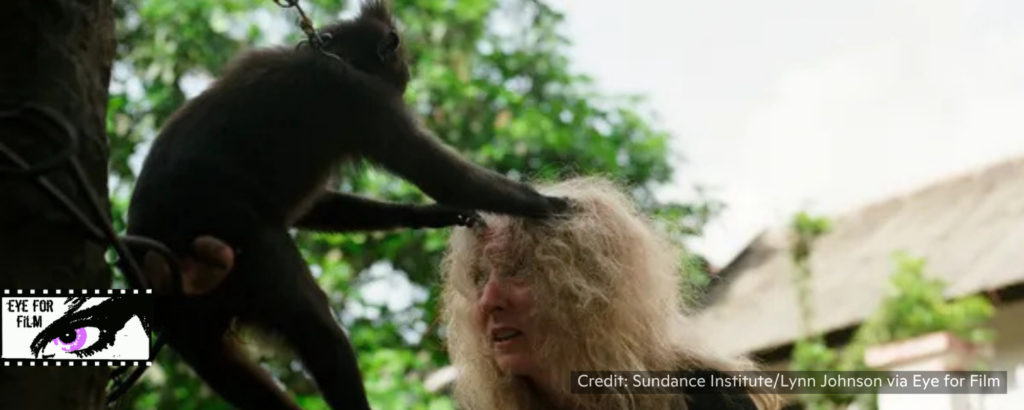
Scientific balance
Amber Wilkinson, Eye for Film, 3/27/2026
“Veteran Australian journalist Tony Jones . . . has made his feature directorial debut with Sentient, a film that digs into the thorny question of laboratory testing on animals.”
“‘It is almost like a secret world, isn’t it?’ says Jones. ‘I like the phrase medical industrial complex because it is exactly that. Billions and billions of dollars have been invested by the pharmaceutical industry and its component parts to create a system beginning, as we see in that film, with the breeding farms….’”
“‘I think that phrase ‘cognitive dissonance’ is spot on. The idea that you’re experimenting on animals, you’re hurting the animals. At the same time you, you may have them in these little translucent boxes where they’ve been drugged and they’re not very well and you can see the little paws coming out of the holes in the side of the box so that they can actually have some contact with another being. And, in this case, it’s the human that’s actually effectively torturing them. So you’re touching the hand that’s torturing you just so you have some contact with another sentient being, I mean, it’s quite moving.’” 📰 Full Story →

FDA Ends Animal Testing As Beagles and Chimps No Longer Used — Here’s What Will Replace Them
Srimoyee Datta, INQUISITR, 3/30/2026
“[FDA Commissioner] Makary acknowledged that animal testing is outdated and often unnecessary.”
“Makary outlined how modern alternatives will work. ‘We’re going to use computational modeling. I can look at a molecule to predict if it’s going to be toxic, using organ-on-a-chip technology,’ he said. He added that this involves using cell lines in laboratory settings to test how drugs behave, reducing the need for chimpanzees, rabbits and other animals.”
“‘Scientists have really preyed on beagles because beagles are docile animals. They do what you tell them to do, and so it’s really kind of sad to see where we’ve come in science. Now, the beagles that were housed in kennels at the FDA’s own facilities are no longer there. Those kennels are empty, and so we are making massive strides to reduce animal testing in different classes of medications on a roadmap that we have. I’m also proud to report that you no longer need to submit data using 144 chimpanzees for a class of drugs called monoclonal antibodies . . . So, we’re making massive strides. We believe in this. This is part of our MAHA agenda. I also think it’s just common sense and humane.” 📰 Full Story →
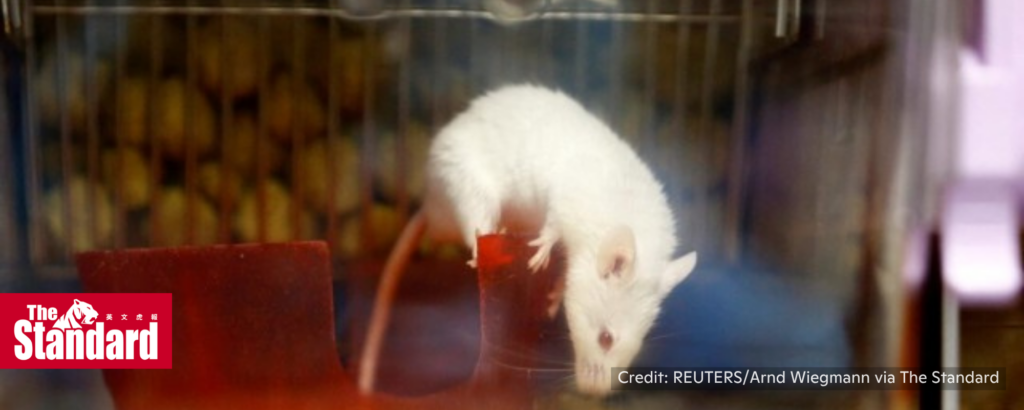
Rights group condemns Hong Kong company tests on severed animal heads, limbs
The Standard, 4/1/2026
“An animal rights group called on Wednesday for a Hong Kong e-commerce company to stop conducting experiments that it said involve keeping detached animal heads and limbs viable for hours.”
“Hong Kong Technology Venture Company Limited (HKTV), the parent company of popular shopping platform HKTV mall, announced in a stock exchange filing on Monday that its research team has been developing ‘equipment designed to maintain the viability of detached body organs’. The company said its team of doctors, professors and researchers had conducted ‘38 experiments in which the animals’ limbs or heads were separated from their bodies’ since 2022. ‘The detached heads remained viable for approximately 7 hours,’ the company said, adding that it believes the case to be a world first. The detached limbs were kept alive for approximately 46 hours, according to measurements made using electrodes.”
“HKTV has invested more than HK$44.5 million ($5.7 million) in the project since 2021, it said in the filing, and intends to invest at least HK$50 million annually in the coming years.“ 📰 Full Story →
Final two dogs used in research leave St. Joseph’s hospital
Baran Ghaforian, The Gazette, 4/1/2026
“The head of St. Joseph’s Health Care said the final two dogs used as test subjects in a heart failure study have left the hospital. In a statement, the president and CEO of St. Joseph’s Health Care London, Roy Butler, said the two remaining dogs began ‘their transition into family homes’ on Tuesday.”
“On Aug. 7, the Investigative Journalism Bureau published an exposé revealing that researchers at St. Joseph’s were inducing three-hour heart attacks in dogs at the Lawson Research Institute, which works in affiliation with Western University. St. Joseph’s Hospital announced on Aug. 11 that it would cease research studies involving dogs following backlash from the public and Ontario Premier Doug Ford. The other six dogs used in the study were rehomed in September.”
“This comes after months of advocacy from animal advocacy groups, including a protest organized by the grassroots movement Release the Dogs.” 📰 Full Story →

Florida monkey importer charged after lab animal dumped at Miami waste facility
Martin Vassolo, AXIOS Miami, 4/1/2026
“After a discarded lab monkey was found alive in a Miami waste facility in February, Florida wildlife officials have charged the head of the biomedical research company responsible.”
“The Florida Fish and Wildlife Commission charged BC US president Mark Bushmitz with a second-degree misdemeanor for violating a law on the escape of captive wildlife. PETA believes this is the first time an importer in the animal experimentation industry has been charged for this type of offense. The charge carries a 60-day jail sentence and/or a $500 fine. An FWC spokesperson confirmed the charge.” 📰 Full Story →
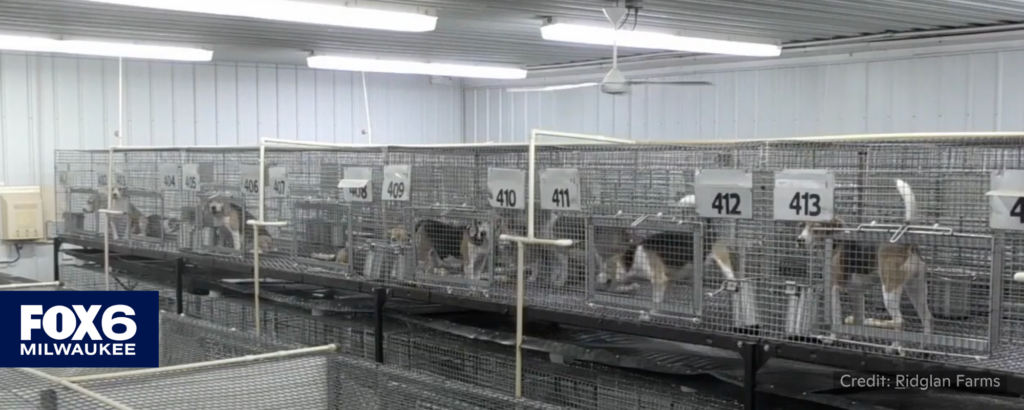
Freed Ridglan Farms beagles adjust; activists plan second raid
Bryan Polcyn, FOX6 News Milwaukee, 4/1/2026
“Twenty-two beagle puppies are now scattered across the country, far away from the facility that bred them to become science experiments. Animal rights groups call it a rescue. Ridglan Farms calls it a crime.”
“Animal rights groups arranged for the FOX6 Investigators to meet 8-month-old Ivy at a temporary location. She is one of the nearly two dozen beagles carried out of Ridglan Farms on March 15 . . . Since Ivy was born in summer 2025, the purebred beagle has had no access to sunlight, no yard to play in, she did not even have a name beyond the code tattooed inside her right ear. The storming of Ridglan Farms set Ivy free.”
“Less than a week after his release from the Dane County Jail, Hsiung published a ‘new’ plan to break into Ridglan Farms again. This time, he said he wants to send 2,000 people in for the 2,000 dogs still inside. ‘They can’t arrest and jail us all,’ Hsiung wrote.” 📰 Full Story →
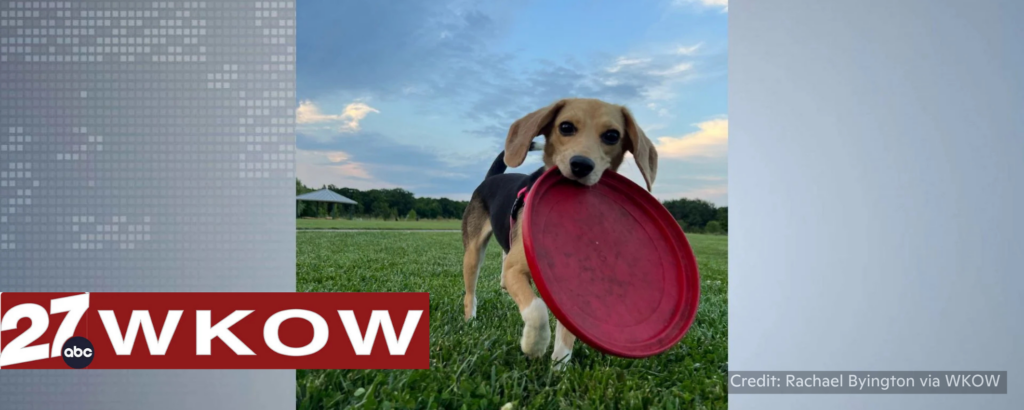
How a Michigan beagle’s roots trace back to Ridglan Farms
Gracie Tuohy, 27 WKOW, 4/2/2026
“The Byington’s adopted Penny in 2024, knowing only that she came from an unknown research lab in western Michigan. Byington said it took patience in the first few months after bringing Penny home. ‘Watching her step on grass for the first time was just so insane just watching her be so cautious on just grass,’ Byington said.”
“Before Penny had a name, she was known by a serial number tattooed in her ear: SYU3. That number traced her back to being bred at Ridglan Farms and later sold to an unknown lab in Michigan.” 📰 Full Story →
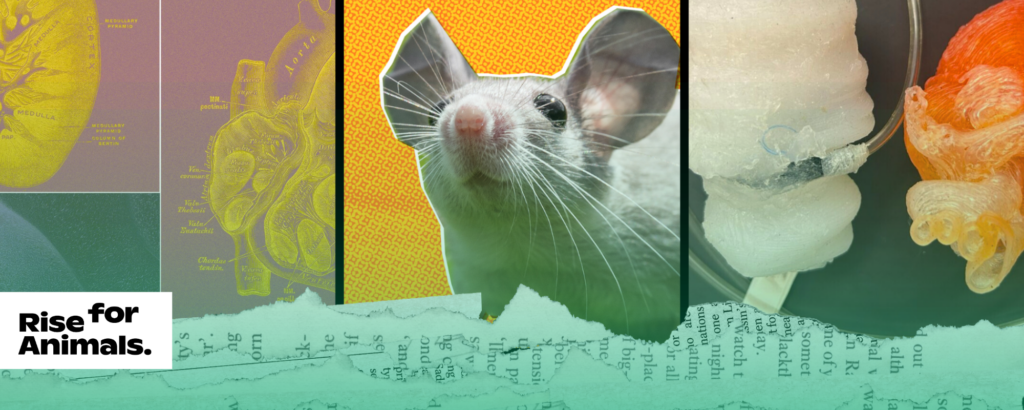
Non-Animal & Human-Relevant Research News: March 2026
Rise for Animals, April 2, 2026
Explore the latest news in human-relevant science and alternatives to animal research from March 2027: 3D-printed beating hearts; human liver organoids; nonsentient organ sacks; and more. 📰 Full Story →
Help spread the word. Share this news compilation on Facebook, X, or Bluesky.