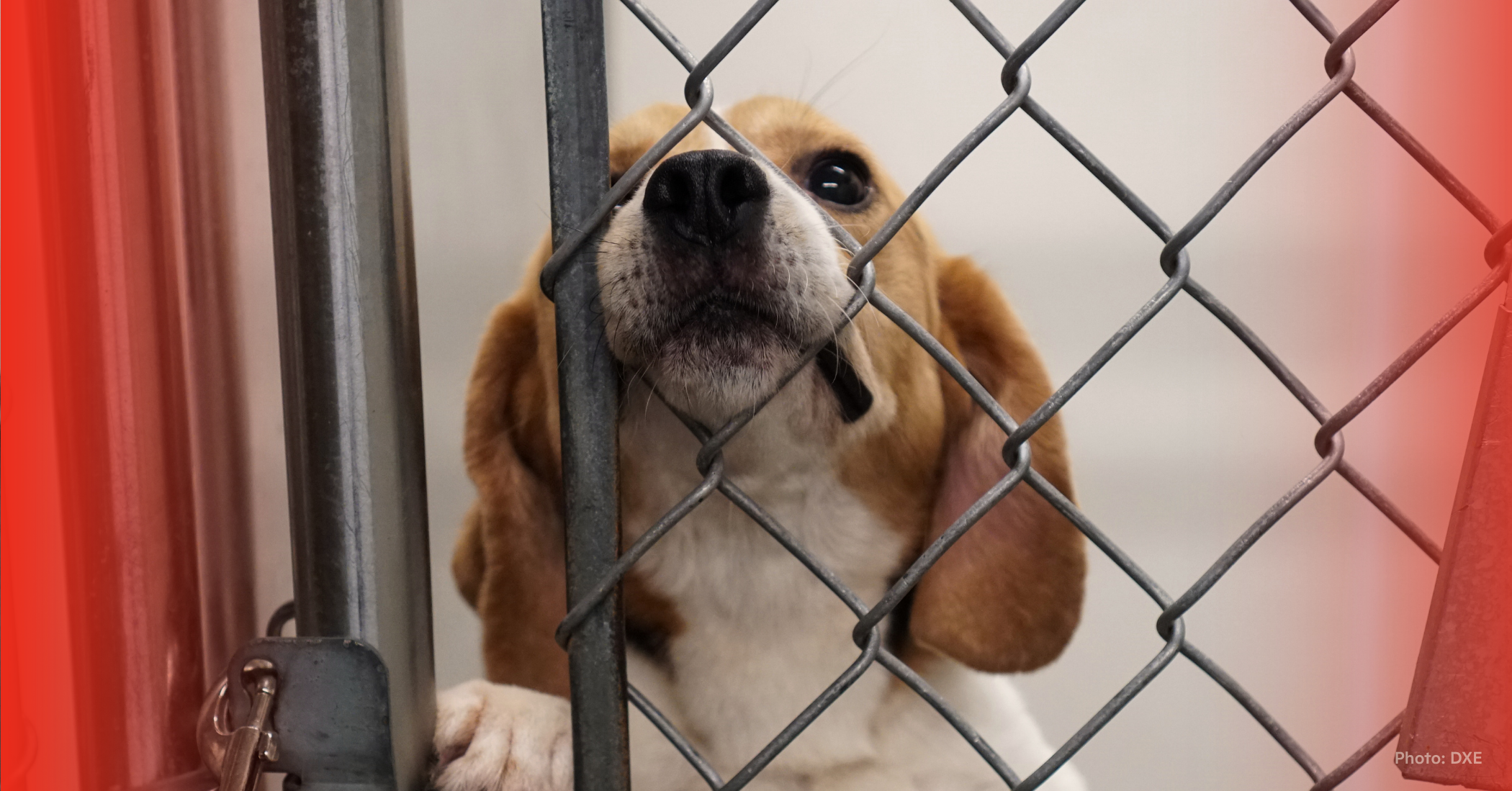
Why This Matters: To avoid felony animal cruelty charges, Ridglan Farms agreed to stop breeding dogs for experimentation by July 1, 2026. More than 2,000 dogs remain inside the facility today—and state and federal regulators have the authority to act now to get them out.
Two weekends ago, animal advocates entered Ridglan Farms and carried dogs to safety.
Of the more than 2,000 dogs inside, thirty made it out.
For eight of those dogs, freedom was heartbreakingly brief.
After their rescue, local authorities seized and returned eight dogs to the very cages they had just escaped—back into the system that breeds and sells them to laboratories for experimentation.

Images and videos from the rescue reached far beyond the animal protection movement. The rescue and its aftermath became top news stories.
People across the country—and around the world—watched as dogs were pulled from small, metal cages inside one of the nation’s largest breeders for experimentation. For many, it was their first time seeing inside facilities like this. The shock was immediate and so was the question: How can this be allowed?
But even before this month’s rescue, Ridglan Farms had already been exposed.
In 2017, animal advocates entered the facility, documented conditions inside, and carried three beagles to safety—an act of “open rescue” intended to show the public what was happening behind closed doors. Their photos and footage revealed rows of confined dogs living in barren conditions, bringing initial national attention to Ridglan Farms and the mistreatment of the animals inside.
Months More of Suffering Ahead
Last fall, a Special Prosecutor’s investigation found that non-veterinary staff at Ridglan performed painful “cherry eye” surgeries on dogs without anesthesia. Ridglan settled to avoid charges of felony animal cruelty, agreeing to surrender their license to breed and sell dogs for experimentation by July 1, 2026.

That may sound like clear progress. In reality, it means more than 2,000 dogs are slated to remain at the facility until summer. This timeline allows months more of confinement, risk, and suffering—and, in the meantime, the dogs can still be sold to laboratories. Even after July 1, 2026, the dogs may still be used by Ridglan itself in research.

A Dangerous Precedent
That authorities are allowing the dogs to remain at Ridglan Farms until summer sends a dangerous message: Facilities with documented histories of illegal harm to animals can continue operating on their own terms, even after the truth comes to light.
State and federal regulators do not have to accept that timeline.

Regulators Must Act Now
In the immediate aftermath of this month’s rescue, we urged local authorities in Dane County, Wisconsin to protect the dogs at Ridglan Farms and prevent further harm.
Thousands of you spoke out.
Now, we’re escalating.
The responsibility to ensure animal welfare does not end with local officials. State and federal regulators—specifically the Wisconsin Department of Agriculture, Trade and Consumer Protection (DATCP) and the U.S. Department of Agriculture’s Animal and Plant Health Inspection Service (USDA APHIS)—have the power to revoke Ridglan’s license, intervene at the facility, and ensure the dogs are removed to safety.

DATCP and USDA APHIS have the authority and responsibility to act in moments like this, when documented, illegal cruelty and ongoing risk to animals make delay indefensible.
Across the country, animals from large-scale breeding and research facilities have been successfully relocated into rescues, fosters, and homes. The same outcome is possible here—but only if regulators choose to act now, rather than waiting months while dogs remain in cages and continue to be sold to laboratories.
Take Action Now
Rather than permitting Ridglan Farms to continue operating until its planned closure, we’re urging DATCP and USDA APHIS to:
- Immediately suspend or terminate Ridglan Farms’ license,
- Direct independent veterinary examinations of all dogs in the facility,
- Work collaboratively with appropriate partners to ensure the safe removal of the dogs from the facility, and
- Facilitate the transfer of these animals to reputable rescues, fosters, and adoption programs.
We’ve made it easy for you to raise your voice for the dogs, too. Send your letter now to DATCP and USDA APHIS.