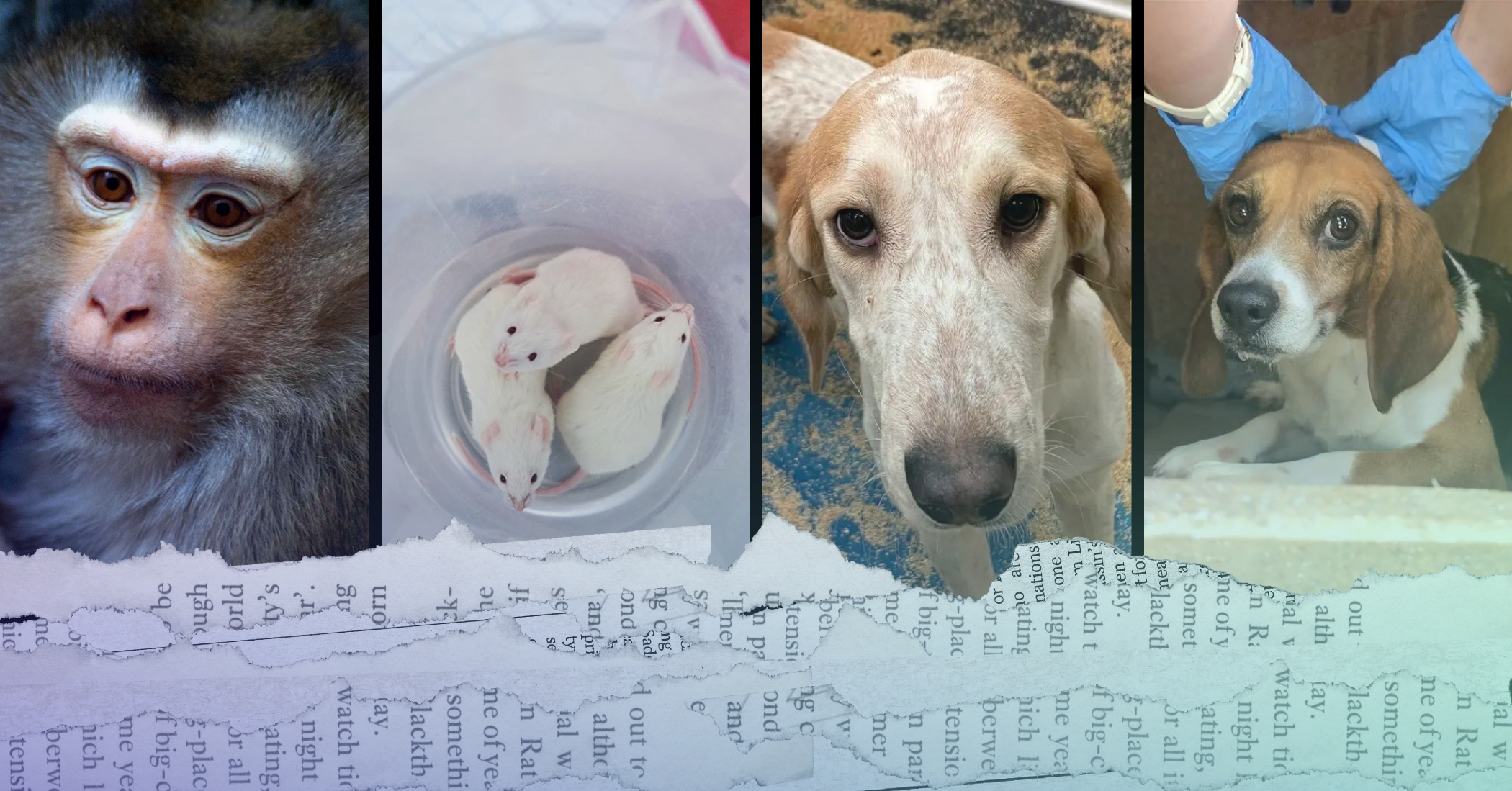
Here’s a roundup of the latest, biggest news stories related to animal research—all the recent media coverage you need to know right now to be the most effective activist for animals in labs.
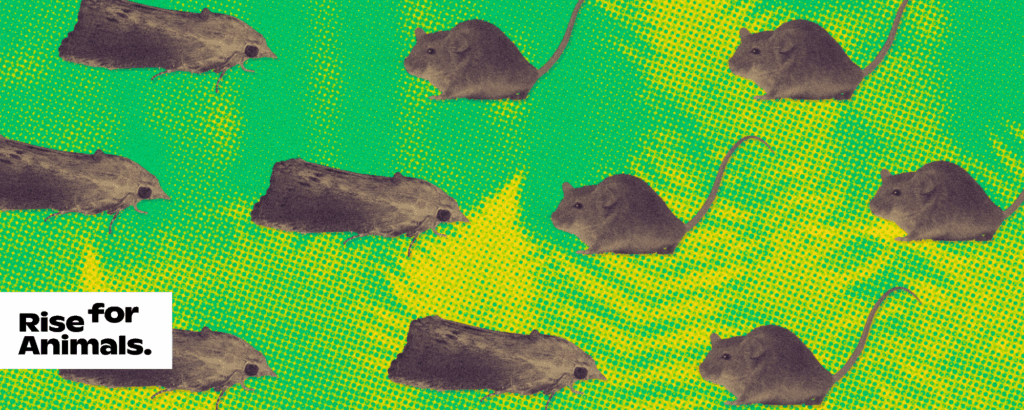
Of Mice and Moths: There’s No Justice in Swapping Victims
Rise for Animals, 2/25/2026
Some animal researchers are touting wax moths as “replacements” for mice. But trading one sentient victim for another isn’t progress—it’s exploitation rebranded.
This National Justice for Animals Week, learn more: 📰 Full Story →
He Died in His Cage. The System Said It Did Nothing Wrong.
Rise for Animals, 2/26/2026
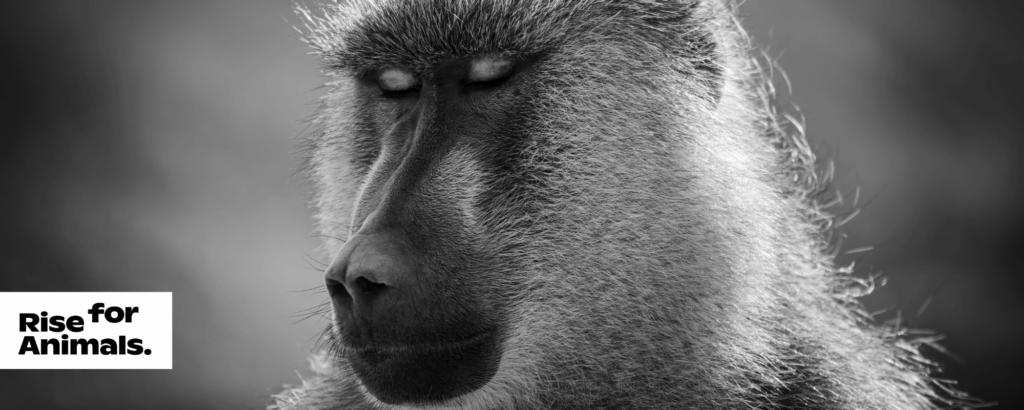
He was a young baboon. Two days after entering a Columbia University laboratory, he was dead.
His death illustrates how the animal research oversight system does not exist to eliminate harm to animals. Rather, it expects harm and exists to manage it. 📰 Full Story →
The age of animal experiments is waning. Where will science go next?
Diana Kwon, Nature, 2/26/2026
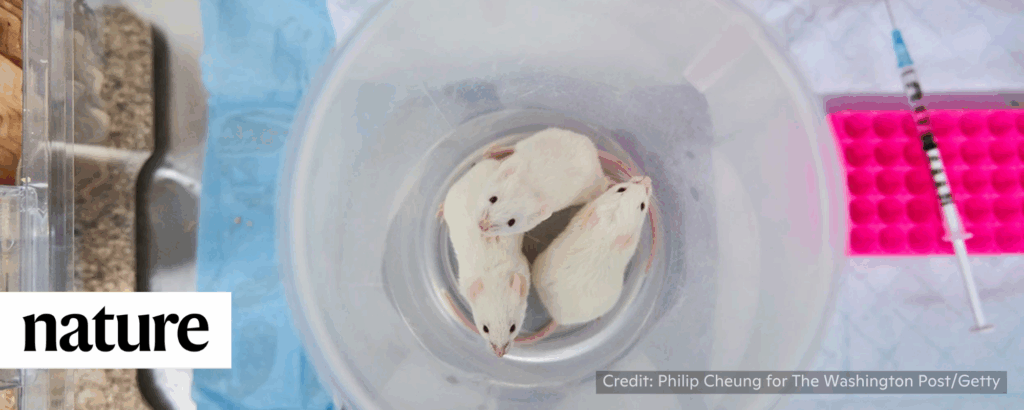
“Ethical and animal-welfare concerns have long fuelled efforts to curb animal use in research — and now rapid advances in alternative scientific methods are accelerating the shift. These ‘new approach methodologies’ (NAMs) include devices known as organs-on-chips, 3D tissue cultures called organoids and computational models, such as artificial-intelligence systems. The number of biomedical publications using only NAMs grew from around 25,000 to 100,000 between 2006 and 2022, according to an analysis of studies on seven diseases by Animal Free Research UK….”
Animal research has “limitations, especially when it comes to understanding and intervening in human diseases. Medicines that work in animal models during preclinical testing often prove ineffective in humans. This is one major reason that around 86% of investigational drugs fail in clinical trials, and why many researchers are focused on developing alternatives . . . Increasingly, researchers see NAMS as a way to help . . . Studies suggest that some NAMS are as good as, or better than, animal tests.”
“Many researchers have welcomed the latest push to speed the uptake of animal alternatives, saying that these techniques have not been adopted at a quick enough pace.” 📰 Full Story →
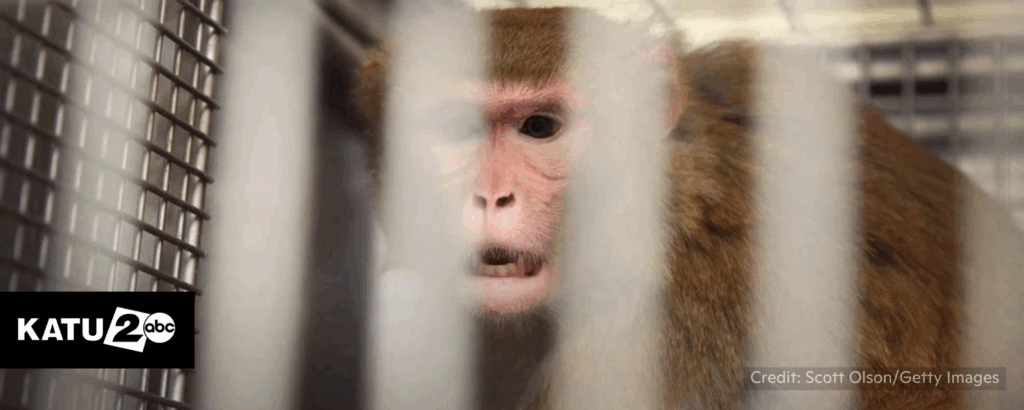
USDA documents veterinary care concerns at OHSU primate center
Tanvi Varma, KATU2, 2/23/2026
“A U.S. Department of Agriculture inspection report dated Jan. 20, 2026, states that a monkey at Oregon Health & Science University was euthanized after its medication was ‘abruptly discontinued’ by facility staff. According to the report, ‘veterinary staff did not recognize the medication was ending and erroneously did not extend the treatment.’”
“The document says the monkey was later referred to veterinary staff for ‘inappetence, hunching, and laying down with piloerection.’ While the report says a necropsy was inconclusive in determining the cause of death, the inspector wrote that ‘abruptly discontinuing certain medications like corticosteroids may lead to the animal having symptoms of pain, suffering, inappetence or death.’”
“‘This latest event underscores why the primate laboratory model is no longer scientifically, ethically, or operationally defensible, and reinforces the Oregon Health & Science University’s president and board of directors’ unanimous decision to begin negotiations to end experiments on monkeys and transition the center toward sanctuary.’” 📰 Full Story →
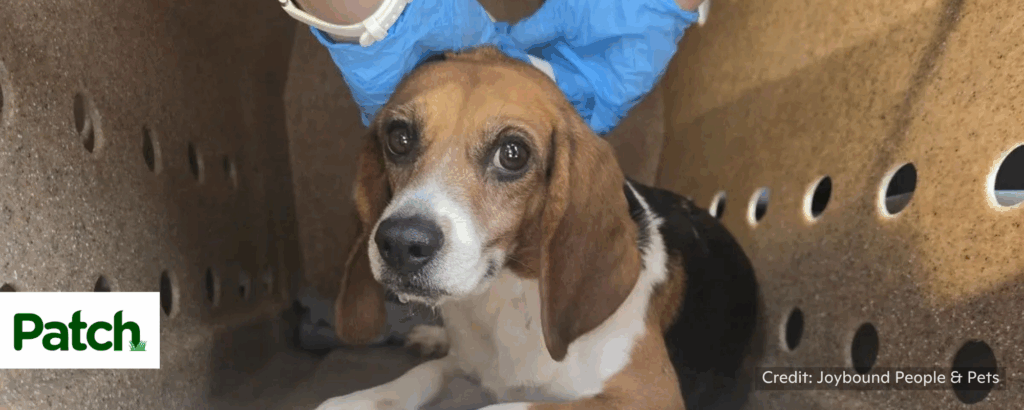
Rescued Lab-Raised Beagles Waiting For New Homes: Watch
Angela Woodall, Patch, 2/24/2026
“Eight beagles that spent every day of their lives in a research laboratory are learning how to be pets for the first time after being released to Joybound People & Pets, where the dogs are quickly adapting to toys, outdoor walks, and human affection. The dogs, ages four to six, were transferred from a shuttered laboratory that Joybound agreed not to name.”
“ . . . the animals arrived unfamiliar with everyday experiences common to household pets. Just stepping onto grass, interacting with other dogs, and playing with toys were new experiences for the octet. Early on, when a ball was thrown, the pups scattered rather than chased it. Within days, however, their tails were wagging, and they were allowed to be playful pups for the first time in their lives.” 📰 Full Story →
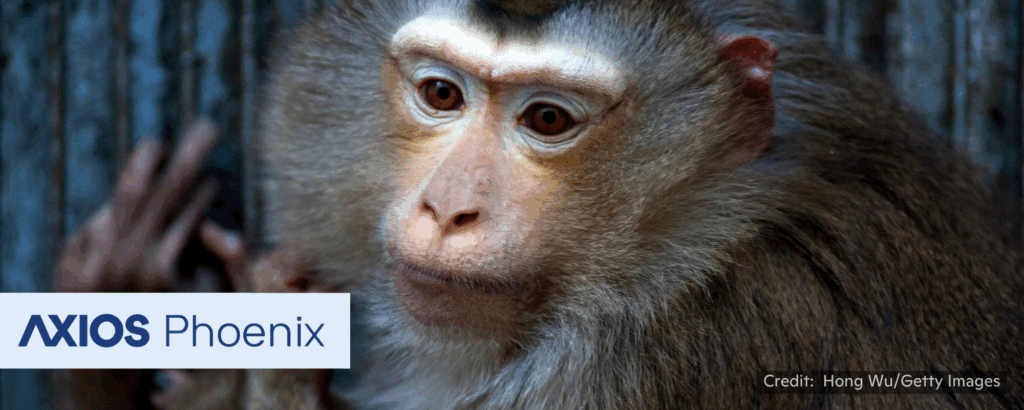
UW scrutinized after monkey death at Arizona primate facility
Jessica Boehm, AXIOS, 2/25/2026
“Animal welfare advocates are again urging the University of Washington to end its primate research program after a newborn monkey died at the university’s Arizona breeding facility.”
“The USDA last month cited the UW for a ‘critical’ violation of the Animal Welfare Act after a monkey died June 30, 2025, at its breeding facility on the Salt River Pima-Maricopa Indian Community near Mesa. • Staff found a ‘limp newborn,’ believed to be dead, in a female monkey’s arms and placed it in a cooler, per the USDA report. • An hour later, the monkey was retrieved for necropsy and was still taking labored breaths. It was then humanely euthanized.” 📰 Full Story →

UMass Chan Medical School violated animal safety rules, USDA says
Henry Schwan, Worcester Telegram & Gazette, 2/25/2026
“UMass Chan Medical School violated safety measures meant to protect animals used in medical research, according to the U.S. Department of Agriculture.”
“In one case . . . a dog swallowed a catheter after staff failed to remove it following a procedure. The animal passed the device in its stool and fully recovered. The second violation was a miscalculation that resulted in an elevated amount of anesthetic given to five rabbits.”
“Beyond the two violations cited by the federal investigator, [a PETA complaint] alleged other infractions, including a ferret that was euthanized after it swallowed a section of a hammock in its cage. PETA also claimed a rabbit had been found dead in its cage after staff allegedly failed to address signs of the animal’s declining health following a sternotomy that involved opening the chest to reach the heart.” 📰 Full Story →
Two primate centers drop ‘primate’ from their name
Calli McMurray, The Transmitter, 2/26/2026
“Two of the seven U.S. National Primate Research Centers have changed their name to ‘National Biomedical Research Center.’ The center based at the University of Washington announced the change on 13 February; the center based at Tulane University did so in October. The new names better reflect the variety of research projects underway at the centers, both announcements state.”
“The name changes come during a ‘complex time for biomedical research in general and for research with animals in particular,’ says J. Anthony Movshon, professor of neural science and psychology at New York University . . . The name changes seem ‘like a desperate attempt to avoid the fate of the Oregon center,’ says Christopher Fetsch, assistant professor of neuroscience at the Johns Hopkins University School of Medicine. ‘I do not think it will succeed, as the anti-animal research faction within HHS and their lobbyist/activist allies continue to grow larger and more emboldened.’” 📰 Full Story →

Campaigners vow to keep fighting after beagle rescue sentencing
John Elworthy, cambsnews.co.uk, 02/19/2026
“The case against [“[a]nimal rights campaigners who broke into a controversial beagle breeding facility . . . and rescued 18 puppies”] is the first in UK history to put the ‘Open Rescue’ tactic – where activists openly remove animals from facilities they believe are causing suffering – before a jury. The trial has drawn widespread attention to the use of dogs in laboratory experimentation, as well as the legal limits of direct action taken in the name of animal welfare.”
“One of those sentenced today, Nathan McGovern, said the group remained committed to ending animal experimentation despite the convictions. ‘While we’re relieved to be spared immediate prison time, we absolutely understand the severity of the sentencing,’ he said. ‘However, our commitment to the beagles, and to phasing out the horrific and unnecessary suffering of animals in laboratories, hasn’t changed.’” 📰 Full Story →
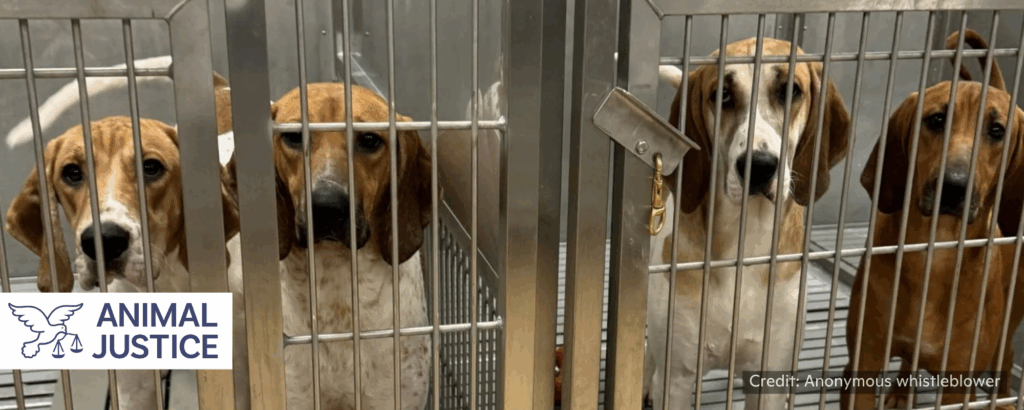
St. Joseph’s Dog Experiment Review Ignores Core Concern About Ethics of Dog Testing
Animal Justice, 2/19/2026
“Following [the] release of reviews by Western University’s Animal Care Committee (ACC), the Canadian Council on Animal Care (CCAC), and a separate group of researchers, Animal Justice wishes to reiterate that the controversy surrounding St. Joseph’s Health Care’s cruel dog experiments was never about whether existing rules were followed.”
“Western’s ACC is the same body that has approved these experiments for decades, and concerns about the experiments were never based on allegations that protocols were violated. Likewise, the CCAC is a non-profit organization with no legal authority, dominated by animal experimenters who are given a free hand to develop voluntary guidelines for the use of animals in scientific research. All the reviews took place well after the dog experiments had become public, and the ‘third-party’ review took place in December 2025—after the program was forced to shut down, and nearly all the dogs had been removed from the hospital.”
“‘It’s not surprising that these groups with vested interests in animal research found the experiments complied with existing guidelines. Animal experimenters are largely allowed to create their own rules, and provincial laws exempt animal research from general cruelty protections. The public outcry about dog experiments was never about whether these minimal guidelines were met; it was about whether deliberately inducing heart attacks in dogs and killing them should be considered acceptable in the first place,’ ….” 📰 Full Story →
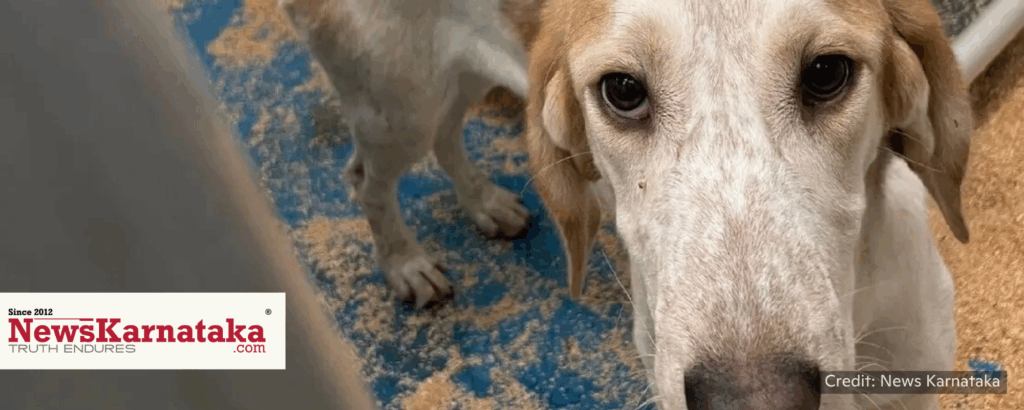
PETA urges removal of UMass researcher over dog experiments
NewsKarnataka.com, 2/20/2026
“Animal rights organisation [PETA] has urged the University of Massachusetts Chan Medical School to remove a senior researcher from a key oversight position and revoke approval of his alleged experiments on dogs . . . The organisation argued that his dual role as experimenter and [Institutional Animal Care and Use Committee (IACUC)] chair presents a conflict of interest.”
“PETA alleges that dogs used in the experiments were subjected to multiple invasive surgeries, including procedures to create artificial aneurysms by manipulating blood vessels. The animals were reportedly operated on several times before being euthanised . . . Among the allegations is a claim that certain dogs were deliberately underfed to keep their weight below 19 kilograms, a threshold that would require larger housing under applicable guidelines. PETA claims laboratory records and photographs show signs of malnourishment.” 📰 Full Story →

‘Instagram fans are devoted’: 19 of the best vegan and cruelty-free beauty brands to know
Lisa Niven-Phillips, The Guardian, 2/26/2026
“Thanks to a growing demand for ethically produced products, vegan and cruelty-free beauty has improved dramatically in recent years. An increasing number of brands are now vegan – in particular newer brands, which have prioritised ethical credentials.”
“All of the skincare and makeup brands I’ve selected are 100% vegan – across the entire line, not just the products selected – and also recognised as cruelty-free by either Peta or Cruelty Free International . . . These brands are also great at what they do, with products that, in my view as a beauty editor with 15 years’ experience, deliver time and again. I’ve chosen my favourite products from each brand, all of which I’ve used for weeks, months or – in some cases – years, and can vouch for them being as effective as they are ethically sound.” 📰 Full Story →
Help spread the word. Share this news compilation on Facebook, X, or Bluesky.