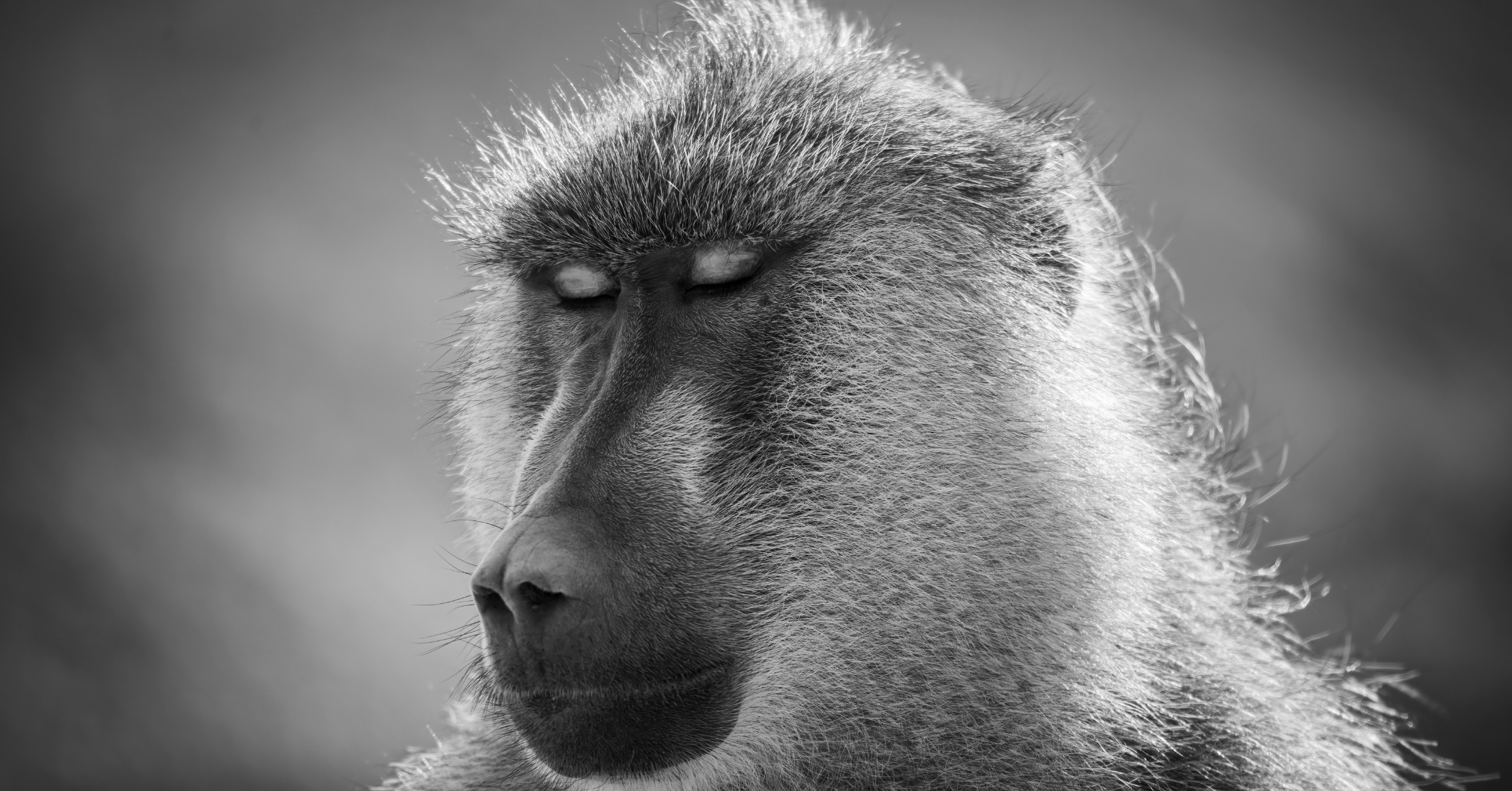
He was a young baboon. Two days after entering a Columbia University laboratory, he was dead.

He had been undergoing “jacket and tether” training—a process where laboratory staff attempt to force animals into submission by restraining them. When he was found, his tether was entangled in a perch inside his cage.

The university documented the death and reported it as required to the National Institutes of Health (NIH), the agency funding the lab’s exploitation of this baboon.
In February 2025, after a review of the university’s report, the NIH Office of Laboratory Animal Welfare (OLAW) concluded it had “no cause for further action.”
No violations. No penalties. Case closed.
This is not an anomaly.
What Happened
Columbia’s Institutional Animal Care and Use Committee (IACUC)—an internal oversight body—investigated the baboon’s death.
The university determined the most likely cause of death to be Sudden Unexpected Death in Epilepsy (SUDEP), citing a gene variant associated with epilepsy in baboons. But it also acknowledged that a stress-induced cardiac event could be the cause.

The NIH concluded there were “no deficiencies in animal care, protocol adherence, or regulatory noncompliance.”
An animal died violently and unintentionally—perhaps from laboratory-induced stress—yet the system determined that the university had done nothing wrong.
The Changes Came After His Death
Following the investigation, Columbia implemented several changes in their primate lab. They:
- Removed perches from the cages of tethered primates,
- Altered safety features for “jacketed and tethered primates,”
- Adjusted the tether training process, and
- Offered expanded “enrichment” (like “more frequent toy rotations”) and increased human-animal interaction.
These changes were described as preventive measures to reduce the risk of recurrence.
The System Investigates Itself
The animal research oversight system is structured to self-police and self-protect.
When animals are unexpectedly or unintentionally harmed or killed in federally-funded research, a laboratory typically investigates itself through its IACUC. Then, regulators—NIH (OLAW)—rely on these self-reports to determine whether violations occurred.

In this case (and in countless others):
- The university itself conducted the investigation into the animal’s unexpected death.
- The university itself determined the cause of the animal’s death.
- The university itself proposed corrective actions.
- NIH accepted those self-reported conclusions.
- NIH concluded there was “no cause for further action.”

There was no independent investigation. There were no consequences for those responsible. There was no external regulation.
This is not unusual. It is how the system is designed to function: to reduce the horrifyingly common “inconveniences” and other human errors that may disrupt the status quo.
“Compliance” Does Not Mean Protection
Supporters of animal research often point to oversight frameworks as proof that animals in laboratories are protected. But this case reveals the truth: the system is designed to measure procedural compliance—not to end the suffering, harm, and death of animals in labs.
Compliance does not mean animal suffering was avoided.
Compliance does not mean animals were not harmed.
Compliance does not mean animals’ lives were protected in any meaningful way—if in any way at all.
Why This Matters
For those of us who recognize animals as sentient individuals—not research tools—this baboon’s death is heartbreaking. It is also clarifying.
This baboon’s death illustrates how the current oversight system does not exist to eliminate harm. Rather, it expects harm and exists to manage it.
To truly protect animals, we cannot rely on a system that reduces even the unapproved sufferings and deaths to routine paperwork.
The only way to ensure animals are not caged, restrained, stressed, harmed, and killed in laboratories is to end animal experimentation altogether—and shift scientific research toward modern, human-relevant methods that do not depend on any animal exploitation and suffering.

That is the future we are working toward.
Because this young baboon died in his cage. And the system said nothing was wrong.
We refuse to accept that end to the story.
Your Call to Action: To begin freeing animals from labs, urge your legislators to support the SPARE Act now.
The Safeguard Pets, Animals, and Research Ethics (SPARE) Act is a bill that aims to end federally funded animal research. This bill aims to prohibit testing on animals in federally-funded labs, phase-out existing animal experiments, redirect taxpayer dollars to non-animal methods, and adopt out “research animals” to caring homes or sanctuaries.