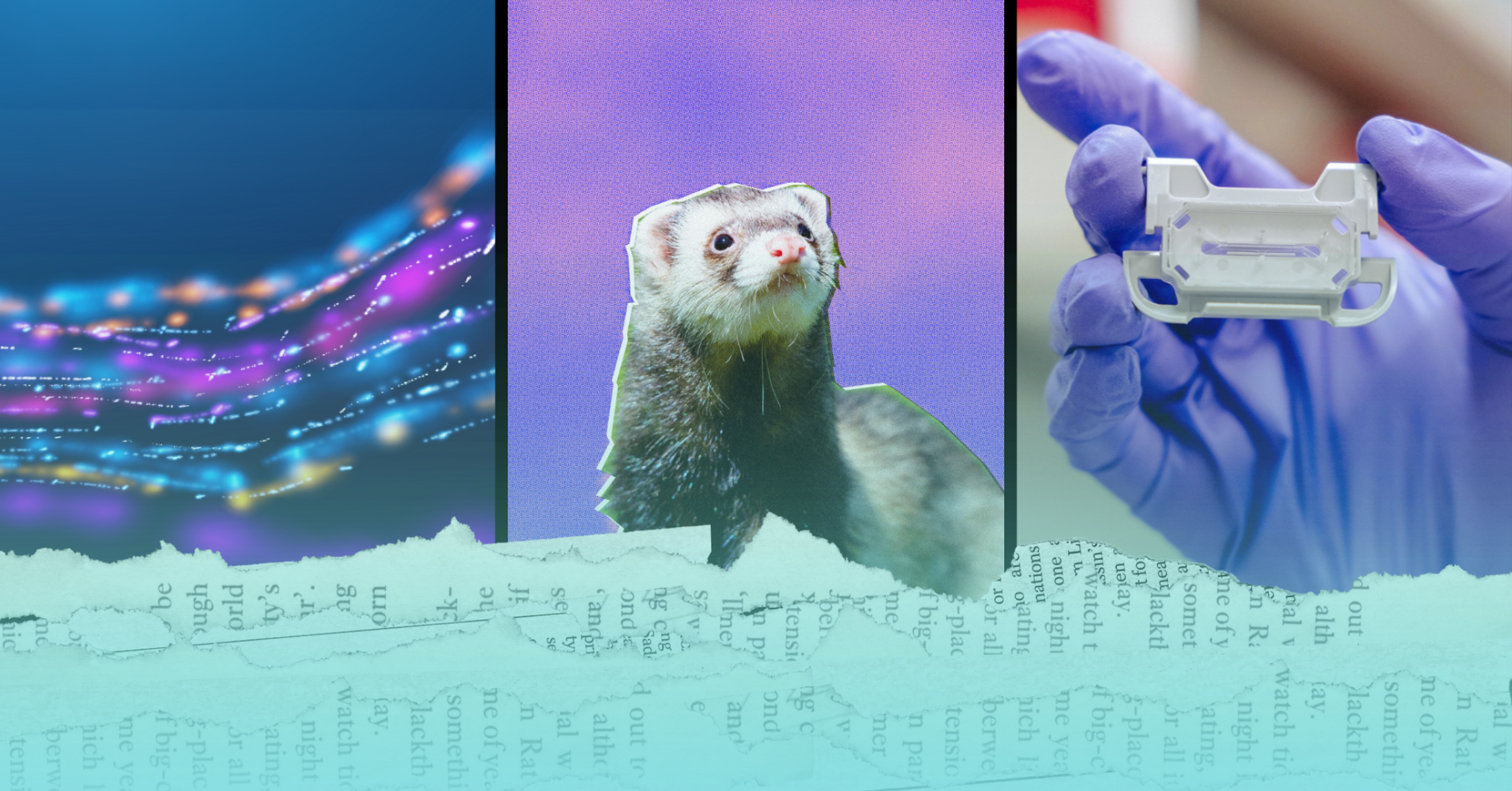
Why This Matters: While the animal research industry continues to breed, buy, cage, torture, and kill sentient beings, progressive scientists are busy proving that human-relevant science is not only possible but, in fact, better for us all. Highlights in science from the last month are below.

Human-centric research: the largest dataset of human biology-based models launched
Joint Research Centre, European Commission, 12/1/2025
“The Joint Research Centre (JRC) compiled a Biomedical models Hub (BimmoH), the largest public database of scientific articles making use of human biology-based models used in biomedical research. This dataset is a milestone in the EU’s push for more human-centric science….”
“By consolidating information on models that rely on human biology, such as organ-on-a-chip systems, 3D cell cultures or computational models, BimmoH offers researchers a powerful tool to design more relevant studies and increase biomedical research translatability. This significant advancement marks a pivotal moment in the promotion of innovative research methodologies, making such models more accessible and promoting their wide adoption.” 📰 Full Story →

Pluristyx Launches Organoid COMMONS, Uniting Industry Leaders to Revolutionize Drug Discovery
Pluristyx, Inc., GlobeNewswire, 12/2/2025
“Pluristyx, Inc. today announced the formation of the Organoid COMMONS (Consortium for Organoid Manufacturing, Measurement, Optimization, and Network for Standards), a public-private consortium created to accelerate the adoption of human-relevant organoid models. Pluristyx will lead the initiative, bringing together ten industry partners to establish global standards and workflows for organoid development, manufacturing, and characterization that de-risk preclinical programs and drive regulatory acceptance of non-animal, iPSC-based test systems.”
“The consortium’s mission is a direct response to the FDA Modernization Act 2.0 and the FDA’s urgent mandate to replace traditional animal testing with predictive, human-relevant New Approach Methodologies (NAMs). With over 90% of drug candidates that pass animal tests failing in human trials, the Organoid COMMONS will establish the standardized, regulatory-accepted workflows, iPSC banks, and organoid libraries needed to de-risk therapeutic development.” 📰 Full Story →

Researchers use ‘brain-on-a-chip’ to revolutionize fight against deadly encephalitis viruses
University of Tennessee Knoxville, Science X, 12/3/2025
“A transparent chip no larger than a stick of gum is helping scientists at the University of Tennessee Health Science Center . . . transform the way researchers study the human brain and develop treatments for some of the world’s deadliest viruses.”
“Colleen Jonsson, Ph.D. . . . is leading a groundbreaking project using a human brain-on-a-chip system to study how lethal encephalitis viruses infect the brain and how to stop them. Working alongside her doctoral student, Walter Reichard, she is pushing forward a new frontier in non-animal research . . . Traditionally, scientists have relied on mouse models to study these pathogens. Dr. Jonsson’s lab is testing a revolutionary alternative: a miniature, three-dimensional system that replicates the function of the human brain. The brain-on-a-chip technology represents what the National Institutes of Health (NIH) and the Food and Drug Administration (FDA) are calling the future of non-animal research, or ‘NAMs,’ new-approach methods. ‘This is novel technology to advance biological and therapeutic discovery,’ Dr. Jonsson said. ‘The human brain chip allows us to do testing in humans….’ . . . Early tests in the Jonsson lab have been promising.” 📰 Full Story →

Revalia Bio Awarded Up To $26.7 Million ARPA-H Contract Award to Advance Drug Development with Human Data Trials
ACCESS Newswire, The Sacramento Bee, 12/5/2025
“Revalia Bio (Revalia), developer of the Human Data Trial platform, today announced that they are serving as the technical lead for an up to $26.7M contract” and “will lead the effort to build advanced AI-driven models trained on Human Data Trials, living systems derived from donated human organs, organ-on-chip platforms, and multimodal datasets. The goal is to reduce reliance on animal models and better predict how drugs behave in the human body, cutting costly late-stage failures and accelerating safer therapies.”
“’Drugs should be tested in the same biology, from the same patients, they are meant to treat,’ said Janet Nikolovski, PhD, Chief Data and Innovation Officer at Revalia. ‘We are generating a unique, integrated human dataset encompassing everything from high level patient data to organ specific physiology and comprehensive molecular level analyses. These data will train models that we believe will better simulate clinical outcomes and reduce the risk of drug failure in clinical trials. This has the potential to change the paradigm for drug development, bringing better and faster therapies to patients who need them.’” 📰 Full Story →

FDA Approves New Cancer Drug for Clinical Trials Based on Nonanimal Data Only
Physicians Committee for Responsible Medicine, 12/5/2025
“The U.S. Food and Drug Administration approved an Investigational New Drug (IND) application using efficacy data solely from Qureator’s human vascularized organoid model, moving an oncology drug to human clinical trials without any animal tests for the first time.”
“The FDA’s approval of an IND application using only human-based methods is a significant landmark in drug development—ushering in a new regulatory precedent in preclinical testing without the use of animals. Qureator’s 3D vascularized tumor organoid model accurately recreates human vascular structures and immune environments. During the preclinical stage, this technology is enhanced by the Quricore AI platform that integrates human data, improving clinical predictability over animal tests and existing organoid models.” 📰 Full Story →

Inductive Bio Announces an Up To $21M Award to Develop AI Drug Toxicity Models that Improve Drug Safety Assessment with Leading Academic and Biopharmaceutical Organizations
PR Newswire, Morningstar, 12/8/2025
“Inductive Bio, an AI drug discovery partner developing virtual chemistry labs, announced today that it has received an up to $21M award to lead a project to develop next-generation models of drug toxicity to advance safer therapeutics and reduce reliance on animal testing” by “us[ing] AI trained on data from advanced human model systems to build toxicity prediction models that could fundamentally change how drug safety is assessed.”
“This approach has the potential to reduce late-stage development failures by leveraging human biology-based predictive models and, ultimately, to accelerate the delivery of safe, innovative medicines to patients. Under the ambitious project called DATAMAP (Digital Acceleration of Toxicity Assessment with Mechanistic and AI-driven Predictions), the team will generate biological data using advanced organoids, ex-vivo human tissue systems, and microphysiological systems – models that more accurately represent human biology than traditional approaches.”
“’While animal tests have historically been the gold standard for assessing drug safety pre-clinically, the reality is that they often fail to capture how humans will actually respond to new therapeutic candidates,’ said Ben Birnbaum, Inductive’s co-founder and the Principal Investigator for the project team. ‘We’re excited to bring together Inductive’s datasets and AI models with organoids, ex-vivo human tissue, and microphysiological systems to better predict drug safety issues that animal testing misses…..’” 📰 Full Story →

Dangerous bleeding: New 3D intestinal model should make causes visible
Bionity.com, 12/10/2025
“A research team at the University of Siegen led by biochemist Prof. Dr. Maria Brehm is developing a new type of intestinal model on a microchip. It should help to understand why people with a certain blood clotting disorder suffer from intestinal bleeding that is difficult to treat.”
“In future, new substances could be tested in such a disease-like model, which in the best case could stop the intestinal bleeding or alleviate the vascular damage. Existing drugs and newly developed active substances could be tested in a safe laboratory environment – without the need for animal testing.” 📰 Full Story →

MSU scientists create first human heart organoid to replicate A-fi
Dalin Clark & Kim Ward, MSU Today, 12/12/2025
“Though an estimated 60 million people around the world have atrial fibrillation, or A-fib, a type of irregular and often fast heartbeat, it’s been at least 30 years since any new treatments have been developed. This is because researchers haven’t had accurate models of the human heart to study. Thanks to new developments from Michigan State University scientists, that is no longer the case. In 2020, MSU researcher Aitor Aguirre and his team started creating and perfecting tiny working models of the human heart known as organoids. Now, these organoids can be modified to replicate atrial fibrillation, or A-fib.”
“Roughly the size of a lentil, the three-dimensional heart organoids are so accurate that researchers can study heart development, diseases and drug responses in ways that were previously impossible . . . These organoids are truly mini hearts, complete with chamber-like structures and vascular networks including arteries, veins and capillaries.”
“[A-fib] remains poorly treated because current therapies tend to target symptoms rather than underlying mechanisms. Therapeutic drug development for A-fib has struggled because there are no reliable animal models that resemble the disease.” 📰 Full Story →

Researchers at University of Geneva develop test platform for cancer treatments
Esme Needham, PMLiVE, 12/16/2025
“Acquired resistance, when tumours develop resistance to cancer treatments, represents a major challenge in oncology. While combination therapies have shown great promise in overcoming that resistance, they are often highly toxic to healthy organs and tissues. The UNIGE team’s new laboratory platform allows for the rapid testing of drug effects without the need for animal models.”
“‘This platform models the human kidney, heart and liver in vitro, as clusters of cells derived from human tissue. [It enables us to] study how new drug combinations interact with these organs….’ . . . Another advantage of this new approach is that it takes only two weeks to obtain results, whereas animal models take around ten weeks or more.” 📰 Full Story →

3D bioprinting offers alternative to animal testing for skin disease research
Vienna University of Technology, Medical Xpress, 12/17/2025
“At TU Wien, researchers are developing three-dimensional (3D) printing techniques that can be used to create living biological tissue—for example, to study skin diseases . . . Developing new therapies for these conditions is often difficult. Animal experiments—aside from their ethical concerns—frequently fail to produce reliable results, because animal skin differs greatly from human skin in both its anatomy and immune response.”
“Using 3D bioprinting technologies established at TU Wien, skin models can be produced in a controlled and highly reproducible manner, allowing different diseases to be studied.” 📰 Full Story →

New Approach Methodologies: Why the Future of Drug Development Must Be Human
Hayley Gooding, The Medicine Maker, 12/18/2025
“Too often, we see brilliant science stumble at the same hurdle: translation. Promising candidates that shine in animal models, rapidly fail in human trials. As an industry we’ve become accustomed to this pattern, but given the enormous amounts of time and money that is wasted as a result – not to mention delays in getting therapies to the patients that need them – the industry should not be accepting it as normal. It indicates that we’re using the wrong models to answer the wrong questions. It’s an uncomfortable truth, but for decades the industry has been building its translational pipeline on a shaky foundation: animal models that simply don’t reflect human biology.”
“NAMs offer something animal models never could: the ability to generate mechanistic, human-specific insight. With the right approach, we can understand why a drug works, how it interacts with human systems, and where it might fail. That’s the kind of knowledge that de-risks development. This also has the potential to take us beyond generic human-relevant data, and brings us closer to truly personalized medicine. The possibility of incorporating patient-specific mutations in testing, and having more predictive biomarkers available as a result of more robust testing up front, opens up the option for tailoring an individual’s treatment at the clinical stage.”
“These aren’t just technical obligations, they’re also moral ones. Every time we use a human-relevant model, we’re not just improving science; we’re reducing waste, avoiding harm, and getting closer to treatments that actually work.” 📰 Full Story →

Bioprinting turns reliable alternative for testing new drugs
Unnikrishnan S, The New Indian Express, 12/22/2025
“The dream of printing a human organ like a liver or a heart has long captivated the scientific community, especially as thousands of people lose their lives each year while waiting for a suitable donor . . . Today, that hope is taking shape in specialised laboratories where researchers are working on a modern medical miracle – using 3D bioprinting to build tissues that look and act like the real thing. Instead of waiting for a donor, the process begins with a digital blueprint of the organ.”
“By 2025, 3D bioprinting has transitioned from a science fiction concept into a sophisticated medical frontier,” allowing “for the creation of artificial tissues and functional organ structures that serve as vital models for the future of healthcare. Beyond transplants, this technology holds immediate promise as a way to test new drugs and chemicals, offering a reliable laboratory alternative that could eventually eliminate the need for animal testing.” 📰 Full Story →

KAIST researchers develop animal-free culture platform to improve intestinal stem cell therapy
Park Sae-jin, AjP News Agency, 12/23/2025
“Researchers have developed a new technology to grow human intestinal stem cells without using animal-derived materials, resolving a major safety hurdle for regenerative medicine. The method significantly improves the ability of these cells to move and repair damaged tissues, potentially accelerating treatments for intractable gastrointestinal diseases.”
“Current methods for growing intestinal stem cells often rely on ‘Matrigel’ or mouse-derived cells to provide a foundation for growth. Because these materials come from animals, they carry risks of viral contamination and trigger strict regulatory hurdles for human use. The newly developed PLUS platform uses a synthetic polymer coating applied via gas-phase deposition, creating a completely ‘xenogeneic-free’ or animal-free environment that remains stable at room temperature for three years . . . ‘This research provides a synthetic culture platform that eliminates the dependence on animal-derived components, which has been a major barrier to the clinical application of stem cell therapies,’ Professor Im Sung-gap said. He noted that the technology could lead to a paradigm shift in how regenerative medicine is produced and distributed.” 📰 Full Story →

Patient-derived cells assembled to recreate functional human liver tissue in vitro
GaHyeon Jo, DongA Science, 12/26/2025
“An international collaborative research team, including Korean researchers, has developed a technology to precisely replicate human liver tissue responsible for key functions in a laboratory. This is expected to open new possibilities for research into incurable diseases such as cirrhosis and liver cancer, as well as for patient-specific drug testing.”
“The portal triad assembloid is an artificial tissue that replicates the function and structure of a real liver *in vitro* by precisely assembling a patient’s hepatocytes, cholangiocytes, and structural cells . . . Professor Yohan Kim stated, ‘This is the world’s first case of recreating the complex structure and disease responses of the human liver in a lab by assembling various cells derived from patient tissue into a single functional unit.’ He added, ‘It will be utilized as a precision medicine platform for developing treatments for various incurable diseases like liver fibrosis, biliary diseases, and liver cancer, and for pre-testing drugs tailored to individual patients.’” 📰 Full Story →

Light-based 3D printing simplifies the production of organ-on-a-chip systems
Lucia Gartner, 3Printr.com, 12/29/2025
“Researchers at the Missouri University of Science and Technology have introduced a new light-based 3D printing process designed to accelerate the fabrication of so-called organ-on-a-chip systems. These microfluidic components serve as artificial tissue models for testing drugs and therapies under realistic conditions, without relying on animal testing or clinical trials. The approach primarily addresses a central challenge in tissue engineering: replicating dense networks of microchannels that correspond to capillaries in the human body.”
“ . . . the research demonstrates how light-based 3D printing can be specifically advanced for biomedical applications. For organ-on-a-chip technology, this could represent an important step toward reproducible, finely structured models for drug discovery.” 📰 Full Story →

New AI brain model mirrors lab animal behaviour without using animal data
GIP Digital Watch, 12/31/2025
“A new computational brain model, built entirely from biological principles, has learned a visual categorisation task with accuracy and variability matching that of lab animals. Remarkably, the model achieved these results without being trained on any animal data.”
“Beyond neuroscience research, the model offers a powerful tool for testing neurotherapeutic interventions in silico. Simulating disease-related circuits allows scientists to test treatments before costly clinical trials, potentially speeding up the development of next-generation neurotherapeutics.” 📰 Full Story →
When you share these stories, you’re helping expose a truth the animal research industry wants to hide: ethical science is more effective.